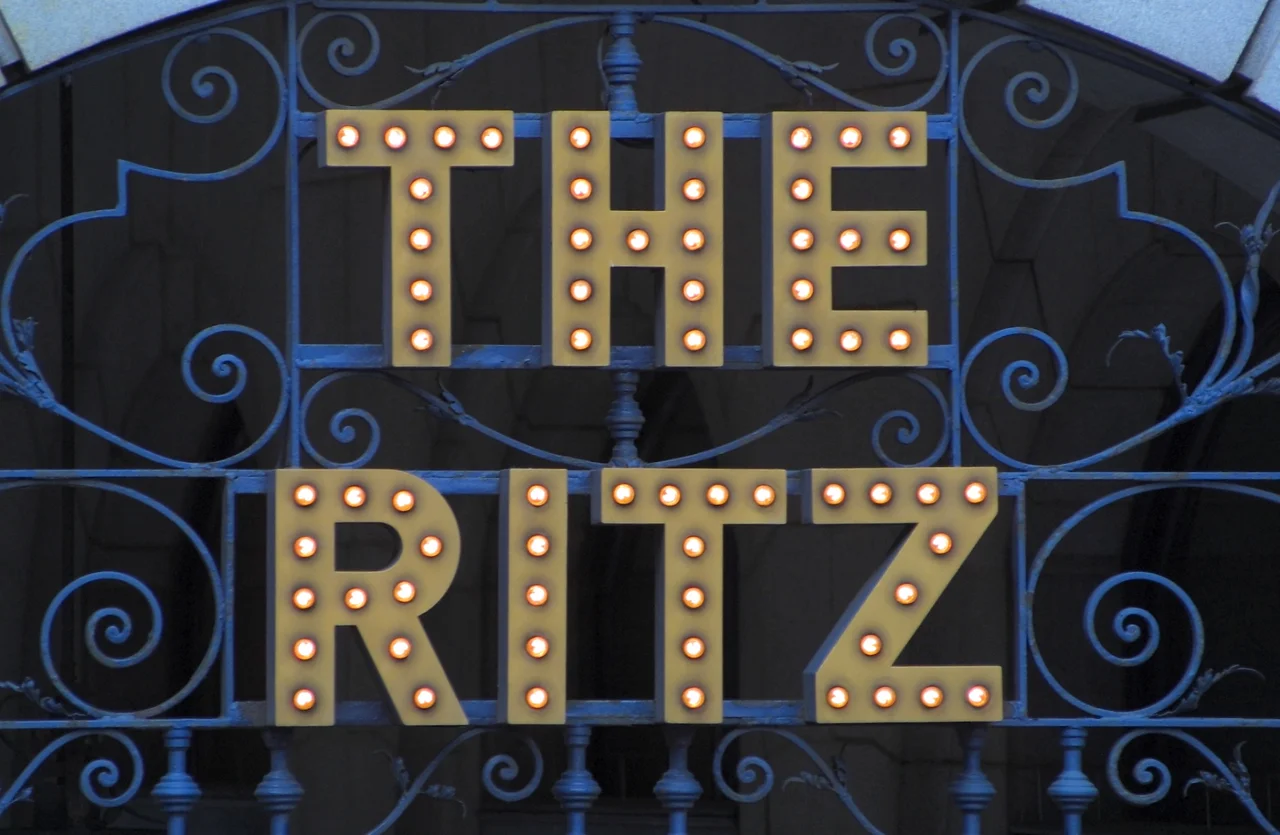

The Ritz Hotel, London
César Ritz opened his Paris hotel in 1898 and his London hotel eight years later. He had already reshaped the hospitality industry so thoroughly that when language needed a word for a certain kind of effortful glamour, it borrowed his surname. 'Ritzy' entered the dictionary. The Ritz on Piccadilly opened on 25 May 1906 and has been living up to the adjective it created ever since—sometimes magnificently, sometimes uneasily.
A Building That Made People Uncomfortable
The Ritz was not an immediate success. In its early years it was resented by the London elite who considered it vulgar. The hotel lost over £50,000 between May 1906 and July 1908—a substantial sum. The death of King Edward VII in 1910 cancelled 38 planned dinners and functions in a single stroke. Recovery came gradually, driven partly by the Prince of Wales's patronage and partly by word spreading among the international wealthy. King Edward had been particularly fond of the Ritz's cakes; the hotel sent him regular supplies in confidence, so as not to embarrass his personal chef. By the 1920s, when Barbara Cartland was asked to summarise London hotels, she placed the Ritz at the top for 'stuffiness and standards.' It was not a compliment, exactly, but it was an acknowledgement.
High Society and Secret Meetings
In the 1920s and 1930s, the Ritz became a stage for the interconnected theatre of British high society. Charlie Chaplin arrived in London in September 1921 after nine years away, was met by enormous crowds at Waterloo Station, required 40 policemen to escort him to the hotel, and stayed in the first-floor Regal Suite, photographing himself throwing carnations to fans from the Arlington Street balcony. The Ritz manager vowed never to accept film stars again—a resolution that did not last. Noël Coward was a regular. Douglas Fairbanks frequented the place. In the 1930s, the Aga Khan kept a suite at the Ritz for forty years and used the Palm Court for meetings with followers. Edward VIII and Wallis Simpson were both regulars, careful to sit near the restaurant door in case a quick exit became necessary. David Lloyd George had held secret wartime meetings here during the First World War, making the decision to intervene on behalf of Greece against Turkey at a table in this building.
Architecture and Atmosphere
The exterior is Franco-American in style—the facade runs 231 feet on the Piccadilly side—and has little trace of English architecture. At the corners of the pavilion roofs sit large green copper lions, the hotel's emblem. The interior was designed in the Louis XVI style by London and Paris-based designers, and Marcus Binney has described the ground-floor suite of rooms as 'one of the all-time masterpieces of hotel architecture.' The Palm Court, where Tea at the Ritz is served, is cream-coloured with panelled mirrors in gilt-bronze frames. The Rivoli Bar, added in 2001, was designed to resemble the bar on the Orient Express. The hotel has 111 rooms and 25 suites. In 2002 it became the first hotel to receive a Royal warrant from the Prince of Wales for its banquet and catering services.
The Ritz Today
The Barclay brothers bought the Ritz in 1995 for £80 million and spent eight years and £40 million restoring it. In 2020 it was sold to a Qatari investor. The hotel's restaurant has climbed steadily in recognition: in 2025, the Ritz Restaurant was named the best restaurant in the UK by the National Restaurant Awards—a title that would have astonished the hotel's early critics who saw it as a vulgar intrusion on Piccadilly. Margaret Thatcher stayed at the Ritz in her final days and her body left the hotel in April 2013 before lying in state. The place holds an unusual kind of historical gravity: glamorous enough to attract the famous, discreet enough that most of what happens there remains private, and durable enough that it has outlasted almost every other institution of its kind.
From the Air
The Ritz Hotel stands at 51.507°N, 0.141°W at 150 Piccadilly in Westminster, on the southern edge of Green Park. From altitude, Green Park's large open space is easily visible, with Piccadilly running along its southern boundary and the Ritz on the corner where Piccadilly meets Arlington Street. The hotel's 231-foot Piccadilly facade makes it identifiable at moderate altitude. Nearest airports are Heathrow (EGLL, about 14 miles west) and London City (EGLC, about 11 miles east). Nearest tube stations are Green Park and Piccadilly Circus. The area sits at approximately 15 metres elevation.
Nearby Stories
- Stevenage 5.7 km away
- Malling Abbey 5.7 km away
- 1952 Farnborough Airshow Crash 7.7 km away
- Ingatestone Hall 8.2 km away
- Hellfire Caves 9.1 km away
- The Carrington Event: The Solar Storm That Could Happen Again 9.8 km away
- Bletchley Park 16 km away
- Castle Hedingham 23 km away