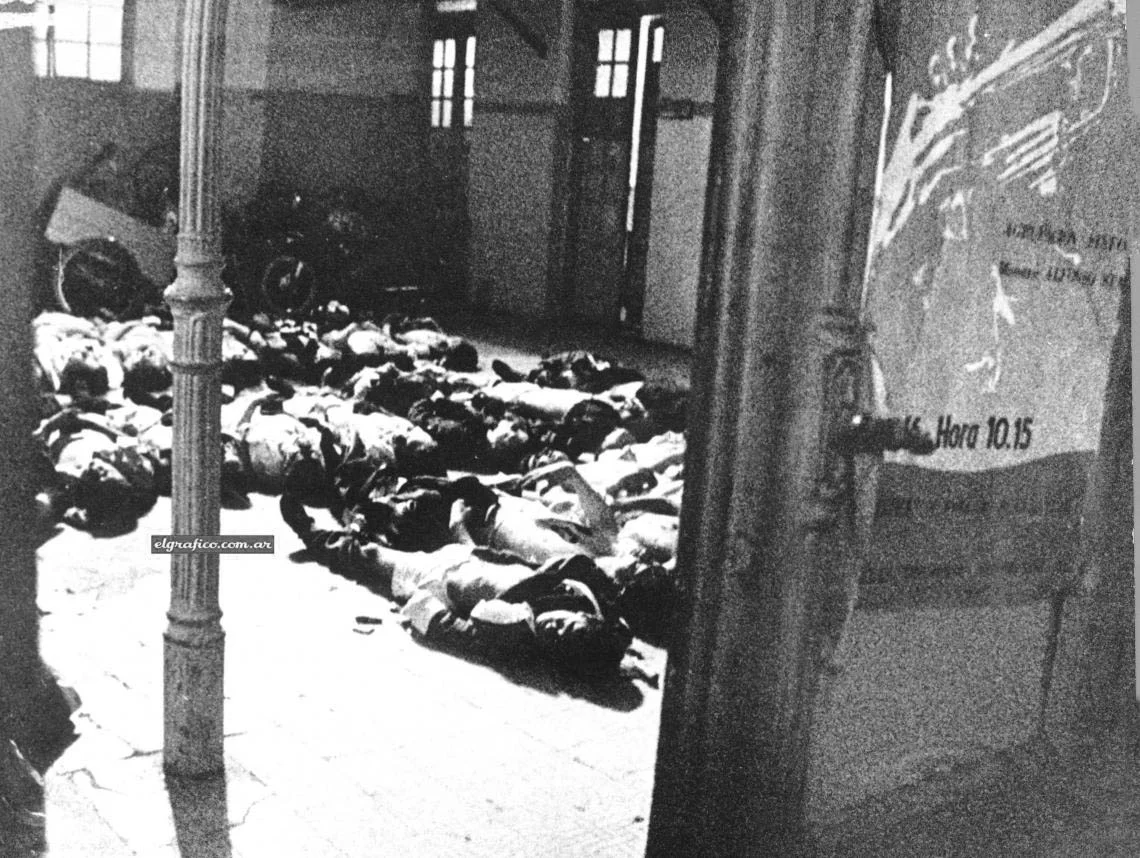

The Tragedy of Gate 12
Their average age was nineteen. Some were younger - a survivor named Miguel Durrieu was fourteen that day, lifted off his feet and carried through the air without touching the ground. On 23 June 1968, at the close of a match between River Plate and Boca Juniors at Buenos Aires' Estadio Monumental, seventy-one people died in the crush at a stadium exit. Nearly all of them were Boca supporters. Most were minors. It remains the worst disaster in the history of Argentine sport, and for decades the country could barely bring itself to remember it.
The Afternoon at the Monumental
The match had ended and the visiting Boca fans were filing out through Gate 12, the exit set aside for them on the away side of River Plate's great stadium. What should have been an ordinary departure became a catastrophe. The passage leading to the street was not clear, and the weight of thousands of people pressing from behind had nowhere to go. The investigation that journalist Pablo Lisotto would publish decades later pointed to a likely trigger: a police officer attempting to block the crowd's exit, turning a moving mass of people into a deadly bottleneck. More than seventy died and over two hundred were injured. The dead were overwhelmingly young - sons and brothers who had come to watch a football game on a winter Sunday.
Voices From the Crush
The survivors carried what happened for the rest of their lives. "At first it was a normal stampede, but it intensified," Miguel Durrieu remembered. "I was carried through the air without touching the ground. The avalanche stopped, and people started panicking. I passed out and was saved by others, probably because I was the youngest. I never returned to watch Boca play." Others insisted the cause lay with the authorities. A former municipal inspector, Juan Carlos Tabanera, said the mounted police acted against the crowd and that officials later tried to hide their role by blaming the turnstiles. The accounts conflict, as accounts of chaos do. What they share is the memory of a panic that should never have been allowed to begin.
A Justice That Never Arrived
Argentina was under the military dictatorship of General Juan Carlos Onganía in 1968, and the search for accountability was shadowed by that fact. Many believed the Federal Police had sealed the exit. The criminal investigation ended without finding anyone responsible. Two River Plate executives were charged with negligence, but the Court of Appeals declared them innocent. The football association and the clubs pooled a fund of just under a hundred thousand dollars - barely a thousand dollars per victim - and to receive even that, families had to surrender any further legal claim. Only two families refused and sued: those of Nélida Oneto de Gianolli and Diógenes Zúgaro. The court found River Plate civilly liable and ordered it to pay roughly fifty thousand dollars to each. For the rest, the question of who was to blame was left to history, unanswered.
Saying Their Names
What followed was a long silence. For forty years neither club formally honored the dead; the subject was treated as taboo. The thaw began in 2008, when River Plate placed a plaque at the site - the gate renamed over the years from 12 to L to K and finally to M - and the filmmaker Pablo Tesoriere released his documentary Puerta 12, which reawakened public memory. In 2018, on the fiftieth anniversary, Boca Juniors apologized for having neglected the victims. The work of remembrance grew personal. Diana von Bernard, sister of one of the fans who died, helped paint a memorial mural near La Bombonera and added her brother Guido's name to the wall with her own hand. In June 2021, Boca installed a plaque in the main hall of its stadium listing the known dead and declared 23 June a day of mourning, its doors closed each year in their memory. The names had finally been spoken aloud - the seventy-one, no longer a number but a list of the young people who never came home from a football match.
From the Air
The disaster occurred at the Estadio Monumental at 34.55°S, 58.45°W, in the Belgrano and Núñez districts of northern Buenos Aires, close to the Río de la Plata waterfront. From the air the stadium is a large oval bowl set among parks and the river's edge, north of the dense city center - one of the most recognizable sporting landmarks in Argentina. It sits just 3 to 4 km from Aeroparque Jorge Newbery (ICAO SABE), the in-city airport along the river, so the stadium is plainly visible to aircraft on approach or departure there; Ministro Pistarini (ICAO SAEZ, Ezeiza) lies about 30 km southwest. Best viewed at low altitude in clear weather, with the river and the surrounding green space framing the ground.
Nearby Stories
- Ezeiza Massacre 1.9 km away
- Luján, Buenos Aires 5.1 km away
- Curutchet House 13 km away
- Colonia del Sacramento 17 km away
- Martín García Island 28 km away
- Atucha Nuclear Power Plant 37 km away
- Lobos 43 km away
- Cry of Asencio 87 km away