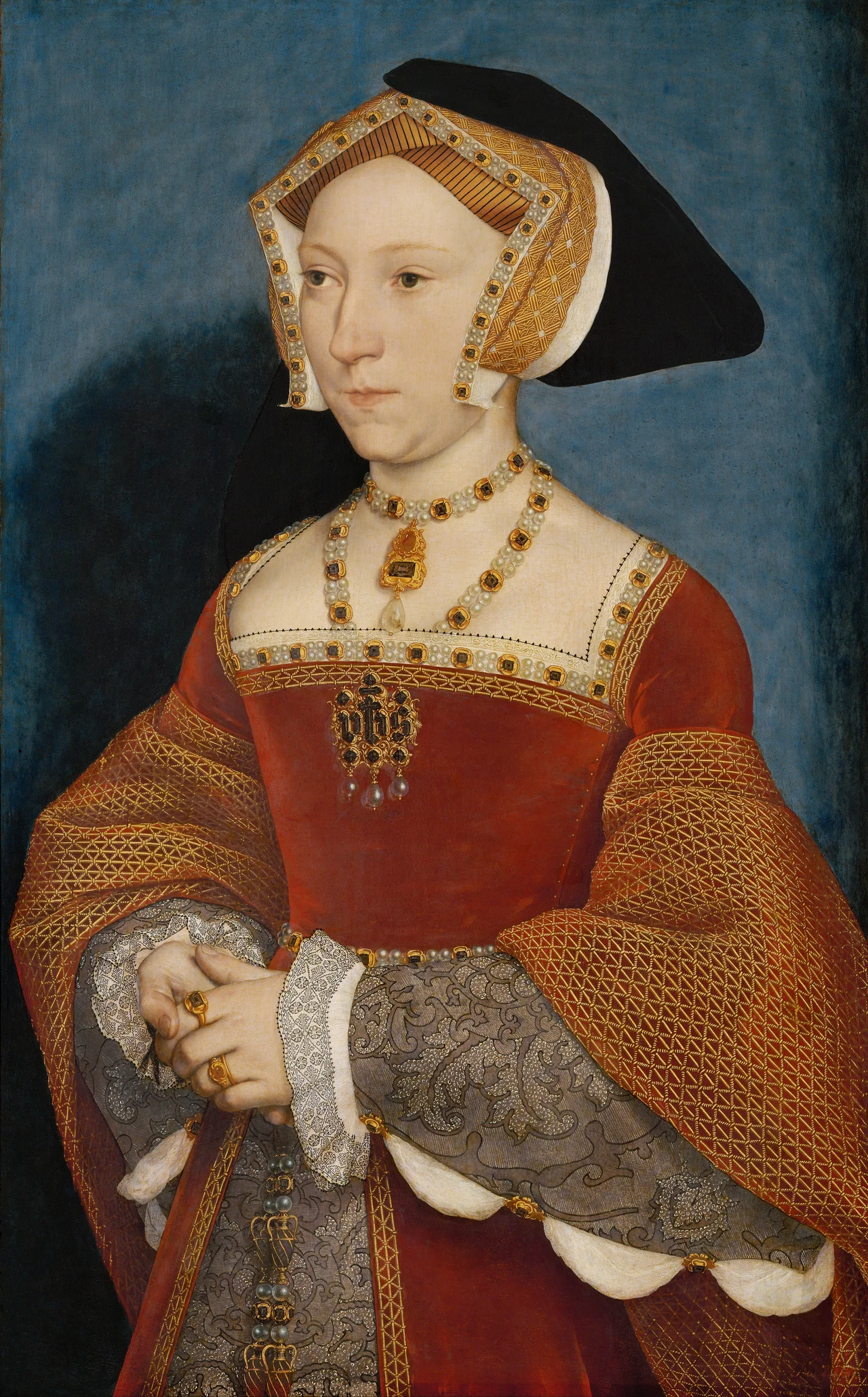

Thomas Cromwell
On 28 July 1540, on a scaffold on Tower Hill, the executioner brought down his axe on a man who, six years earlier, had been the most powerful commoner in England. Thomas Cromwell was about fifty-five. He had been arrested seven weeks before at a Council meeting at Westminster, stripped of the Garter ribbon his enemy the Duke of Norfolk personally snatched from his shoulder, and condemned by act of attainder without a trial. The accounts of his death conflict — some say the headsman struck cleanly, others say the work was botched and took multiple blows. Within months Henry VIII was lamenting in private that his ministers had "under pretext of some slight offences which he had committed" robbed him of "the most faithful servant he ever had." Cromwell had risen from a Putney blacksmith's family to architect of the English Reformation. He had been Henry's enabler in the break with Rome, in the dissolution of the monasteries, in the fall of Anne Boleyn. Until 2009, when Hilary Mantel published Wolf Hall, history had largely remembered him as the villain.
Putney
He was born around 1485 in Putney, then a Surrey village known for its ferry across the Thames. His father Walter was a yeoman who ran a fulling mill, a brewery, and a tavern, who served as Constable of Putney in 1495, and who repeatedly found himself in court for minor offences. His mother Katherine came from a gentry family in Staffordshire. Cromwell himself acknowledged to Archbishop Cranmer that he had been "a ruffian... in his young days." Around the turn of the sixteenth century, perhaps after a spell in prison, he crossed the Channel. A contemporary Italian writer named Matteo Bandello wrote a story — half-novella, half-rumour — placing Cromwell at the Battle of Garigliano in 1503 as a page in the French army. He certainly worked in the Frescobaldi banking household in Florence, traded cloth in the Low Countries, and twice returned to Italy to handle business at the Roman Rota. By the time he came home around 1515 he was fluent in French, Italian, Latin, and some Greek. He married Elizabeth Wyckes the same year. She bore him three children. By 1529 she and both daughters were dead, probably of sweating sickness.
Wolsey's Man
Cromwell entered the household of Cardinal Wolsey around 1524 and rose quickly to become one of the cardinal's most trusted advisers. He helped Wolsey dissolve nearly thirty smaller monasteries to fund Cardinal College at Oxford. When Wolsey fell in 1529, Cromwell did not abandon him. He told George Cavendish, Wolsey's gentleman usher, that he would "either make or marre" — that he would defend the cardinal's reputation in Parliament rather than slink away. The defence worked. The king noticed. By the closing weeks of 1530 Cromwell was on the Privy Council. By 1532 he was Master of the Jewels, Clerk of the Hanaper, and Chancellor of the Exchequer. By 1534 he was the king's principal secretary and chief minister, having engineered the legal apparatus that allowed Henry to set aside Catherine of Aragon and marry Anne Boleyn. By 1535 he was Vicar-General, with authority over every monastery, abbey, and parish church in England.
Anne Boleyn
Anne Boleyn had been an ally during the campaign for the king's annulment. By 1536 she was an obstacle. She and Cromwell had quarrelled over the proceeds of monastic dissolution — she wanted them used for education and charity, he wanted them for the Crown — and her almoner had denounced him from the pulpit on Passion Sunday. Whether Cromwell engineered her fall or merely executed an order from the king remains one of the most argued questions in Tudor scholarship. The Imperial ambassador Eustace Chapuys, writing to Charles V, said Cromwell had "set himself to devise and conspire the said affair." Cromwell himself, in a separate letter, told Chapuys he had acted with the king's authority. Anne was tried on 15 May 1536, charged with adultery and treason, and beheaded four days later on Tower Green. The five men accused with her, including her brother George, had been executed two days before. Whatever Cromwell's exact role, he had helped destroy the queen he had helped to crown.
The Dissolution
The systematic suppression of England's monasteries, between 1536 and 1540, was Cromwell's largest single project. The smaller houses went first, under the Act of 1536. The larger ones followed by "voluntary" surrender, often after careful pressure. The accumulated wealth, libraries, and lands of nearly a thousand religious houses passed to the Crown. Many of the books were burned or sold for scrap. Diarmaid MacCulloch has called it "easily the greatest single disaster in English literary history." Oxford's university library was left without a collection until Thomas Bodley refounded it in 1602. The northern uprising known as the Pilgrimage of Grace, which began in autumn 1536, was largely a response to the dissolutions. Cromwell crushed it. He also, in 1538, ordered every parish in England to keep registers of christenings, marriages and burials — a measure intended to identify Anabaptists which became, by accident, the foundation of English genealogy.
Anne of Cleves
After Jane Seymour died in 1537, days after giving birth to the future Edward VI, Cromwell looked for a Protestant alliance abroad. He found one in Anne, sister of William, Duke of Jülich-Cleves-Berg. Holbein painted her portrait. The king met her at Rochester on New Year's Day 1540, kissed her in disguise, and announced afterward that he could not enjoy her physically. "I like her not." The wedding went ahead on 6 January and was annulled six months later. By then Cromwell's enemies — the Duke of Norfolk, Stephen Gardiner of Winchester — had begun pushing Norfolk's niece Catherine Howard into the king's path. Cromwell was made Earl of Essex on 18 April 1540. He was arrested at the Council table on 10 June. He was executed on 28 July. He was fifty-five years old. He died, according to his own scaffold speech, "in the traditional faith" — although his enemies would have called that a lie.
Wolf Hall
For four hundred and seventy years, English schoolchildren learned that Thomas More was a saint and Thomas Cromwell was a monster. The Robert Bolt play A Man for All Seasons, filmed in 1966, set the template. Then in 2009 Hilary Mantel published Wolf Hall, the first volume of a trilogy that won her two Man Booker Prizes and reframed Cromwell as a man of grief and intelligence, capable of cruelty and tenderness in roughly equal measure. Bring Up the Bodies followed in 2012. The Mirror and the Light, the final volume, appeared in 2020. Mantel did not exonerate Cromwell. She drew him as a man whose mother had given him to an Italian banker because there was no future for him in Putney, whose wife and daughters had died in one summer, who served the king he served because the alternative was to serve no one. He still ordered executions. He still broke the monasteries. But Mantel made it possible to grieve for him, and her trilogy has shifted the historical conversation in a way that few novels ever do.
From the Air
Cromwell's London life centred on Austin Friars, where his grand house stood, and the Palace of Westminster where he served. The coordinates given (51.5086 N, 0.0769 W) place him just north of the Tower of London, where he was imprisoned and executed on Tower Hill. From the air the Tower complex is unmistakable, with the modern City of London's office towers rising directly behind it. Putney, his birthplace, lies about seven miles south-west along the Thames. Nearest airports: London City (EGLC) four miles east, Biggin Hill (EGKB) twelve miles south-east, Heathrow (EGLL) eighteen miles west. His head was set on a spike on London Bridge after the execution, a customary final humiliation for traitors. The body lies in an unmarked grave in the Chapel Royal of St Peter ad Vincula, within the Tower walls, alongside Anne Boleyn and others he had helped to send there.
Nearby Stories
- Stevenage 5.7 km away
- Malling Abbey 5.7 km away
- 1952 Farnborough Airshow Crash 7.7 km away
- Ingatestone Hall 8.2 km away
- Hellfire Caves 9.1 km away
- The Carrington Event: The Solar Storm That Could Happen Again 9.8 km away
- Bletchley Park 16 km away
- Castle Hedingham 23 km away