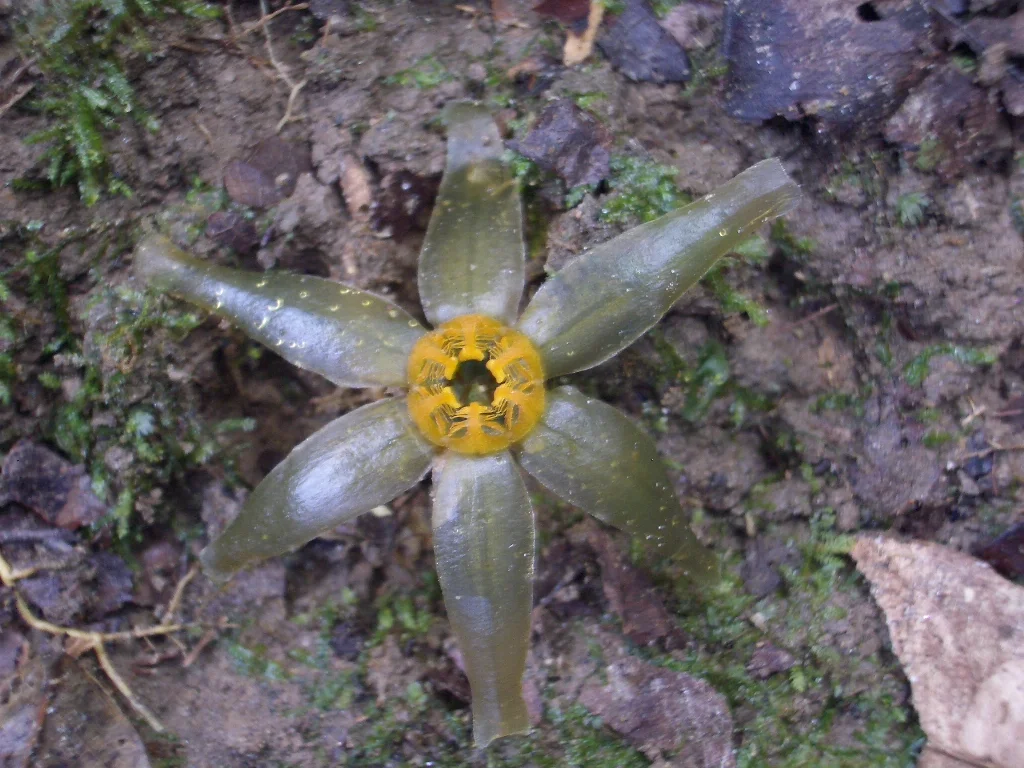

Tiputini Biodiversity Station
The claim sounds absurd until you check the numbers. A higher diversity of reptiles, amphibians, insects, birds, and bats has been documented at Tiputini Biodiversity Station than anywhere else in South America, and possibly the world. One station, a small cluster of buildings on the north bank of the Tiputini River, holds records against every other site scientists have studied. The lodge sits 280 kilometers east-southeast of Quito, in a stretch of Amazon forest so intact that the border between measurable and astonishing has blurred. Ecuadorians call this the most biodiverse land on Earth and then back it up in footnotes.
A Joint Venture in the Jungle
Tiputini was founded in 1995 as a partnership between Universidad San Francisco de Quito and Boston University. Both institutions still manage it jointly as a center for education, research, and conservation. It sits in Orellana Province on the north bank of the Tiputini River, which marks the boundary with Yasuni National Park. Though technically separated from the park by the river, TBS is part of the Yasuni Biosphere Reserve, and researchers treat it as functionally continuous with the protected area. The facility is a working field station, not a tourist destination. Students and scientists fly to Coca on a regular LATAM route, then travel several hours by river canoe through rainforest increasingly disconnected from the Ecuadorian road network.
The Manakin Experiment
Research at Tiputini has pushed beyond simple species counts. One project targeting manakin birds needed genetic samples from offspring, but sampling requires either a hatched chick or a developed egg with visible veins, and manakin nests suffer high predation. The researchers solved it by lifting eggs from nests, replacing them with plaster replicas that the mothers continued to incubate, then running the real eggs through a lab until they were developed enough to sample. Once the genetic material was taken, the real eggs went back in the nest. The mothers, having faithfully tended plaster, accepted the returns. It is the kind of field ingenuity that only a station embedded for decades in one patch of forest can develop, where researchers know the birds well enough to trust them with the switch.
Camera Traps and Caimans
Camera traps ring the station and the surrounding forest, quietly building population estimates for species that are rarely seen directly. Some captures reveal rare animals the naked eye would miss entirely. Another piece of the station's work involves reintroduction: when a black caiman farm near Tiputini closed down, most of the captive caimans were released into the surrounding rivers. White-bellied spider monkeys and red howler monkeys visit the mineral licks along the banks, where researchers have documented the behavior for over a decade. The scope is broad. The style is patient.
The Huaorani Complication
The Huaorani, also spelled Waorani, are the indigenous people whose territory covers this region. Since the 1950s, they have responded to oil company incursions with open resistance, sometimes violent. The oil industry kept pushing anyway. Roads built to service drilling operations cut new paths into Huaorani land, and today some Huaorani live in settlements along those roads while others remain deeper in the forest, including two groups, the Tagaeri and Taromenane, who live in voluntary isolation and reject all outside contact. Tiputini operates at the edge of that geography. The station's research informs conservation debates, and the history of oil extraction in this part of the Amazon shadows every academic publication that comes out of it.
In the Canon of Nature Documentaries
The BBC filmed at Tiputini for its series Andes to Amazon. National Geographic has profiled the station. National Public Radio has broadcast from it. The 2006 report by Kevin Zimmer referenced tropical biologist-author E.O. Wilson's observation that you can find more insect species in a single hectare of this forest than in the entire continent of North America. Tiputini is the site where that kind of claim gets verified. It is also, in a quieter way, where the Amazon's future is being argued. Every species logged makes the scientific case for leaving the oil in the ground harder to ignore. Every camera trap that catches a jaguar is evidence for what the Yasuni Biosphere Reserve protects.
From the Air
Located at 0.64 degrees S, 76.15 degrees W, on the north bank of the Tiputini River in Orellana Province, Ecuador. Nearest airport is Francisco de Orellana (SECO) in Coca, about 100km west; station is then reached by several hours of river canoe. Yasuni National Park lies directly south across the river. Best aerial viewing at 3,000-10,000 feet under clear morning light; terrain is flat rainforest broken by the Tiputini and Napo river systems. Cloud cover is frequent.
Nearby Stories
- Nuevo Rocafuerte 22 km away
- Yasuni-ITT Initiative 32 km away
- Ecuadorian Amazon 35 km away
- Cuyabeno Wildlife Reserve 41 km away
- Tena 131 km away
- Guandera Biological Station 158 km away
- Napo moist forests 221 km away
- San Vicente del Caguán 289 km away