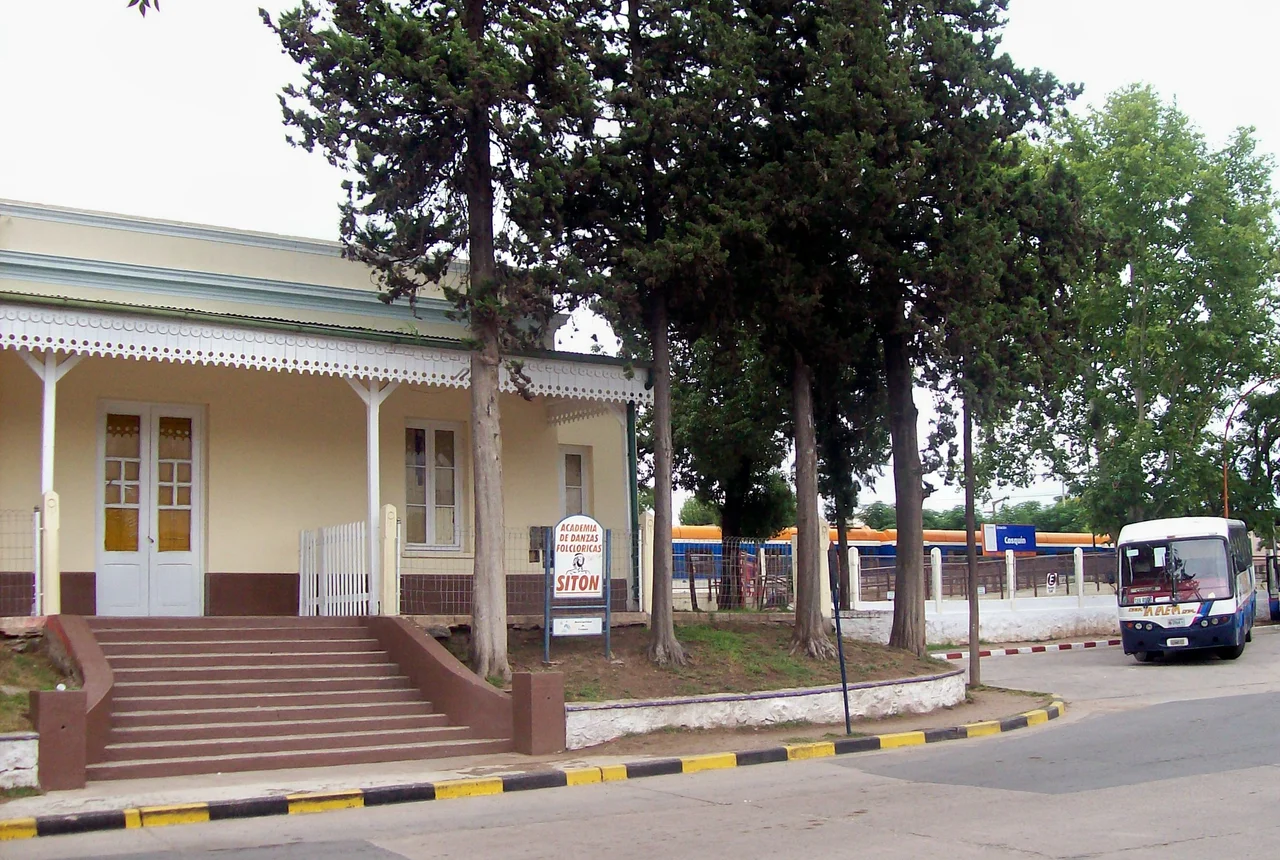

Tren de las Sierras
Count the times this railway has been declared dead. Closed in 1977. Abandoned again in 2001. Stripped of its concession in 2004 for rusting track and broken promises. By any reasonable measure, the Tren de las Sierras should be a memory by now, the kind of thing old men in Córdoba describe to grandchildren who have never ridden it. Instead the diesel cars still climb out of the city each morning, rattling north through the Punilla Valley toward the mountains. This is a line that refuses to stay buried.
British Iron in the Argentine Hills
The first train ran on July 2, 1889, hauling freight and passengers from Córdoba toward Cruz del Eje. It belonged to the Córdoba North Western Railway, one of the British-owned companies that laced Argentina with steel rails in the boom decades before the world wars. Ownership changed hands the way fortunes did in that era: the Córdoba Central Railway took the branch in 1901, the Argentine State Railway absorbed it in 1909, and in 1948 Juan Perón nationalized the entire network, folding the old British line into the sprawling General Belgrano Railway. The technical name survives today as the unglamorous "A-1" branch, a bureaucratic label for one of the most scenic rides in the province.
The Golden Decade
The 1960s were the line's golden age. Trains arrived crammed with holidaymakers from Córdoba, Rosario, and Buenos Aires, all bound for the resort towns strung along the Punilla Valley at fares cheap enough that ordinary families could afford the mountains. The Sierras Chicas rose green on either side, and the stations themselves became destinations. Then the economics turned. Argentina's railways bled money for decades, and in 1977 the service simply stopped. The handsome stone depots fell quiet. The Valle Hermoso station, once full of arriving tourists, would eventually be reborn as a cultural center, its platforms hosting art instead of passengers.
Death by Privatization
The 1990s brought a peculiarly Argentine experiment. Under President Carlos Menem's privatization drive, the line passed to Grupo Alcázar, a consortium whose previous ventures included running the Córdoba Zoo and a racetrack. Trading under the name Aero Ruta, they revived the route as a tourist service and gave it the name it still carries: Tren de las Sierras, train of the mountains. The romance lasted barely a few years before service abruptly halted in 2001. Three years on, the provincial government revoked the concession outright, citing neglected track and a service allowed to crumble. For the second time in a generation, the line lay dead.
The Stones and the Comeback
Resurrection came in 2007, when the state poured ten million dollars into reopening a short stretch between Rodríguez del Busto and La Calera. Diesel-electric cars, built in Portugal and rebuilt in workshops at Chascomús, returned to the rails. The route crept forward year by year, reaching Cosquín through the dramatic Quebrada of Bamba gorge. The recovery was not without its bruises. When Alta Córdoba was made the terminus in 2009, the operator soon retreated again because residents of poor neighborhoods near the tracks were throwing stones at passing trains, a quiet measure of the inequality the railway runs through. In 2013 the state operator Trenes Argentinos took over, and in November 2023 the line finally pushed all the way to Capilla del Monte, reuniting the city with the far valley for the first time in decades.
A Slow Ride Worth Taking
Today three morning trains leave Alta Córdoba bound for Cosquín, with departures returning through the afternoon. End to end, the journey runs two hours and twenty-four minutes, which is rather the point. This is not transport for the impatient. The reward is the unhurried unspooling of the Punilla Valley through the window, the same view that drew the crowds of the 1960s, now experienced at a pace that lets you actually see it. Few railways anywhere have been pronounced dead so often and kept arriving anyway.
From the Air
The line threads north from Córdoba city through the Punilla Valley at roughly 31.23°S, 64.47°W. From the air the route reveals itself as a thin line tracing the eastern foot of the Sierras Chicas, linking a chain of small valley towns between Córdoba and Capilla del Monte. A viewing altitude of 4,000 to 6,000 feet AGL keeps both the rail corridor and the surrounding ridgelines in frame; the green valley floor contrasts sharply with the brown sierra slopes in clear, dry weather. The nearest major field is Ingeniero Aeronáutico Ambrosio L.V. Taravella International Airport (SACO), about 9 km north-northwest of central Córdoba, which makes a natural starting point for tracing the line northward.
Nearby Stories
- Battle of San Cala 4.7 km away
- Capilla del Monte 9.7 km away
- Jesuit Block and Estancias of Córdoba 23 km away
- Mar Chiquita Lake 141 km away
- Battle of Quebracho Herrado 167 km away
- Sierra de las Quijadas National Park 226 km away
- Villa San Agustín 234 km away
- Rafaela 238 km away