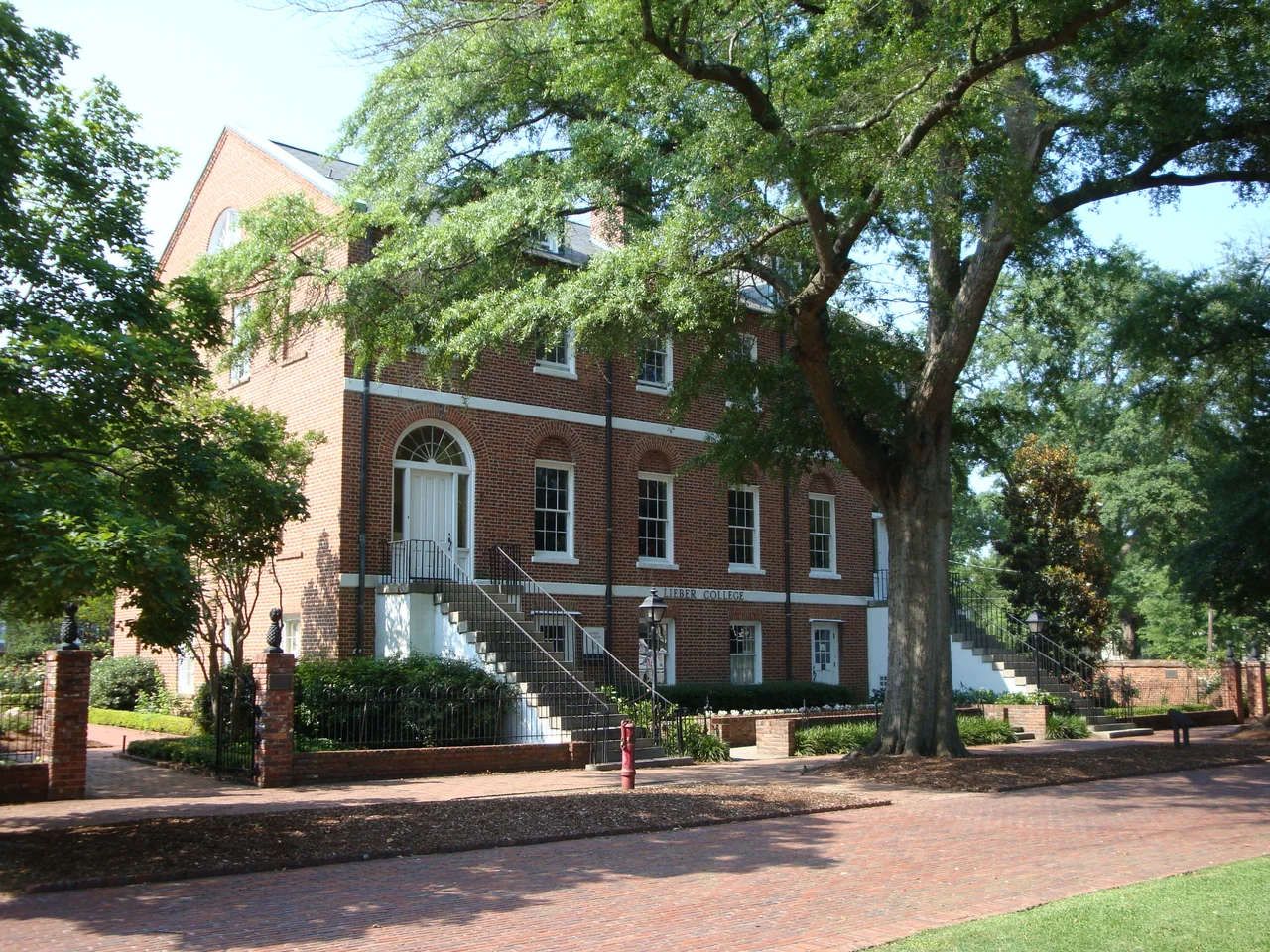

University of South Carolina
On October 7, 1873, Henry E. Hayne walked into the medical college and signed the register. He was the Secretary of State of South Carolina, and he was the first Black student to enroll at the university since the school's founding seventy-two years earlier. White students walked out. White faculty resigned in protest. The story made national news. Within two years, the majority of students at South Carolina College were Black. It was, briefly and improbably, the most progressive university in the American South. The window stayed open for four years. Then Reconstruction ended, the legislature became all-white again, and the door closed for nearly nine decades.
Founded 1801, Built by Enslaved Hands
South Carolina College was chartered on December 19, 1801, by an act of the General Assembly that Governor John Drayton pushed through as a way to bind the Lowcountry to the Backcountry through a shared elite education. Reverend Jonathan Maxcy, a Baptist minister who had served as president of Brown and Union College, became its first president in 1804. When classes opened on January 10, 1805, there were nine students. The building now called Rutledge College was the only one on campus. The remaining ten planned buildings were constructed over the following decades, arranged around an open quadrangle that took on the shape its name still bears: the Horseshoe. Many of those buildings, including the bricks they were made of, were built by enslaved people. They cooked the meals, cleaned the tenements, and maintained the campus. South Carolina College's antebellum prestige rested on their unpaid labor.
The College of Secession
By the 1840s and 1850s, South Carolina College was the leading institution of the South - a symbol, by design. Its faculty included Francis Lieber, who would later draft the laws of war for the Union army; Thomas Cooper, a chemist and political theorist; and the geologist Joseph LeConte. Its graduates dominated the politics of secession. In January 1862, seventy-two students attended classes. By March 20, conscription emptied the campus. Faculty issued a notice that anyone under eighteen would be admitted. Nine students arrived. The Civil War effectively closed the college.
The Radical University
In 1869, the Reconstruction-era legislature passed the University Act. A Black representative from Beaufort, W. J. Whipper, added an amendment forbidding racial discrimination in admissions. Two Black trustees - Benjamin A. Boseman and Francis Lewis Cardozo - were elected to the governing board. Tuition was abolished to encourage Black enrollment. The students who came in the next four years included Richard T. Greener, who became the university's first Black professor; T. McCants Stewart, later a civil rights pioneer; and William D. Crum, eventually appointed Collector of Customs at Charleston by President Theodore Roosevelt. Opponents called the place "the radical university" and waited for political conditions to change. In 1877, with the end of Reconstruction, they did. Greener had to leave. The legislature returned the school to white-only enrollment, and it stayed that way for 86 years.
September 1963: Three Students
In September 1963, three Black students enrolled at the University of South Carolina: Henrie Monteith, Robert Anderson, and James Solomon. USC was one of the last large public universities in the South to desegregate. The three feared violence. They were excluded from most aspects of campus social life, denied participation in extracurriculars, and largely left alone. The official integration went, in the university's own words, peacefully if not supportively. In 1965, Henrie Monteith became the first Black student to graduate from USC since Reconstruction - and the first Black woman to graduate from the university in its history.
The Horseshoe Now
The Horseshoe is on the National Register of Historic Places. The eleven original buildings survived a fire, an earthquake, and the Civil War; the South Caroliniana Library, designed by Robert Mills in 1840, was the first freestanding academic library building in the United States. The university has grown into a 359-acre research campus enrolling over 38,000 students on the Columbia campus, classified as R1 - highest research activity. It holds the world's largest Ernest Hemingway collection and the largest collection of Robert Burns materials outside Scotland. Its alumni include FBI agent Melvin Purvis, who captured John Dillinger in 1934; Darius Rucker of Hootie and the Blowfish; the four-time WNBA MVP A'ja Wilson; and Charles Duke, the moonwalker. The Horseshoe today is shaded by hardwoods that were planted on land worked by enslaved people - a fact the university has begun, slowly, to acknowledge in plaques and programs.
From the Air
Located at 33.9975 degrees N, 81.0253 degrees W in downtown Columbia, South Carolina, immediately east of the State House. The historic Horseshoe occupies an 11-building rectangle opening onto Sumter Street. From the air, the campus is recognizable by the green canopy of the Horseshoe surrounded by larger modern academic buildings. Williams-Brice Stadium sits about 1 nautical mile south, off-campus. Nearest airport: Columbia Metropolitan (KCAE), 6 nautical miles southwest. Jim Hamilton-L.B. Owens Field (KCUB) is 3 nautical miles south. McEntire JNGB (KMMT) is 12 nautical miles southeast. Best viewed from 2,000-3,000 feet AGL in clear weather; campus lights make it visible at night.
Nearby Stories
- Shaw Air Force Base 5.5 km away
- Fairfield County, South Carolina 16 km away
- Newberry Opera House 30 km away
- Graniteville Train Crash: The Night Invisible Death Came to a Mill Town 31 km away
- Orangeburg Massacre 33 km away
- Battle of Hammond's Store 33 km away
- Hartsville, South Carolina 41 km away
- Middleton Place 101 km away