
University of Zambia
Nelson Mandela had been out of prison for eleven days when he walked onto the University of Zambia campus in February 1990 and addressed the students. It was his first trip abroad since his release, and his first university speech as a free man. That he came to UNZA first was no accident. Zambia had hosted the African National Congress in exile, feeding and housing its leadership through the long decades of the South African struggle at a cost that strained a small country. Mandela was, in a sense, coming to thank the place that had made the unthinkable possible - and to address a generation of Zambian students who had grown up watching the liberation wars to their south from a country that kept the borders open.
A University Born in Argument
UNZA exists because an argument was lost and then won. Plans for a university serving Central Africa had circulated since before the Second World War. When Sir Alexander Carr-Saunders led a 1952 commission into higher education for Africans in the region, the majority report recommended a multiracial University College in Salisbury - the capital of Southern Rhodesia. A minority report by Alexander Kerr disagreed. Kerr argued that an institution built on racial equality would not survive in the political climate of the Rhodesias, and recommended instead a university for non-Europeans in Lusaka. His view lost in 1952 and won in 1963. That year the new Northern Rhodesia government appointed the Lockwood Commission, led by Sir John Lockwood, to assess the feasibility of a Zambian university. Lockwood's commission made a radical recommendation: the new institution should have no ties to established British universities. It should be a full-fledged university from the first day.
The First Chancellor
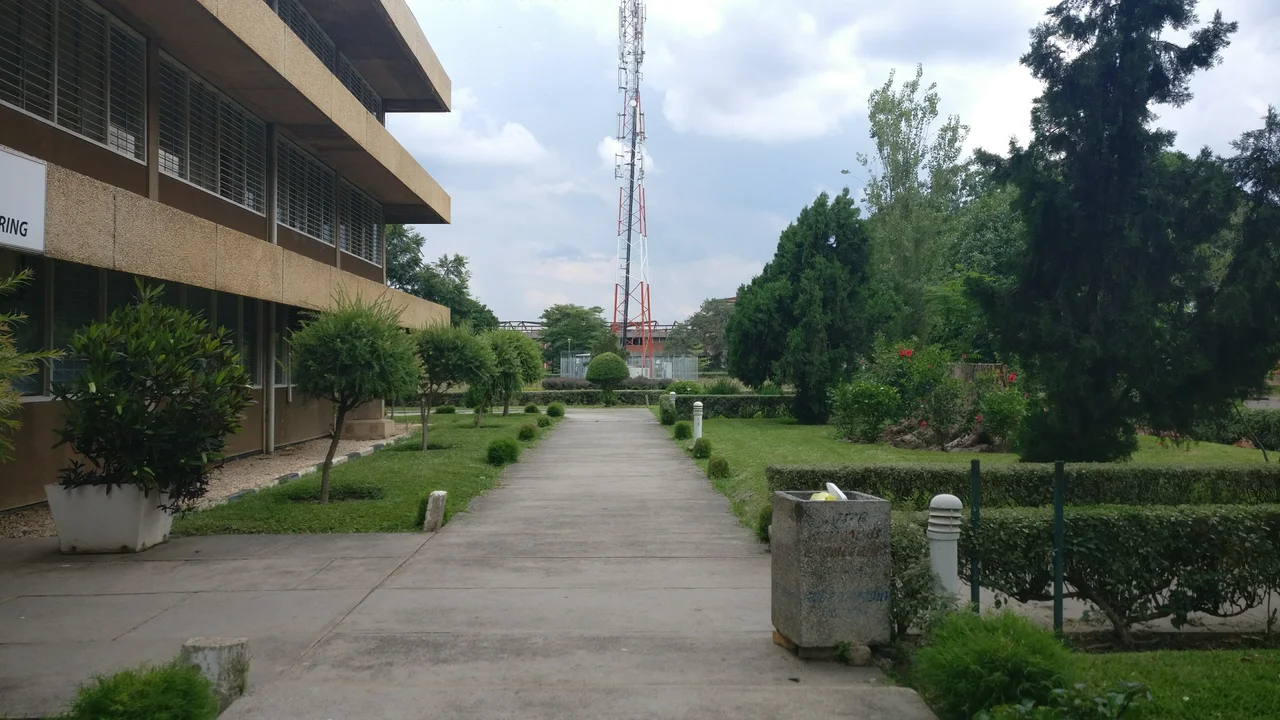
The University of Zambia Act was enacted in 1965. Douglas G. Anglin was appointed Vice Chancellor in July of that year. In October, President Kenneth David Kaunda - Zambia's independence leader, three months into his first year of national office - gave formal assent to Act No. 66 of 1965. The institution was inaugurated on 13 July 1966, a day after Kaunda himself was installed as its first Chancellor. Classes began almost immediately. The main campus took shape along the Great East Road about seven kilometers from the Lusaka central business district; a second campus at Ridgeway, co-located with the University Teaching Hospital, was dedicated to medical and pharmacological training. The language of instruction was English - a practical choice in a country with seventy-three ethnolinguistic groups and no single dominant African language.
The Liberation University
From its first decade, UNZA operated in a region at war. Zambia's borders touched Angola, Mozambique, Rhodesia, and South West Africa, all of which were fighting wars of independence or against apartheid during the 1960s, 1970s, and 1980s. Students at UNZA were reading their textbooks while exiled liberation leaders lived in their country, and some of those leaders crossed the campus at various moments. In February 1990, just weeks after his release from Victor Verster Prison, Nelson Mandela made UNZA the setting for his first university address as a free man. The School of Veterinary Medicine at UNZA would later be recognized by Japan's Foreign Minister's Commendation in 2020, for contributions to international technical cooperation - one of the ways a university of the global south earns recognition on its own terms, by doing work the world needs done.
A School for a Country
UNZA now offers more than 157 undergraduate and postgraduate programs across a full set of faculties - Agricultural Sciences, Engineering, Education, Humanities and Social Sciences, Law, Mines, Medicine, Natural Sciences, Veterinary Medicine, and a Graduate School of Business. Its research arms include the Institute of Economic and Social Research, the University of Zambia Library, and the Institute of Distance Education. The university is a member of the Association of African Universities, the Association of Commonwealth Universities, and the International Association of Universities - the kind of affiliations that situate a Zambian institution in conversation with its continental peers and with the wider world. The alumni roster now includes three presidents of Zambia - Levy Mwanawasa, Edgar Lungu, and Hakainde Hichilema - as well as Emmerson Mnangagwa, who became the third president of neighboring Zimbabwe, and Inonge Wina, Zambia's first female vice president. Lawyers, doctors, engineers, and teachers in every Zambian city trace their training back to the Great East Road campus.
From the Air
University of Zambia, Lusaka. Coordinates 15.39°S, 28.33°E. Main campus on Great East Road, ~7 km east of Lusaka CBD. Nearest airport: Kenneth Kaunda International (FLKK), ~20 km northeast. Recommended viewing altitude 3,000-6,000 ft. The Ridgeway Campus, for medical students, lies closer to the CBD adjacent to the University Teaching Hospital.
Nearby Stories
- Northern Rhodesia 13 km away
- Rhodesia (region) 15 km away
- Lusaka Province 19 km away
- Mazabuka 25 km away
- Chirundu Bridge 44 km away
- Zambezian flooded grasslands 80 km away
- Kafue Flats 81 km away
- Lukanga Swamp 101 km away