
Uruguay River Pulp Mill Dispute
For nearly three years, a single international bridge over the Uruguay River carried almost no traffic. It was blockaded by ordinary people from the Argentine town of Gualeguaychú, who pitched tents on the asphalt and turned away the cars, trucks, and summer tourists that normally crossed into Uruguay. On the far bank, in Fray Bentos, Uruguayans watched their economy and their patience drain away. The two countries share a river, a language, and a tangled common history, yet a pulp mill nearly tore them apart. One president would later admit he had readied his military and sought American backing in case it came to war.
A River Between Friends
The Uruguay River draws part of the border between Argentina and Uruguay, and a 1975 treaty, the Statute of the River Uruguay, binds both nations to inform each other of any project that might affect the shared water and to coordinate through a joint commission. Fray Bentos, on the Uruguayan side, was no stranger to industry; its old Liebig meat-extract works once called itself the kitchen to the world and now stands as a UNESCO World Heritage site. So when the Spanish firm ENCE won permission in October 2003 to build a pulp mill there, and the Finnish company Botnia announced plans for a second one nearby, Uruguay saw badly needed investment. Botnia's project would become the largest private investment in the country's history.
Gualeguaychú Says No
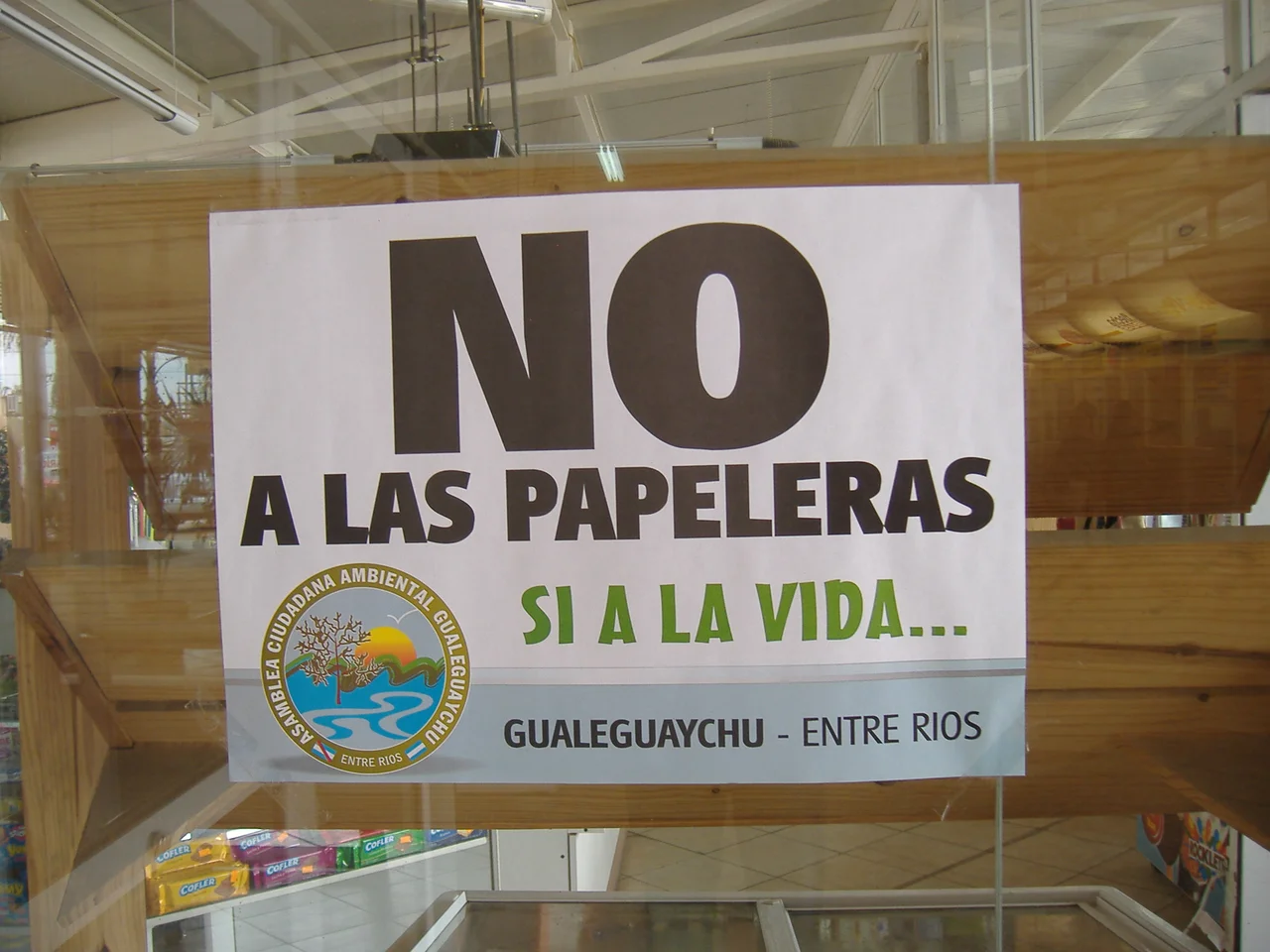
Thirty-five kilometers upriver, the Argentine town of Gualeguaychú saw something else: a threat to the river they fished, swam in, and built their tourist trade around. On April 30, 2005, between ten and twenty thousand residents and environmental activists blocked the Libertador General San Martín Bridge, and the Citizens' Environmental Assembly of Gualeguaychú was born as a force that would not back down. Their fear was pollution, the dioxins and effluent they believed a paper mill would pour into shared water. These were not professional protesters but townspeople, and their conviction was genuine. Whether the science supported their alarm became the central, bitterly contested question of the entire affair.
Two Nations, Two Truths
Uruguay's case was patient and technical. The mills would use Elemental Chlorine-Free bleaching, the standard the United States and European Union both recognize as best available technology, and independent World Bank studies repeatedly found the projects met environmental requirements. Uruguayan officials insisted they had informed Argentina as the treaty required and that no objection had been raised in time. Before the mill, Fray Bentos had dumped its sewage into the river untreated; modern wastewater systems, they argued, would actually help. Argentina countered that consultation had been inadequate, that the treaty was breached, and that the World Bank's own ombudsman had found its review process incomplete. Both governments believed they were defending something real, a clean river on one side, a fair shake and sovereignty over its own development on the other.
The Blockades and the Carnival Queen
The dispute escalated into pure spectacle and genuine pain. Blockades shuttered the bridges through holiday seasons, costing Uruguay hundreds of millions of dollars and stranding tourists, truckers, and shoppers. Activists built a concrete wall across one route. In May 2006, in one of the conflict's most theatrical moments, 26-year-old Evangelina Carrozzo, a carnival queen from Gualeguaychú, slipped into a European summit in Vienna with a press pass, shed her overcoat before fifty-eight heads of state, and unfurled a banner reading "No pulp mill pollution." ENCE eventually abandoned its Fray Bentos plans, but Botnia pressed on, and on November 15, 2007, its mill produced its first load of eucalyptus pulp. The Finnish company UPM acquired the Uruguayan operations and became majority owner in December 2009.
The Court, and an Uneasy Peace
Argentina took the case to the International Court of Justice in The Hague. On April 20, 2010, the court delivered a split verdict that let neither side fully win: Uruguay had indeed breached its procedural duty to inform Argentina, but the mill had not polluted the river, so ordering it closed or torn down was unjustified. The thaw came from new leadership. Uruguay's president José Mujica met Argentina's Cristina Fernández de Kirchner four times in a matter of weeks, and on July 28, 2010, the two governments agreed to jointly monitor the river through the binational commission CARU, formally ending the conflict. The reconciliation was real, but the scars lingered. The episode remains a sober lesson in how a shared river, and the question of who gets to decide its future, can strain even the closest of neighbors.
From the Air
The dispute centers on the Uruguay River between Gualeguaychú, Argentina, and Fray Bentos, Uruguay, near 33.1°S, 58.3°W. From the air the river runs broad and silver, with the Botnia/UPM mill visible on the Uruguayan bank just outside Fray Bentos and the Libertador General San Martín Bridge spanning the water nearby; further north the General Artigas Bridge links Colón with Paysandú. Best appreciated at medium altitude (3,000-6,000 ft AGL) in clear conditions, when the river's full width and the bridge crossings are easy to trace. The nearest airports are around Gualeguaychú (ICAO SAAG) on the Argentine side and Fray Bentos / Nueva Hesperides region on the Uruguayan side. Expect humid, hazy summers with afternoon storms; calmer, clearer air in the cooler months.
Nearby Stories
- Cry of Asencio 27 km away
- Esteros de Farrapos 42 km away
- Atucha Nuclear Power Plant 65 km away
- Battle of Vuelta de Obligado 86 km away
- Martín García Island 91 km away
- Abadía del Niño Dios 108 km away
- Anchorena National Park 128 km away
- Salto, Uruguay 165 km away