.jpg)
Viña del Mar International Song Festival
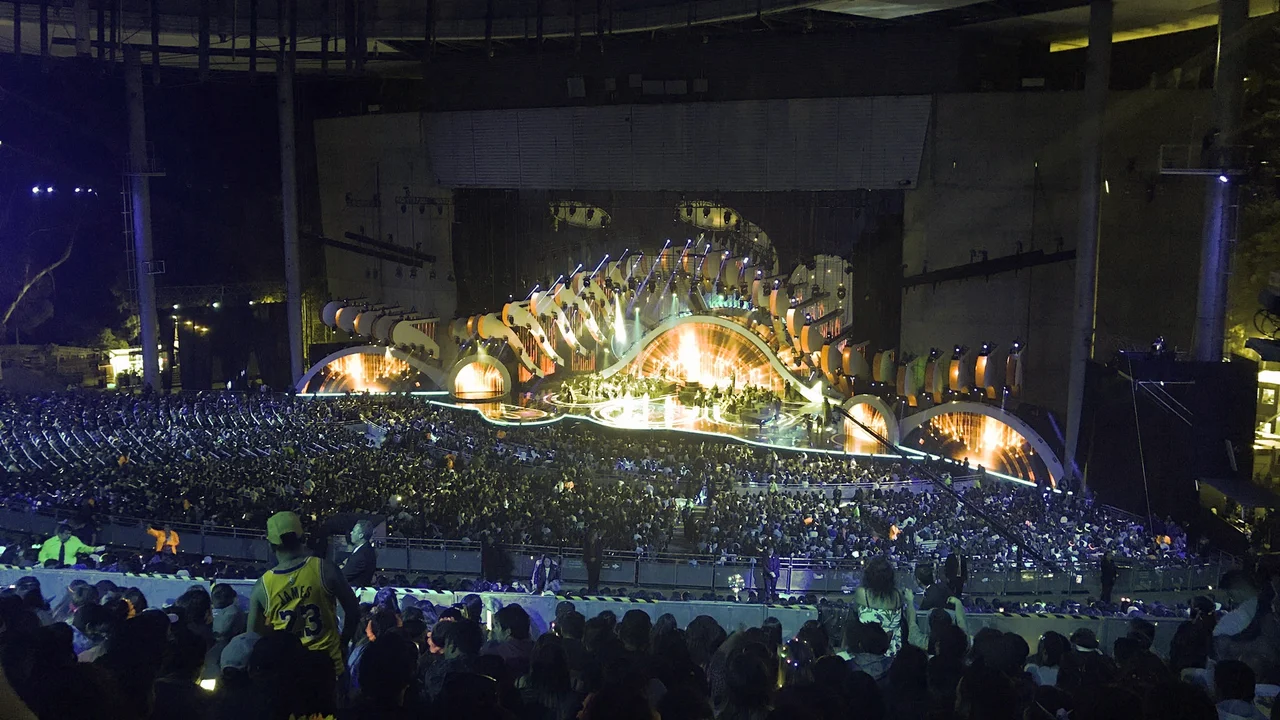
The crowd has a name. The Chilean press calls it El Monstruo, the Monster, and every artist who walks onto the stage at the Quinta Vergara learns within minutes whether the Monster has decided to love them or eat them alive. Adam Levine of Maroon 5 found out the hard way in 2020, apologizing afterward for a performance the crowd rejected. Tame the Monster, though, and the rewards are enormous: instant stardom across the Spanish-speaking world. For more than six decades, this amphitheater in a coastal Chilean garden city has been the place where Latin music careers are made and unmade, all of it decided by the roar or the booing of fifteen thousand people on a cool February night.
Six Songs and a Hillside
It began in 1960 as something small and earnest. The mayor of Viña del Mar and his tourism director organized a contest: write an original song about the city, and the best one wins a cash prize and a golden lyre. Six compositions competed. The winner, fittingly, was called simply 'Viña.' There was barely a stage, just a platform thrown up beside the Vergara family's palace, and the audience sat on wooden chairs, on the grass, or on the dirt. Some clambered into the trees on the surrounding hills to watch for free. The whole thing had a frankly provincial air. Yet the idea took hold. A proper amphitheater rose in stages over the following years, its design borrowed from the Hollywood Bowl, with a roof added in 1967 to throw the sound outward and shield performers from the cold Viñamarina nights.
The Monster's Verdict
What makes Viña unlike a tidy talent show is that the audience refuses to stay quiet. They cheer, they jeer, and they demand. The festival hands out awards in ascending order, the Silver Seagull and the Golden Seagull, but the Monster can insist that an artist receive all of them, one after another, as a performance builds. A musician who earns the full set has 'tamed the Monster,' and Chilean and Latin American media crown them a star on the spot. The most prestigious honor, the Seagull, traces back to awards first given as a Golden Lyre and Golden Harp in 1961. A Platinum Seagull, added in 2012 for performers of lasting influence, has been awarded to only three artists. The whole ritual makes the crowd, not any panel of experts, the real authority in the room.
When Politics Took the Stage
A festival this prominent could never stay above Chile's turbulent history, and it never did. In 1971, representatives of the Soviet Union drew applause for backing President Salvador Allende's Popular Unity government. The following year the South African singer Miriam Makeba was booed by the conservative crowd for praising Allende and shouting 'long live the Chilean revolution.' After the 1973 coup, the dictatorship of Augusto Pinochet took control of the festival, promoting only sympathetic performers. Pinochet himself was a regular guest in those early years. From 1974 to 1980 the regime cancelled the folk competition outright. By 1980, as the broadcast reached an international audience, the government had learned to use Viña as a showcase, projecting a flattering image of Chile to the world watching from abroad.
A Quarter Billion Watching
Today the six nights at the Quinta Vergara reach an estimated audience of around 250 million people across the Americas, Europe, North Africa, and Australia, with streaming carrying it everywhere else. It is the oldest and largest music festival in Latin America and among the longest-running anywhere, broken only by cancellations in 2021 and 2022 for the pandemic, and a 2025 postponement after a near-nationwide blackout. The festival has had its quirks, too. For decades it crowned a Queen, with personalities campaigning through outrageous stunts and the winner obliged, after 2001, to dive into the pool at the Hotel O'Higgins before the cameras. The tradition was finally retired in 2023. What endures is the Monster itself, fifteen thousand voices in the dark, ready to decide a career before the last note fades.
From the Air
The Quinta Vergara amphitheater lies at 33.03°S, 71.55°W, set in a large green park in central Viña del Mar on Chile's Pacific coast, just north of Valparaíso. From the air the venue is a pocket of dense foliage amid the dense coastal city; the broader landmark is the conurbation of Viña del Mar and Valparaíso wrapping the curve of Valparaíso Bay. A viewing altitude of 2,500 to 4,000 feet captures the city, its beaches, and the green sweep of the Quinta. Nearest airfields are the regional strip at Viña del Mar / Concón (SCVM) just to the north and Santiago's Arturo Merino Benítez International (SCEL) inland to the east. February visibility along this coast is generally good, though Humboldt Current fog can settle over the bay in the mornings.
Nearby Stories
- Battle of Papudo 24 km away
- Casa de Isla Negra 28 km away
- Battle of Chacabuco 31 km away
- Battle of Maipú 38 km away
- Aconcagua 94 km away
- Constitución, Chile 237 km away
- Santa Olga 278 km away
- 1687 Peru Earthquake 1982 km away