
Waterford Crystal
Every 31 December in Times Square, a geodesic orb covered in Waterford Crystal drops one foot per second as a million people in the cold count down to midnight. The crystals were cut in Ireland. The brand they bear was almost destroyed in 2009 by a financial collapse no one in Waterford could control, and the workers who made the glass staged a sit-in in their factory that ended up on the BBC. Three hundred miles from Times Square, in a small Irish city on the River Suir, there is still a furnace that melts 750 tonnes of crystal a year.
The Penrose Brothers, 1783
Waterford Crystal began in 1783 when George Penrose and his nephew William Penrose started a business they called the Waterford Glassworks. Their flint glass was extraordinarily fine, and within a few decades the Waterford name had become a marker of luxury in the dining rooms of England and Ireland. Then in June 1851, with the loss of somewhere between 53 and 100 jobs, the firm closed. For nearly a century afterwards, Waterford had a famous glass tradition and no glass factory. There were repeated attempts to bring glassmaking back -- a Belgian project in 1933, a German proposal in 1937, and finally a Czech glass manufacturer named Charles Bacik who agreed in 1938 but could not move because of his young family and the approaching war. The first successful blow of glass at the revived works happened on 11 September 1947.
The Empire Years
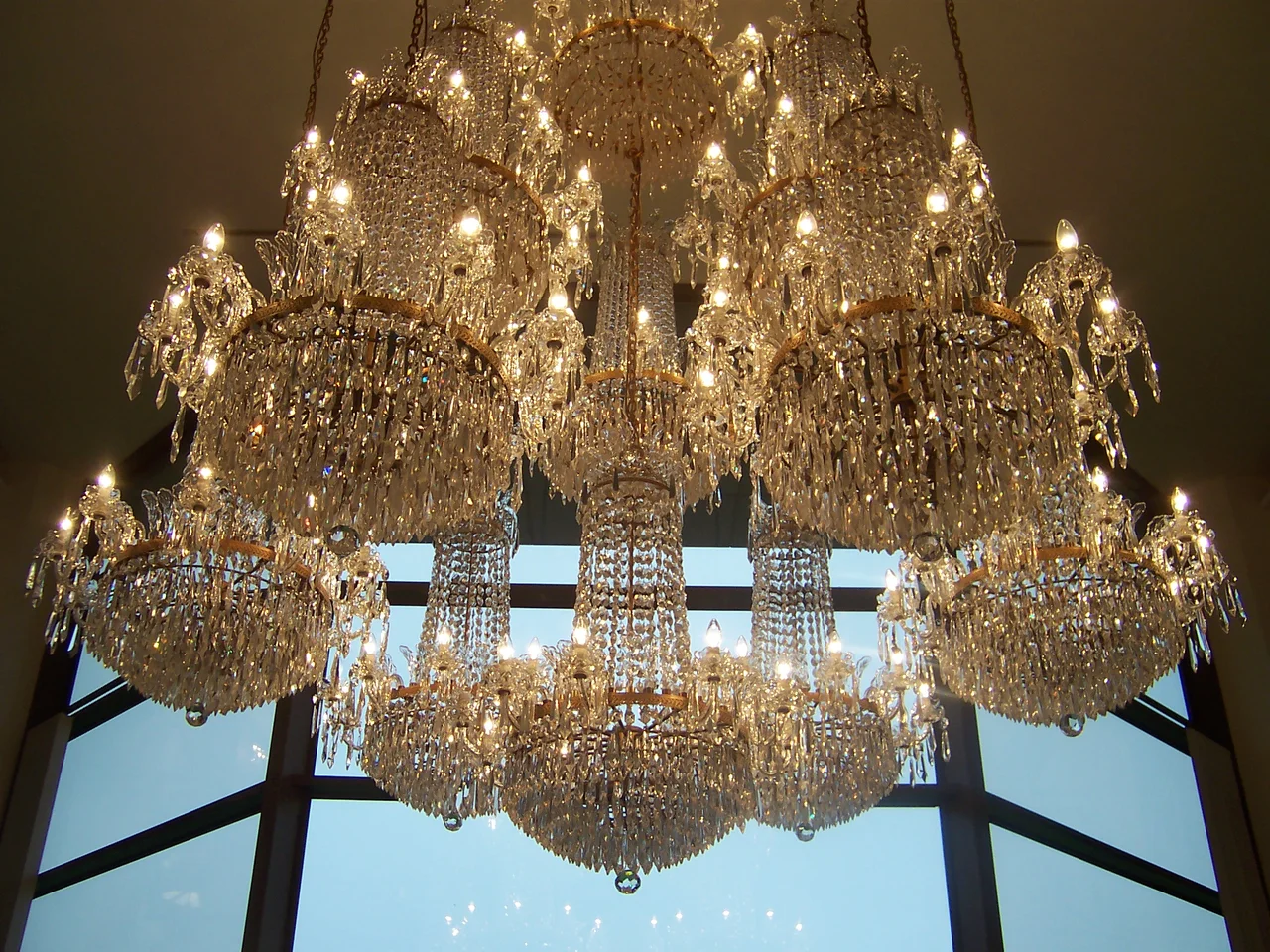
By the 1950s the new operation had been taken over by the Irish Glass Bottle company, controlled by Joseph McGrath and the Irish Hospitals Sweepstake's investors. At peak operations Waterford employed 3,000 staff in a city of 46,000 -- one job in every fifteen, in other words. In 1986 Waterford Crystal acquired Wedgwood, the British bone china maker, to create Waterford Wedgwood plc. The chandeliers Waterford had installed in Westminster Abbey in 1966 for the abbey's 900th anniversary still hang there, paid for by the Guinness family after a minor canon named Christopher Hildyard convinced them. More chandeliers went to Windsor Castle and the Kennedy Center in Washington. And then there was the Times Square ball -- 12 feet in diameter, lit by 32,256 LEDs, faced with 2,688 Waterford crystal triangles -- which became maybe the most-photographed piece of Irish glass in the world.
The Sit-In
The Great Recession hit Waterford Wedgwood hard. On 5 January 2009 the group went into receivership. On 30 January, the announcement came that the Kilbarry plant on the edge of Waterford was to shut down immediately, despite promises to discuss any closure with the unions first. Many of the workers refused to leave. Their unofficial sit-in made BBC News, and the campaign drew sympathy from across Ireland and beyond. There were protests in the city on 4 February. On 27 February, the receiver David Carson of Deloitte confirmed that the US equity firm KPS Capital Partners would acquire certain overseas assets, but not the Kilbarry factory itself. The sit-in ended in March 2009 after the workers agreed to split a payment of 10 million euros. The fight is chronicled in a PBS documentary. The Kilbarry visitor centre closed its doors on 22 January 2010.
Apprentice Bowl
A new visitor centre and small manufacturing facility opened on The Mall in central Waterford in June 2010, much closer to where George and William Penrose had begun in 1783. Today the Mall location melts more than 750 tonnes of crystal a year and houses the world's largest collection of Waterford Crystal, though most production now happens in Slovenia, the Czech Republic, Hungary, and Germany. Since 2015 the brand has been owned by Fiskars Corporation, the Finnish company best known for orange-handled scissors. The most demanding test for any Waterford apprentice cutter is still the Apprentice Bowl, requiring 600 precision cuts done entirely by hand. Cutters were granted three attempts in their fifth and final year. Pass, and the bowl received the Waterford Crystal watermark.
From the Air
Located at 52.26 degrees N, 7.11 degrees W on The Mall in Waterford city, Ireland. The visitor centre and manufacturing facility sit in the central commercial district, visible from altitude as part of Waterford's compact urban core along the south bank of the River Suir. The former Kilbarry factory site lies on the western edge of the city. Nearest airports: Waterford (EIWF) approximately 9 km south; Cork (EICK) approximately 110 km west. Best viewed below 2,500 ft AGL.
Nearby Stories
- Siege of Kilkenny 4 km away
- 2008 Irish Pork Crisis 9.4 km away
- Liam Lynch (Irish republican) 9.6 km away
- Raymond FitzGerald 11 km away
- Johnstown Castle 12 km away
- Holy Cross Abbey 13 km away
- SS Folia (1907) 29 km away
- Ramsey Island 94 km away