
Wellcome Trust
In 1995, the Wellcome Trust sold its last shares in a pharmaceutical company and walked away from drug manufacturing forever. The company it sold to was Glaxo plc, which used the acquisition to begin a consolidation that would eventually produce GlaxoSmithKline. The Trust pocketed billions and reinvested them not in pills but in science — funding research, building institutions, and eventually accumulating an endowment that by 2025 stood at £37.6 billion. Henry Wellcome, the Wisconsin-born entrepreneur who founded Burroughs Wellcome in 1880, had left behind something unexpected: one of the most consequential health research charities in human history.
The Man Behind the Money
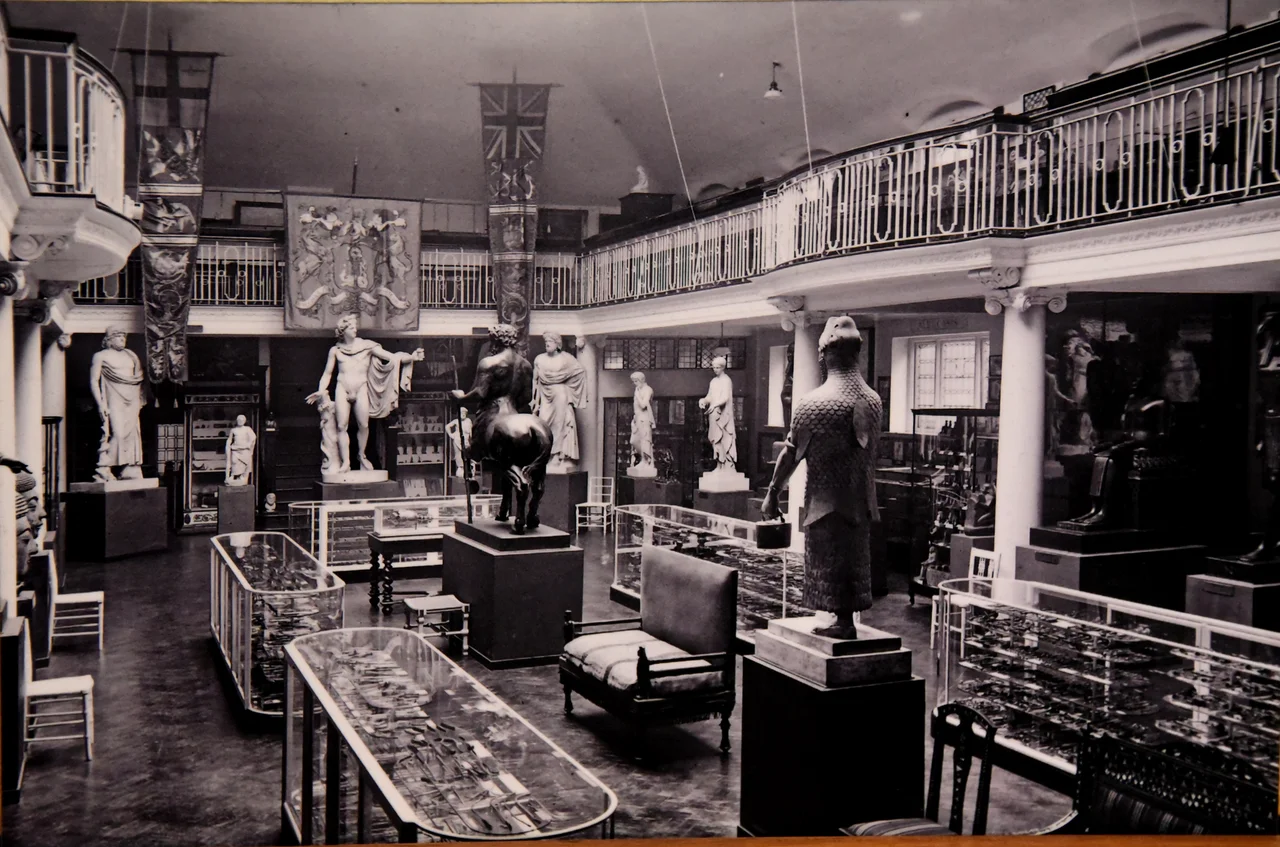
Henry Wellcome was an unlikely figure to endow a global scientific empire. He grew up in Minnesota and Wisconsin, the son of a frontier preacher, and made his name by co-founding a pharmaceutical company that pioneered compressed medicine tablets — the forerunner of modern pills. He accumulated wealth in London while simultaneously pursuing one of the great private collecting projects of the twentieth century: an obsessive, globe-spanning acquisition of objects related to the history of medicine. When Wellcome died in 1936, he bequeathed his estate and his collections to a body of trustees, with instructions to use the income to support biomedical research. The Wellcome Trust was born from that single act of will. Within decades, its growing investment portfolio would dwarf his original fortune.
What £37 Billion Funds
The Trust's reach is extraordinary in scope. Its funded programmes include the Wellcome Trust Sanger Institute, a world-leading genomics and genetics research centre in Hinxton, Cambridgeshire; the UK Biobank, a long-term health database of half a million British participants; the Cancer Genome Project; the Diamond Light Source synchrotron in Oxfordshire; and a network of research programmes across Africa and Southeast Asia. In response to the West African Ebola epidemic, the Trust launched a fast-tracked research programme to identify clinical interventions. When COVID-19 emerged, it collaborated with the Bill and Melinda Gates Foundation and Mastercard to launch the COVID-19 Therapeutics Accelerator with an initial $125 million in funding. In 2012, the Financial Times described the Trust as the UK's largest non-governmental funder of scientific research.
A Public Face on Euston Road
The Trust operates from two buildings on Euston Road in London. The original Wellcome Building at 183 Euston Road, built in 1932 in Portland stone, houses the Wellcome Collection — a free public museum that explores the connections between medicine, history, and art. Alongside it stands the Gibbs Building at 215 Euston Road, a glass and steel structure by Hopkins Architects that opened in 2004 as the administrative headquarters. In June 2007, after a major refurbishment, the Wellcome Building reopened with gallery spaces, conference facilities, a café, and the Wellcome Library. Admission to the Collection and its exhibitions has always been free. The Trust also runs an annual photography prize and sponsors the Wellcome Book Prize, both aimed at engaging public interest in medicine and health.
Scrutiny and Scale
An organisation this large does not escape criticism. Reports have noted that the Trust holds investments in pharmaceutical companies directly involved in the health challenges it claims to combat — a structural tension inherent in charitable foundations that grow through commercial investment. The Trust has also been scrutinised for developing large-scale housing estates on green land in southern England as part of its investment portfolio, with campaign groups arguing this works against the mental and community health values the charity promotes. These are tensions the Trust publicly acknowledges, and in 2019 it launched an initiative to improve research culture within the scientific community — recognising that the systems it funds can themselves create stress and insecurity. For an institution built on the fortune of a Victorian pharmaceutical entrepreneur, the questions of how wealth and health intersect are never entirely settled.
From the Air
The Wellcome Trust headquarters sit at 51.5257°N, 0.1350°W on Euston Road in central London. The twin buildings — the older Portland stone Wellcome Building and the modern glass Gibbs Building — are visible from low altitude along the northern side of Euston Road between Euston and King's Cross stations. London City Airport (EGLC) is approximately 14 km to the east; Heathrow (EGLL) is 25 km west. The area around Euston and King's Cross is a recognisable cluster of large rail terminal buildings visible from altitude.
Nearby Stories
- Stevenage 5.7 km away
- Malling Abbey 5.7 km away
- 1952 Farnborough Airshow Crash 7.7 km away
- Ingatestone Hall 8.2 km away
- Hellfire Caves 9.1 km away
- The Carrington Event: The Solar Storm That Could Happen Again 9.8 km away
- Bletchley Park 16 km away
- Castle Hedingham 23 km away