
The Last Five-Cent Fare
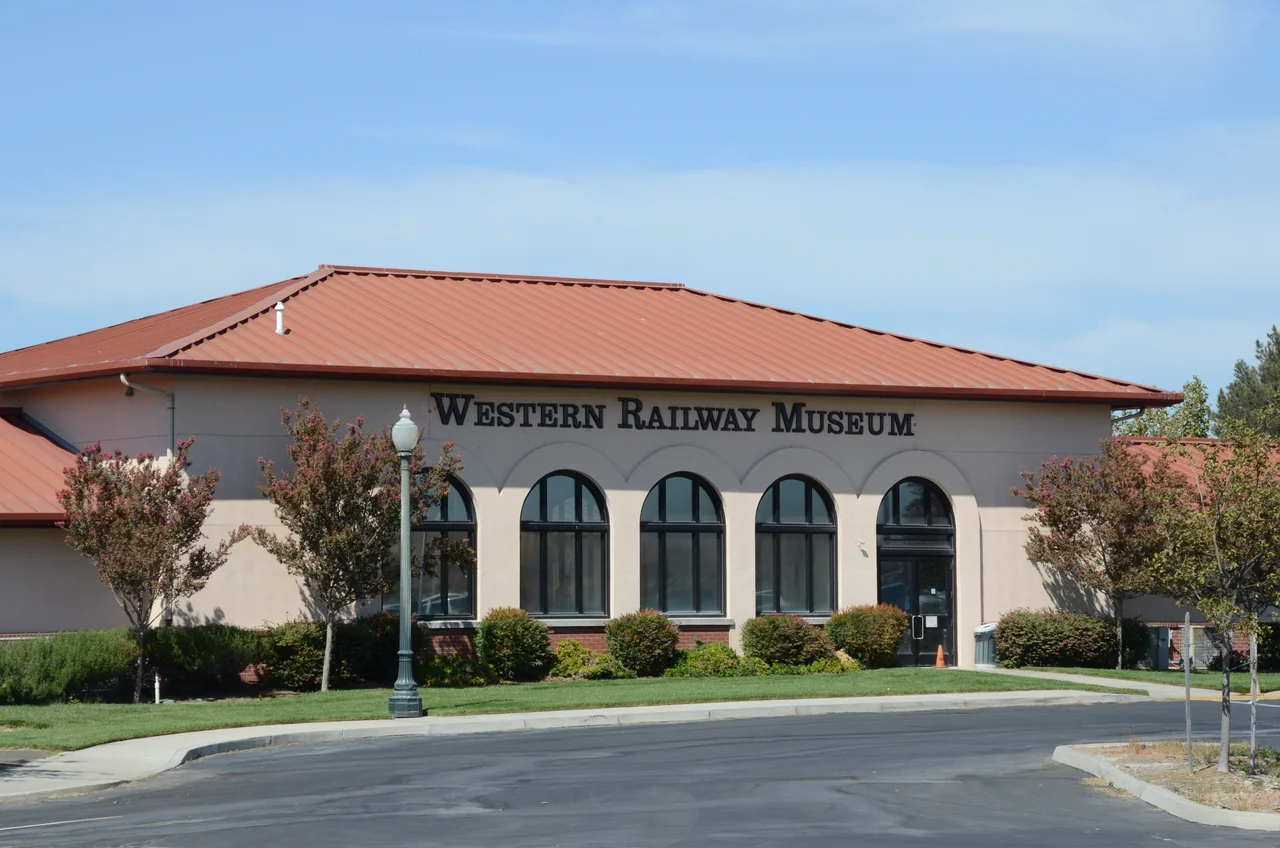
Sacramento Northern car number 62 is a Birney streetcar built in 1920. For twenty-seven years it ran local service in Chico, California, rattling through a small city at the top of the Sacramento Valley. When it retired in 1947, it held a distinction no other transit vehicle in California could claim: the last five-cent fare in the state. A nickel to ride from one end of town to the other, the same price it had charged since Warren Harding was president. The car did not go to a scrapyard. It went to a group of San Francisco Bay Area rail fans who had decided, against all reasonable expectation, that they were going to save the electric railroads of the American West -- not as photographs or memories, but as actual rolling stock, on actual rails, carrying actual passengers. They are still at it. The Western Railway Museum in Solano County now holds over 100 pieces of railroad equipment and operates excursion trains on a restored section of the Sacramento Northern Railway's original mainline.
The Collectors
The Bay Area Electric Railroad Association began in 1946 as a social club for people who loved electric traction. Not steam -- electric. While other rail enthusiast groups organized excursions on main line railroads, BAERA's members were drawn to the streetcar lines and interurbans that threaded through Bay Area cities, the vehicles that most people ignored until they were gone. Their first acquisition came from an excursion on the Key System, the network of streetcars and trains that once connected Oakland and Berkeley to San Francisco via the Bay Bridge. BAERA purchased Key System car 271, a wooden streetcar that had originally run in Lehigh Valley, Pennsylvania. More cars followed. Members donated them, or the association bought them from transit agencies that were only too happy to have someone haul away obsolete equipment. Each car needed storage, and storage needed land, and moving heavy rail vehicles from place to place cost time and money that a volunteer organization never had enough of.
Rio Vista Junction
By 1960, the constant shuffling of equipment had become untenable. BAERA needed a permanent home, and they found one at Rio Vista Junction, a former station stop along the Sacramento Northern Railway near Suisun, California. The location was inspired: the Sacramento Northern's right-of-way was still intact, rails and ties in place, running from Montezuma near Collinsville north to Dozier. The electrification had been stripped in 1953, but the roadbed remained. BAERA acquired the railroad line along with the property, becoming a 501(c)(3) nonprofit in the 1960s and establishing the California Railway Museum as their flagship project. In 1985, they renamed it the Western Railway Museum to avoid confusion with the state-run California State Railroad Museum in Sacramento. The distinction matters: Sacramento's museum is a polished, government-funded institution. The Western Railway Museum runs on volunteers, donations, and the stubbornness of people who believe that a streetcar from 1920 is worth saving.
Riding the Mainline
What makes this museum unusual is that it is also a railroad. Visitors do not simply look at old trains -- they ride them. BAERA has been reinstalling the overhead electrification southward from Rio Vista Junction, currently reaching Bird's Landing Road, about six miles down the line. Heritage excursions run on scheduled days, with restored interurban cars carrying passengers through the same Solano County farmland that Sacramento Northern passengers saw in the 1920s and 1930s. The experience is not nostalgic in the sentimental sense. The cars sway and clatter on their original trucks, the trolley pole hisses against the overhead wire, and the landscape outside the window is flat, open, and almost entirely unchanged from the era when these railways were the connective tissue of rural California. Restoration work continues on the line toward Molena, where ties are being replaced and new catenary wire strung.
A Hundred Pieces of the Electric West
The collection spans the full range of West Coast electric railroading. Petaluma and Santa Rosa car 63, a combine that once served the wine country north of San Francisco, is maintained in running condition. Peninsular Railway car 52 from San Jose operates regularly. Salt Lake and Utah car 751 represents the interurban lines of the Mountain West. Sacramento Northern 1005, originally Oakland, Antioch and Eastern 1005, has been the focus of a decade-long restoration after suffering a badly bent frame during a freight train move in 1962 -- it has been returned to its 1934 configuration. In 2024, the museum acquired two decommissioned Bay Area Rapid Transit cars, an A-Car and a B-Car from the original legacy fleet, for display. They cannot run on the museum's tracks -- BART uses broad gauge and third-rail power incompatible with the museum's trolley wires -- but they represent the next chapter of Bay Area rail history, already becoming artifacts.
The Archive Below the Catenary
Beyond the rolling stock, BAERA maintains a substantial archive of materials relating to streetcar and interurban lines across California and adjacent states, housed in a climate-controlled space in one of the museum's newer buildings. The archive holds photographs, documents, maps, and technical drawings -- the paper trail of an entire mode of transportation that American cities largely abandoned in the mid-twentieth century. The Western Railway Museum is a monument to a particular kind of stubbornness: the conviction that the thing itself matters more than a description of the thing. A photograph of Sacramento Northern 62 cannot replicate what it feels like to stand in the car, hear the motor whine, and watch the Solano County landscape slide past at twenty miles an hour for the price of an admission ticket -- though the fare is no longer a nickel.
From the Air
Located at 38.20N, 121.87W along Highway 12 between Rio Vista and Suisun in Solano County, California. The museum and its rail line are visible from low altitude as a cluster of buildings and tracks running north-south through flat agricultural land. Look for the collection of colorful vintage railcars near the junction. Nearby airports include Rio Vista Airport (O88) approximately 5nm south, Nut Tree Airport (KVCB) 10nm northwest, and Travis Air Force Base (KSUU) 12nm northwest (restricted). The Sacramento River delta is visible to the south and east. Flat terrain with excellent visibility in clear conditions. Best viewed from 2,000-3,000 feet AGL.
Nearby Stories
- Where Vineyards Became a Canvas 3 km away
- Black Diamond Mines Regional Preserve 4.1 km away
- Chevron Richmond Refinery 4.9 km away
- Wings Mended: The California Raptor Center 6.1 km away
- Emery Worldwide Airlines Flight 17 7.9 km away
- When Wine Country Burned 13 km away
- Rancho Seco Recreational Park 21 km away
- From Aluminum to Ammunition to Aviation Fuel 43 km away