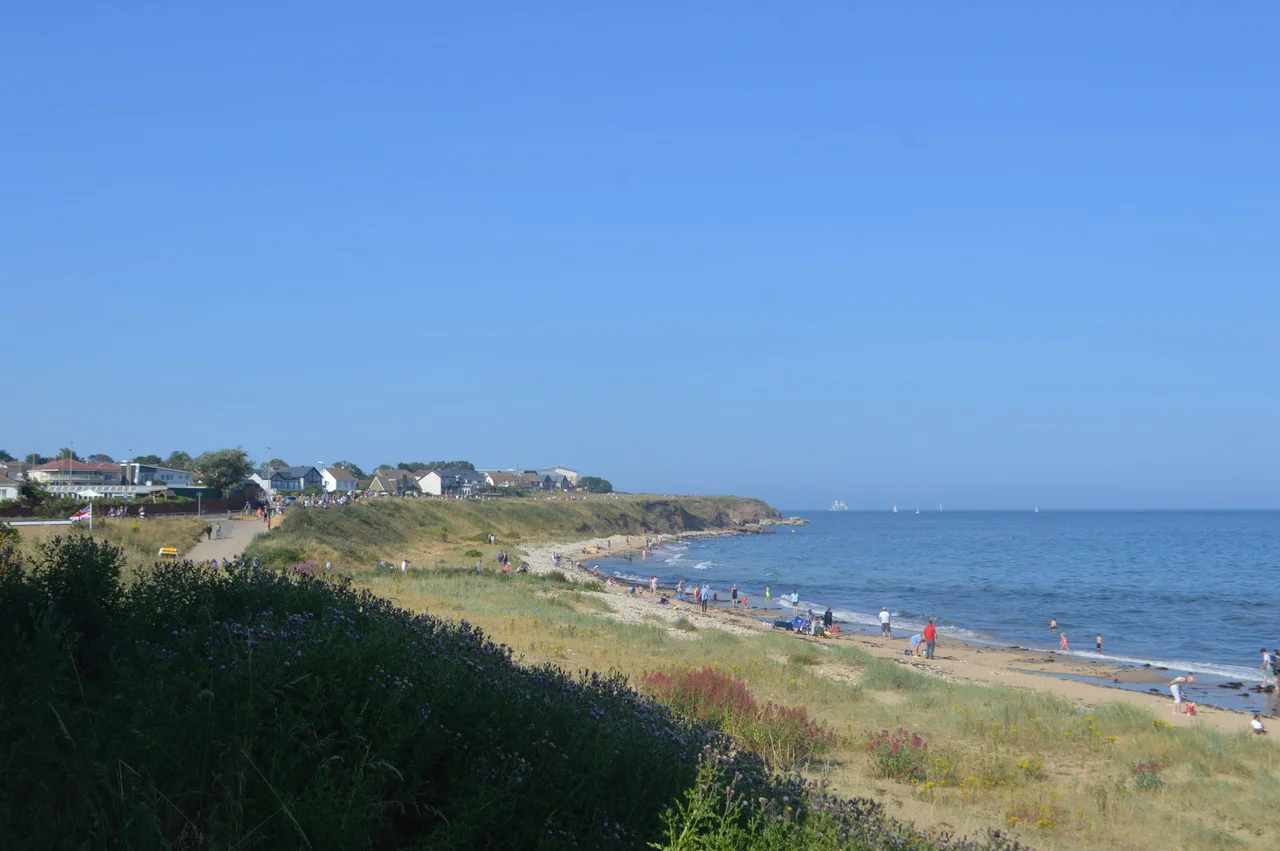

Whitburn Lifeboat Station
A maiden voyage that ended in wreckage just north of Sunderland harbour kicked off a century of small acts of seamanship at Whitburn. The lost ship was Ajax, the wreckage caught the attention of Lord Dundas, and the response - raising money for a dedicated lifeboat - was the kind of small civic project that turned into something larger than its founders expected. Within a year the Sunderland Lifeboat Committee had set up a station at Whitburn, at the lower end of Sea Lane on a coast that did not lack for emergencies. It would run for exactly one hundred years.
A Borrowed Boat and an Inventor's Influence
The first lifeboat stationed at Whitburn in 1818 had been built eighteen years earlier by William Wake of Sunderland, and its lines borrowed from the work of Henry Greathead, the South Shields boatbuilder whose pioneering self-righting designs effectively created the modern lifeboat. At 27 feet 6 inches she was small by later standards but not by the standards of what she would face. A new boathouse went up at Marsden, on the north side of Whitburn village. In 1830 the Reverend Thomas Baker, the local vicar, wrote to the Royal National Institute for the Preservation of Life From Shipwreck - the precursor to the RNLI - to ask for a replacement. With £50 from Lloyd's of London and money Baker raised himself, another 27-foot boat arrived in September that year, costing exactly £100.
Rough Seas, Rescued Strangers
Management of the station passed to the Royal National Lifeboat Institution in 1854. The work did not get easier. On 12 January 1864, in seas described as brutal even by Whitburn standards, the volunteer crew launched and brought seven men off the steam-tug Rob-Roy, aground off the village. A 32-foot replacement boat, named Thomas Wilson, came on station in September 1865. The following November she launched to the barque Margaret and Jane, wrecked on the rocks at Whitburn, and brought eight people back alive. Within twenty-four hours the same crew were back at sea, this time pulling thirteen people off the Caroline Elizabeth. Two rescues in a day, in a North Sea winter, in a rowing boat.
William and Charles
Two further lifeboats took up the work after Thomas Wilson, both gifts from a woman named Miss C. L. Preston and both named William and Charles. Across the years they launched 34 times and brought 107 people home. The arithmetic of those numbers - thirty-four small dramas, more than three lives saved on average per launch - hints at the shape of the work without quite capturing it. Each launch meant a crew rowing into weather that had already overwhelmed someone else's vessel. Two of those volunteers, Eleanor Galbraith and the fisherman William Rae, were honoured with the RNLI Silver Medal in 1855 for their service. The medal was meant for exceptional bravery in lifeboat service; in Galbraith and Rae's case it recognised what an ordinary day at Whitburn could demand.
Closure, Not Retirement
By 1918 the world of lifeboat work was changing. Motor lifeboats, faster and more capable than anything that could be rowed, had been placed at neighbouring stations whose range now covered the waters off Whitburn. The economics of running a small all-weather rowing station on an exposed coast no longer added up. At the end of April 1918 - exactly a century after the first boat slid down the slipway - Whitburn Lifeboat Station closed. The men and women who had crewed and supported it did not stop caring about ships in trouble. Their successors at Sunderland RNLI still launch today, under the same yellow-and-blue flag, into the same grey water. The boathouse at Sea Lane is gone, but the work continues a few miles down the coast.
From the Air
The site of Whitburn Lifeboat Station lies at approximately 54.944 degrees north, 1.365 degrees west, at the southern end of Whitburn village on the North Sea coast of Tyne and Wear. At 1,500-2,500 feet the village and its sandstone limestone cliffs are clearly visible between Sunderland to the south and South Shields to the north. Newcastle International (EGNT) is the nearest major airport at about 11 nautical miles inland to the west; Durham Tees Valley (EGNV) lies roughly 27 nautical miles south. The coastal stretch here is part of the South Tyneside heritage coast, with Souter Lighthouse and Marsden Bay forming distinctive landmarks just to the north.
Nearby Stories
- Seaton Carew 2.7 km away
- HMS Unity (N66) 6 km away
- George Stephenson's Birthplace 6.1 km away
- Raby Castle 9 km away
- Cragside 15 km away
- Whitby Abbey 21 km away
- German submarine U-2367 46 km away
- Alexander L. Kielland (Platform) 277 km away