
Whitehaven
Whitehaven was, with Falmouth, one of the first post-medieval planned towns in England. The Lowther family laid the streets out in a right-angled grid in the 1680s, specifying three-storey houses of hewn stone with transomed windows and ample gardens, before American colonists picked up the same idea for their new towns across the Atlantic. To walk Lowther Street today is to walk through a piece of Georgian urbanism preserved more completely than almost anywhere else in Europe — over 170 listed buildings standing more or less where Sir John Lowther dropped them.
The Pit Under the Sea
Coal made Whitehaven, and the Lowthers made coal mining a science. By the 1720s the family was pumping water from their workings with Newcomen engines, including a small 17-inch cylinder built by Thomas Newcomen himself and his partner John Calley. The technology was so successful that Lowther bought another engine in 1727 and began the audacious project that would define West Cumbrian mining: Saltom Pit, the first sub-sea coal mine in England. Work began in early 1730 below the cliffs south of the harbour. Carlisle Spedding directed the sinking. Twenty-three months of labour, thirty barrels of gunpowder, and a shaft 141 metres deep — the deepest in Europe at the time — and not a single worker killed or maimed. Saltom Pit opened in May 1732. It worked coal until 1848, then served as a pumping station for the surrounding mines for decades more. Today its remains form one of Britain's best surviving examples of an 18th-century colliery.
Sparks Against the Dark
Methane is the miner's silent enemy. To fight it, Carlisle Spedding invented a small machine called the Spedding Wheel — a steel disc spun against a flint, throwing sparks bright enough to see by but, Spedding hoped, not hot enough to ignite firedamp. He was sometimes wrong, and the mill caused explosions of its own, but it was a great improvement over carrying a naked flame underground. The wheel was the precursor of Humphry Davy's safety lamp, which would later replace it. Mining continued under and around the town until Haig pit hit a major geological fault in 1983, ran headlong into the 1984–85 miners' strike, and finally ceased operation on 31 March 1986. The town's pit lamps went out, but the question of coal didn't.
The American Captain
In April 1778, during the American War of Independence, a Continental Navy sloop called the Ranger entered Whitehaven harbour under cover of darkness. Her captain knew the place well — John Paul Jones had begun his merchant career here as a teenager, and the navigation came back to him without effort. He had been born in Scotland, trained in Whitehaven, worked the slave trade, and now sailed for a new American republic. The raid was small. Jones spiked the cannon at the harbour battery and tried to set fire to the ships, but one of Jones's own crew, an Irishman named David Freeman, ran ahead to warn the town, and most of the fires were doused before they spread. Whitehaven survived almost unscathed. It remains the only American attack on British soil in the Revolutionary War, and the town wears the distinction quietly: a curious footnote, not a wound.
The Harbour Reborn
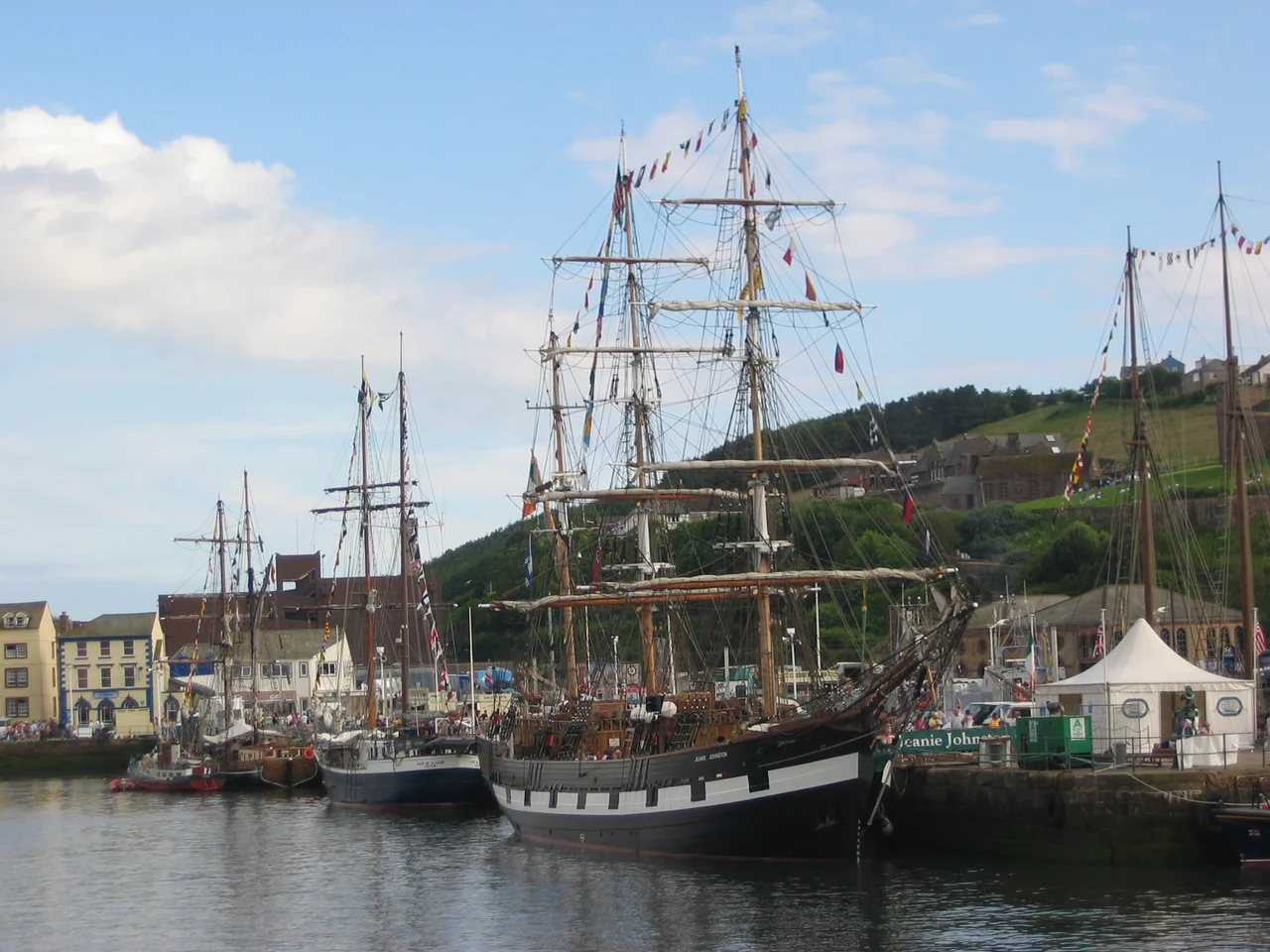
The harbour Sir Christopher Lowther began with a stone pier in 1631 went through centuries of expansion, decline, and reinvention. Coal exports faded as Bristol and Liverpool took the trade. A 19th-century iron boom on local haematite collapsed when the Bessemer process no longer required phosphorus-free ore. The last commercial cargo handler — Marchon's phosphate-rock import — closed in 1992. Then came the rebuild: an £11.3 million marina conversion, 100 new moorings, a 40-metre-high crow's nest sculpture, and a wave light that changes colour with the tide. Queen Elizabeth II reopened the refurbished Beacon museum in June 2008 to 10,000 spectators. The Whitehaven Maritime Festival, founded in 1999, drew an estimated 350,000 visitors at its peak. A small Cumbrian port had remade itself, again, around water.
Twelve Names
On 2 June 2010, a Whitehaven taxi driver named Derrick Bird went out into the streets where he worked and shot people. He killed twelve before turning the gun on himself. The dead were not statistics. They were taxi drivers waiting at their rank, a farmer in his fields, a part-time mole catcher, a woman walking near the harbour, a man cycling to work. They had families. They had routines that ended that morning. The shootings put Whitehaven into the international news for reasons no town would want, and the rebuilding that followed was the quieter, slower kind that doesn't make headlines. The Georgian streets carried on. The marina filled with boats again. The wave light kept changing colour with the tide. Whitehaven added the names of the lost to its long memory and continued, as it always has, to face the sea.
From the Air
Whitehaven lies at 54.55N, 3.59W on the Cumbrian coast, roughly 30 nm south-west of Carlisle. From the air, the Georgian grid is unmistakable: parallel right-angled streets running back from a working harbour with a marina and two stone piers framing the basin. The Beacon museum's distinctive tower and the wave-light sculpture mark the harbour mouth. Saltom Pit's surviving buildings sit on the cliff edge to the south. Nearest field is Carlisle Lake District (EGNC) some 30 nm north-east. Coastal weather can change quickly; sea fog historically demanded the explosive fog signal at neighbouring St Bees.
Nearby Stories
- Derwentwater 1 km away
- Cashtal yn Ard 10 km away
- Buittle Castle 14 km away
- Carlisle Castle 15 km away
- Isle of Whithorn 16 km away
- Conishead Priory 17 km away
- Black Combe 24 km away
- Battle of Glen Trool 32 km away