
Whitsun Reef Incident
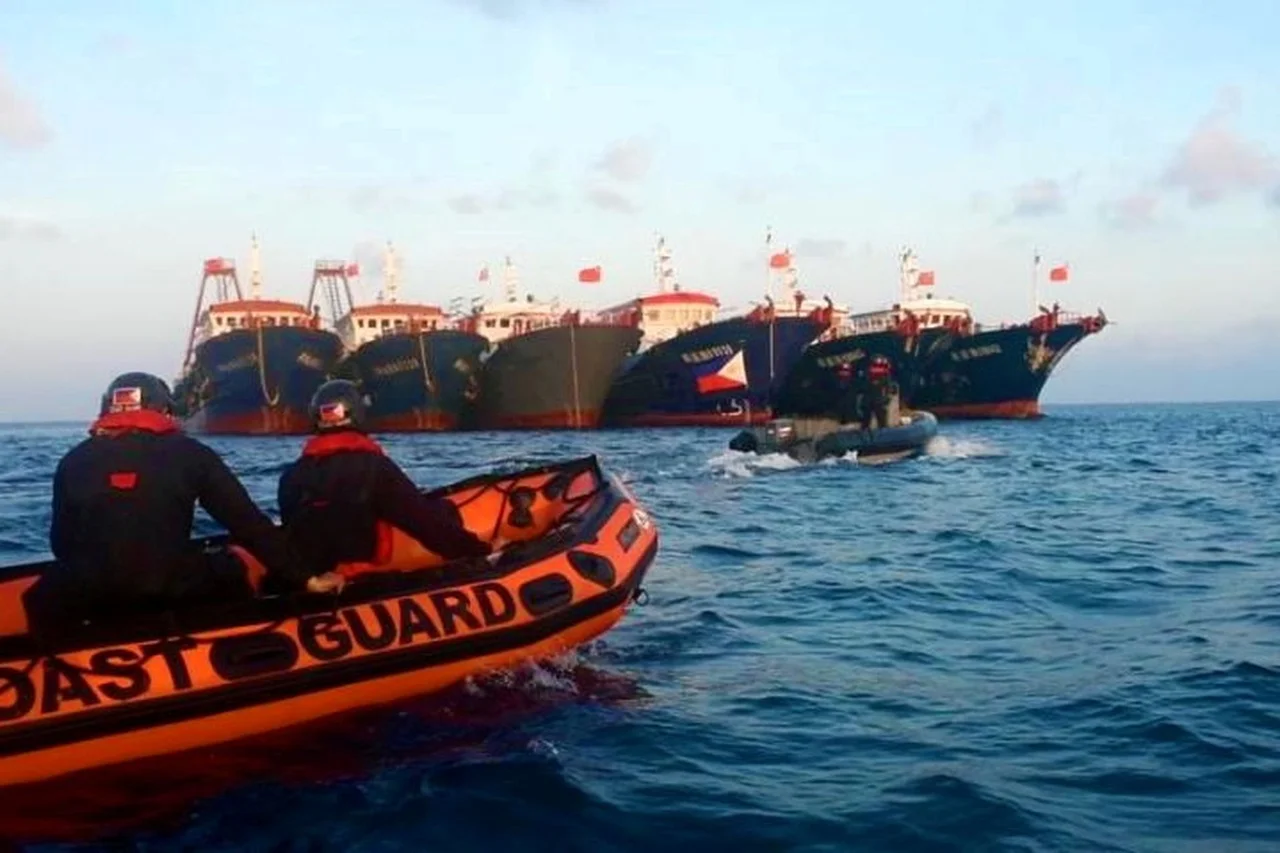
"Nobody fishes by lashing ships together." Philippine Foreign Secretary Teodoro Locsin Jr. delivered that line in April 2021, and it cut through weeks of diplomatic hedging. The cause was a scene visible from surveillance aircraft: more than 200 Chinese vessels moored in tight formation at Whitsun Reef, a submerged feature in the Spratly Islands that the Philippines calls Julian Felipe Reef and China calls Niu'e Jiao. China said the boats were sheltering from rough weather. The Philippines said the weather had been fine for weeks. What followed was one of the most sustained diplomatic confrontations in the modern history of the South China Sea.
Ghosts of Mischief Reef
Filipinos had reason to be alarmed. They had seen this pattern before. In 1995, China occupied Mischief Reef by first positioning fishing vessels, then erecting structures, and finally establishing a permanent military presence. In 2012, a standoff at Scarborough Shoal ended with Chinese vessels establishing de facto control. Both losses began with boats that were ostensibly fishing. When 220 vessels were spotted at Whitsun Reef on March 7, 2021, the Philippine National Task Force for the West Philippine Sea raised the alarm immediately. The Armed Forces of the Philippines dispatched air and naval assets to verify the report. What they found, vessels arranged in formation rather than spread out for fishing, reinforced fears that the fleet was not what Beijing claimed.
Protest After Protest
Philippine Defense Secretary Delfin Lorenzana demanded on March 21 that China withdraw what he called a maritime militia. China's Ministry of Foreign Affairs replied the next day, insisting the boats were ordinary fishing vessels seeking shelter and adding, "there is no Chinese Maritime Militia as alleged." Vietnam, which also claims Whitsun Reef as the northeasternmost feature of the Union Banks, filed its own protest on March 25. By early April, the diplomatic temperature was rising sharply. Lorenzana cited aerial surveillance showing 44 Chinese vessels still moored at the reef, called himself "no fool," and accused China of planning further occupations. The Chinese Embassy in Manila branded his remarks "perplexing" and "unprofessional." The Philippines filed protest after protest. By May 28, 2021, the Philippine foreign department had lodged its 100th diplomatic note over Chinese presence within the country's claimed exclusive economic zone.
Words as Weapons
The Whitsun Reef incident played out as much in public statements as on the water. Locsin summoned the Chinese ambassador on April 13 and made his objection to China's "illegal lingering presence" explicit. President Rodrigo Duterte, who had spent years cultivating closer ties with Beijing, struck an ambivalent note on April 19, saying he did not care about fishing rights but would send warships if China began drilling for oil. The contradiction captured the bind the Philippines faced: its president had sought Chinese infrastructure funding while his military watched Chinese vessels encircle Philippine-claimed reefs. International reactions sharpened the picture. The United States warned on April 7 that any armed attack against Philippine forces or public vessels in the Pacific, including in the South China Sea, would trigger American obligations under the 1951 Mutual Defense Treaty. Australia and Japan expressed similar concerns.
Dispersal Without Resolution
By mid-May 2021, only nine vessels remained at Whitsun Reef itself. The crisis appeared to be subsiding. But the numbers told a different story. While the concentration at the reef thinned, vessels dispersed to other parts of the Spratly Islands. By mid-June, the National Task Force counted 236 Chinese ships across the Union Banks. The Whitsun Reef incident did not end with a resolution. It ended with a diffusion, the pressure spreading rather than disappearing. The fleet's movement pattern suggested not a withdrawal but a redistribution of presence across the contested waters. For the Philippines, the episode underscored a painful reality: filing diplomatic protests, even a hundred of them, changes very little when the other side simply ignores them.
From the Air
Whitsun Reef is located at approximately 9.99°N, 114.65°E in the Union Banks, within the Spratly Islands group. From altitude, the reef appears as a shallow turquoise feature against deep ocean blue. No airstrip exists at the reef. The nearest Philippine airfield is Rancudo Airfield on Thitu Island (11.05°N, 114.28°E), approximately 70 nm to the north. Puerto Princesa (RPVP) on Palawan is about 270 nm east. Expect potential military and coast guard vessel activity in the surrounding waters.
Nearby Stories
- Mischief Reef 24 km away
- Spratly Islands 29 km away
- Taiping Island 50 km away
- Second Thomas Shoal 59 km away
- Fiery Cross Reef 142 km away
- HMS Pelorus (1808) 187 km away
- 2019 Reed Bank Incident 226 km away
- Kashmir Princess 243 km away