
Wookey Hole Caves
The name is a triple redundancy: Wookey is a Celtic word for cave, ogo or ogof in Welsh; Hole is an Anglo-Saxon word for cave; and Cave is what we add in modern English. Wookey Hole Cave technically means Cave Cave Cave. The redundancy is appropriate, because the system that runs back into the southern slope of the Mendip Hills has 25 known chambers, contains the longest underwater cave system explored in Britain, and has been claiming and rewarding cave divers for over ninety years. Tourists see the first three chambers. Past chamber five, the way on lies underwater, and that is where the strange history of British cave diving begins.
The Witch
In the first chamber stands a stalagmite roughly the shape and size of a hunched human figure. Legend says it is a witch from the Iron Age, turned to stone by a monk from Glastonbury who came to deal with her. The story may be older than the legend - in 1912, Herbert Balch, who was leading excavations of the cave entrance, found a 1000-year-old skeleton in the cave that was traditionally associated with the witch. Analysis showed the bones belonged to a male between 25 and 35 years old. They have been in the Wells and Mendip Museum since they were excavated, though the current cave owner has asked for them to be returned. Stone Age and Iron Age people definitely used the cave - Wookey Hole was occupied around 250-300 BC, and nearby Hyena Cave was a Stone Age den. Cave hyenas, cave lions, and badgers all left fossils in the system.
The First British Cave Dives
Up to chamber five, the cave is dry and walkable. Past that, the way on lies in the water-filled sump where the River Axe emerges from the deeper cave system. In 1935, Graham Balcombe and Penelope 'Mossy' Powell, working under the Cave Diving Group, borrowed standard diving dress from the firm Siebe Gorman - the heavy brass-helmet, lead-boot equipment that commercial divers used at the time - and walked into the sump. They penetrated 170 feet into the cave and surfaced in the seventh chamber. It was the first successful cave dive in Britain. Balcombe came back in 1946 with his own homemade respirator and waterproof suit. By 1948 he and Don Coase had reached the ninth chamber. The cave claimed its first life on 9 April 1949, when Gordon Marriott died returning from chamber nine. Another diver, Keith Potter, was lost in 1981. Pure oxygen rebreathers limited divers to about 22 metres depth, and the way on past chamber nine was deeper. Progress required new gas mixtures, then aqualungs, then wetsuits, then mixed-gas open-circuit diving.
The Lake of Gloom
The names attached to the deeper chambers tell their own story. The way on from chamber twenty-two was found by Colin Edmond and Martyn Farr in February 1976. A few days later Geoff Yeadon and Oliver Statham, laying just nine metres more line, reached chamber twenty-three. They emerged from a short underwater passage into chamber twenty-four, which Statham described as 'a magnificent sight - the whole of the River Axe pouring down a passage 40 feet high by 5 feet wide,' ending in a 90-metre blue lake. Farr dived that lake a few days later and surfaced in chamber twenty-five - a desolate muddy chamber the divers named the Lake of Gloom. Past it, the River Axe rises out of a deep sump where successive British depth records have been set: 45 metres by Farr in 1977, 68 metres by Rob Parker in 1985, 76 metres by John Volanthen and Rick Stanton in 2004. The pair returned in 2005 and reached 90 metres before gravel chokes stopped them. Volanthen and Stanton would later become known to the world during the 2018 Thai cave rescue. The Wookey Hole sump was where they learned the trade.
A Paper Mill and a Crazy Golf Course
Above ground, the village of Wookey Hole grew up around a paper mill that drew on the cave's water. The current mill building dates from around 1860 and is Grade II listed; its water wheel was powered by a canal channelled from the River Axe. Commercial handmade paper production ceased in February 2008, when the owner Gerry Cottle - a former circus proprietor - concluded the market had vanished. Madame Tussauds owned the cave and mill from 1973 to 1989, when a management buyout took it private. Cottle has run it since. He introduced a circus school, a house of mirrors, a small dinosaur valley, and in 2009 turned the village's Victorian bowling green into a crazy golf course without first obtaining planning permission. The same year he held an audition to choose a new actress to play the Witch of Wookey Hole; Carole Bohanan, performing as Carla Calamity, was selected from 3,000 applicants. The cave has also been used as a location for Doctor Who (twice - in 1975's Revenge of the Cybermen and 2009's The End of Time), Blake's 7, and Robin of Sherwood.
What You See
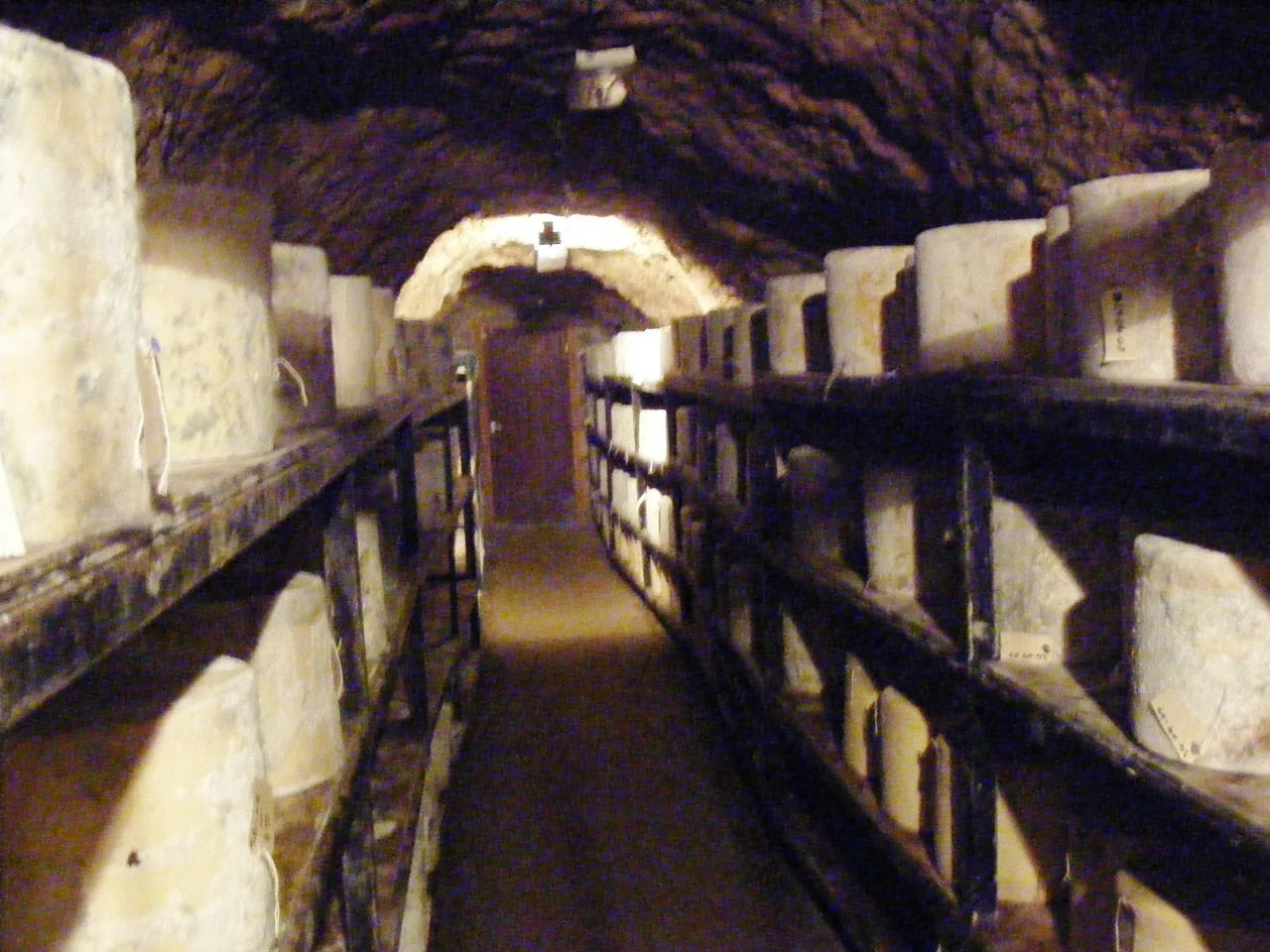
Public tours follow the dry gallery through the first three chambers, then take artificial tunnels - excavated in 1974-1975 by ex-coal miners from the Radstock area - to bypass the underwater sections and visit chambers seven, eight, nine, and twenty. The river runs through the show chambers, maintained at an artificially high level by the entrance weir. The temperature stays constant year-round, which is why cheddar cheese is matured in the lower part of the cave - small wheels racked on stone shelves, finishing slowly in the dark. Past the public area, 25 known chambers extend back into the Mendip limestone, the deepest passages running 26 metres below sea level. Most of the system remains unmapped. Divers are still adding to it.
From the Air
Wookey Hole Caves sit at the head of a short ravine on the southern slope of the Mendip Hills at 51.228 degrees north, 2.671 degrees west, about a mile northwest of Wells. From the air the cave entrance is hidden in trees, but the village of Wookey Hole and its paper mill are visible, with the limestone cliffs of the Mendip escarpment rising immediately to the north. Ebbor Gorge is the next valley west. Nearest airports: Bristol (EGGD), 15 nm north; Cardiff (EGFF), 25 nm northwest. Best viewed from 3,000 feet AGL on a clear day.
Nearby Stories
- National Eisteddfod of Wales 4.9 km away
- Montacute House 6.1 km away
- Malmesbury Abbey 9 km away
- Quantock Hills 11 km away
- Severn Bridge 12 km away
- Coldharbour Mill Working Wool Museum 15 km away
- Stonehenge Cursus 21 km away
- Royal Naval Cordite Factory, Holton Heath 29 km away