
Coldharbour Mill Working Wool Museum
Eleven hundred guineas bought Thomas Fox a stream, fifteen acres of meadow, and a future. In 1797, writing to his brother about his purchase near Uffculme, he was almost apologetic about the buildings - "but middling," he called them - but he could not hide his pleasure at the water. "The stream good," he wrote. That stream, a quiet bend of the River Culm flowing through mid Devon farmland, is still turning the wheels at Coldharbour Mill more than two centuries later. The same wool yarn that supplied Wellington's looms during the Napoleonic Wars still moves through the same building today, making this one of the oldest continuously operating woollen mills in the world.
A Quaker Inheritance
The Foxes were Quakers, members of a faith founded a century earlier by another George Fox - no relation, though both families traced their convictions to the religious upheavals of the 1650s. Edward Fox, a Cornish serge maker, married Anne Were of Wellington in 1745, knitting together two Quaker dynasties already prominent in West Country cloth. The Weres held the WRE trademark, a mark that buyers across Europe trusted for quality. When the French Revolution and Napoleon's campaigns crushed the Exeter export trade in the 1790s - shipments collapsing from over 330,000 pieces of cloth in 1768 to just six vessels' worth in 1797 - the Foxes did the opposite of retreat. They built. While the old serge merchants foundered, Thomas Fox bought a struggling grist mill on a good stream and began making yarn for the new mechanized age.
From Fleece to Finished Cloth
The main mill building rose in 1799: thirty-nine feet wide, one hundred and twenty-three feet long, immense by the standards of its day. Coldharbour was never meant to stand alone. It was the spinning end of a system whose other end sat at Tonedale in Wellington, six miles north, where Fox Brothers built what may have been the only true 'Twin Vertical Woollen Factory' in the world - a single integrated complex turning out both worsted and woollen cloth from raw fleece to finished bolt, all under one roof. At its peak the company employed five thousand people across nine mills in Devon, Somerset and Oxfordshire. Coldharbour spun the yarn. Tonedale wove it. Pack horses carried the finished cloth down the rough lanes to the quays at Topsham and Exeter, where ships took it to London, Bristol, and the wider world.
The Twelve-Day Journey
It is hard to imagine, standing today beside the M5 motorway humming past junction 27, how isolated this corner of Devon once felt. In the 1790s the roads from Uffculme to Bristol were a twelve-day journey by carrier's cart. The cloth that left here had to survive ruts and mud, river crossings, the weather of every season the trip happened to span. The mill survived where so many West Country woollen sites did not, partly because the Fox family kept reinvesting and partly because the building itself was so solid. English Heritage now calls Coldharbour "probably one of the best-preserved textile mill complexes in the country," with its leats and water courses still in the positions sketched on a legal map in 1834.
Steam, Water, and Memory
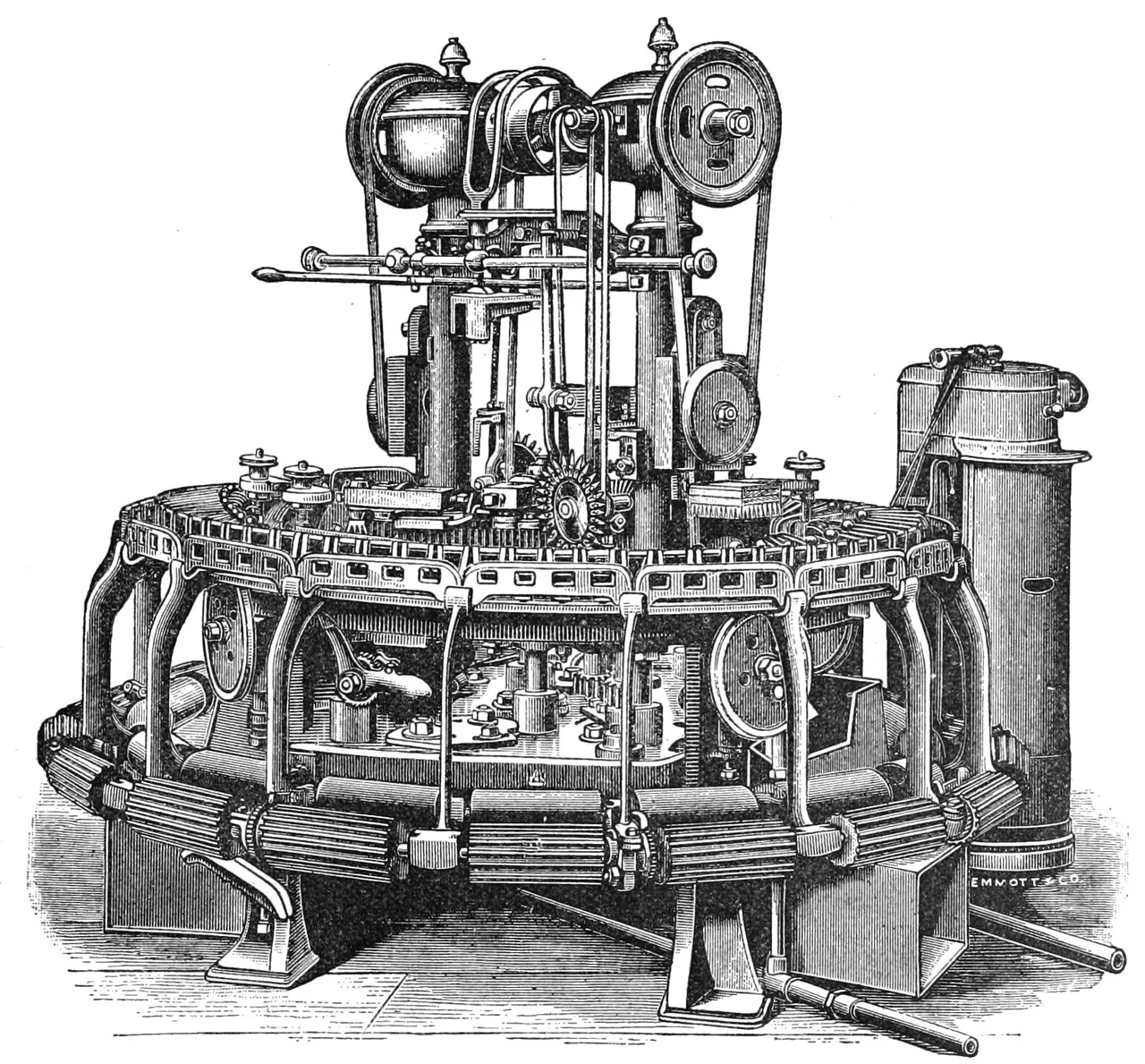
Walk into Coldharbour now and you can hear the mill working as it always has. The Lancashire boiler still raises steam. The Pollit and Wigzell mill engine still drives the line shafts. The waterwheel still turns. Volunteers run the machinery on steam-up days, threading yarn through carding engines and spinning frames that were old when their grandparents worked here. The mill is not a static museum where things sit behind ropes; it is a place where the smell of wool grease and the whir of bobbins still hang in the air, where wool from local sheep still becomes cloth. The Quaker quietness of the Foxes, their habit of patient continuity, somehow seeped into the building itself.
From the Air
Coldharbour Mill sits at 50.90 degrees north, 3.34 degrees west, near Uffculme in the Culm Valley of east Devon. From the air the site appears as a long stone block beside a narrow leat just south of junction 27 of the M5 motorway. Cruising altitude 3,000-5,000 feet gives a clear view of the valley patchwork. The nearest tower-controlled field is Exeter International (EGTE), about fifteen nautical miles south; Bristol (EGGD) is forty nautical miles north. Devon weather can deliver low stratus and drizzle off the Atlantic - clearest air usually comes with northerly winds.
Nearby Stories
- Cleeve Abbey 1.7 km away
- Glastonbury Lake Village 6.1 km away
- Wistman's Wood 8.5 km away
- Montacute Castle 9.3 km away
- South Devon Railway sea wall 11 km away
- Ilfracombe Lifeboat Station 19 km away
- Okehampton Castle 20 km away
- Weymouth 25 km away