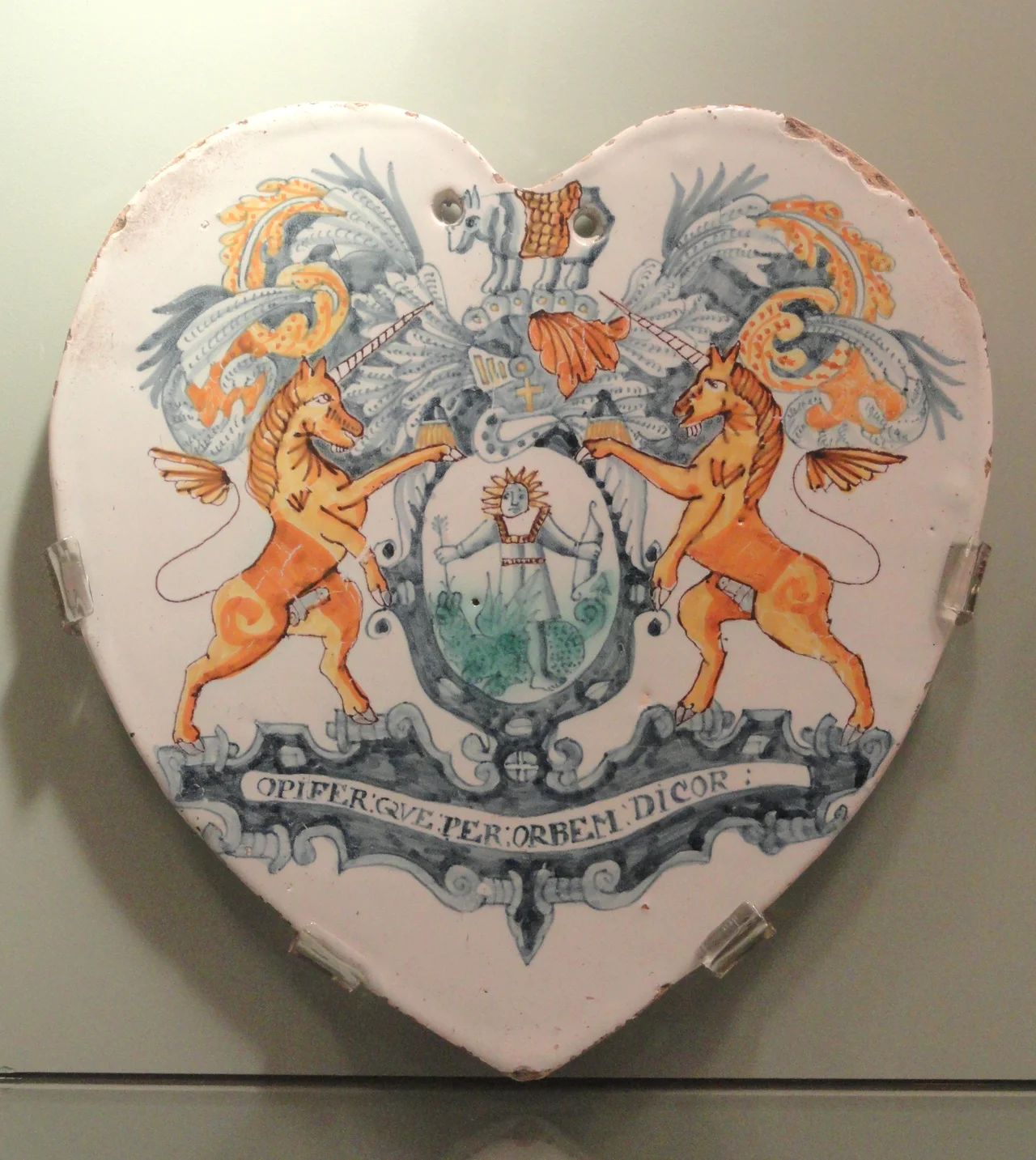

Worshipful Society of Apothecaries
Agatha Christie sat the Apothecaries' Assistants exam in 1917 and passed. She was twenty-six. The First World War was on, and she was working as a hospital dispenser at the Red Cross Hospital in Torquay. The qualification she earned at Apothecaries' Hall in Blackfriars taught her how to measure, mix, and recognise the substances that, two decades later, would kill more than eighty characters in her crime novels - cyanide, strychnine, arsenic, digitalis, thallium. Christie is only one of many notable people who passed through the Society of Apothecaries on their way to becoming someone else. The poet John Keats qualified as a licentiate here in 1816. Elizabeth Garrett Anderson qualified in 1865 and became the first openly female recipient of a UK medical qualification. Nobel laureate Sir Ronald Ross qualified in 1881. All of them sat exams in a Blackfriars hall that, with the exception of the Stationers', is the oldest standing livery hall in the City of London.
Breaking Away from the Grocers
For most of the Middle Ages, London's apothecaries were a sub-group of the Grocers' Company. The trade was described in 1365 as the Mistery of Grossers, Pepperers and Apothecaries, since spices and medicines came in through the same Mediterranean trade routes and were sold through the same shops. By the seventeenth century the apothecaries wanted out. They were no longer just spice merchants - they were practising medicine, prescribing herbal preparations, treating patients who could not afford the College of Physicians' fees. On 6 December 1617, James I granted them their own royal charter. Six days later, William Camden as Clarenceux King of Arms granted them their coat of arms. The speed was conspicuous; the break from the Grocers had been carefully planned. The apothecaries chose Apollo as their armorial figure - described in the grant as the inventor of physic. The motto was Opiferque Per Orbem Dicor, a Latin phrase from Ovid: throughout the world I am called the bringer of help.
The Rose Case
Once the apothecaries had their charter, they fought a long battle with the College of Physicians over who could legally practise medicine. The college argued that apothecaries were dispensers, not doctors; the apothecaries countered that they had been treating patients for centuries and could not be confined to handing out other people's prescriptions. In 1704 the House of Lords decided the Rose case in favour of an apothecary named William Rose. The ruling effectively gave apothecaries the right to practise medicine, making them the direct ancestors of today's general practitioners. The Apothecaries Act of 1815 codified the role; the society became the body responsible for examining and licensing medical practitioners across England and Wales. From then until 1999, the Licentiate of the Society of Apothecaries (LSA, later LMSSA) was a registrable medical qualification. The General Medical Council ceased to recognise the society as a primary medical examining body in 2008.
Apothecaries' Hall
The society moved into Cobham House in Blackfriars in 1632. The building was originally part of the Dominican priory of Black Friars, abandoned at the dissolution of the monasteries a century earlier. The Great Fire of 1666 destroyed much of it; a new hall by Edward Jerman was completed in 1672. The new building included an elaboratory - the first large-scale drug manufacturing facility in England. From 1672 until 1922, the society manufactured pharmaceutical and medicinal products on site, supplying the navy, the army, the East India Company, and the crown colonies. The retail outlet on Water Lane (now Blackfriars Lane) opened directly onto the street. A major restoration in the 1780s added the stucco facing in the courtyard, and the hall has changed little since. Walk in today and the Great Hall, Court Room, and Parlour are essentially as they were rebuilt between 1668 and 1670. The hall is the oldest standing livery hall in the City of London.
The Chelsea Physic Garden
In 1673 the society founded a four-acre garden in Chelsea, on the north bank of the Thames upstream of the city, for the cultivation and study of medicinal plants. Sir Hans Sloane - whose collection later founded the British Museum - granted the apothecaries the rights to the manor of Chelsea, and the garden flourished under the directorship of Philip Miller. The seed exchange programme between Chelsea and the Leiden Botanical Garden produced one notable consequence: cotton seeds sent from Chelsea were the first cotton planted in the Colony of Georgia in 1733. The garden is one of Europe's oldest botanical gardens and the second-oldest in Britain after the Oxford Botanic Garden. In 1983 it separated from the Apothecaries and became an independent charity, opening to the public for the first time. It remains a working garden of medicinal plants, with the oldest rock garden in Europe (built in 1773 from stones brought back from Iceland and lava from a Sicilian volcano) at its heart.
What the Society Does Now
The society stopped manufacturing drugs in 1922. It stopped issuing primary medical qualifications in 1999. What it still does is run postgraduate diploma examinations in specialisms that no other body covers: medical jurisprudence, history of medicine, philosophy of medicine, medical care of catastrophes, forensic medical sciences, HIV medicine, tropical medicine. Two faculties - the Faculty of the History and Philosophy of Medicine and Pharmacy and the Faculty of Conflict and Catastrophe Medicine - organise lectures and dinners through the year. The Apothecaries' building opens to the public on Open House Day each September, when anyone can walk through the Great Hall under the cupola where Apollo is depicted overcoming pestilence. The membership requires that at least eighty per cent be medical practitioners; the master, two wardens, and twenty-one assistants meet around a long table in the Court Room and run a body that has been in continuous operation since 1617.
From the Air
Apothecaries' Hall sits at 51.51°N, 0.10°W on Blackfriars Lane in the City of London, just south of Ludgate Hill and a short walk from Blackfriars station. From the air, look for the small courtyard building tucked between the river and St Paul's Cathedral. London City Airport (EGLC) is about five nautical miles east. Best viewed at low altitude over the City of London.
Nearby Stories
- Stevenage 5.7 km away
- Malling Abbey 5.7 km away
- 1952 Farnborough Airshow Crash 7.7 km away
- Ingatestone Hall 8.2 km away
- Hellfire Caves 9.1 km away
- The Carrington Event: The Solar Storm That Could Happen Again 9.8 km away
- Bletchley Park 16 km away
- Castle Hedingham 23 km away