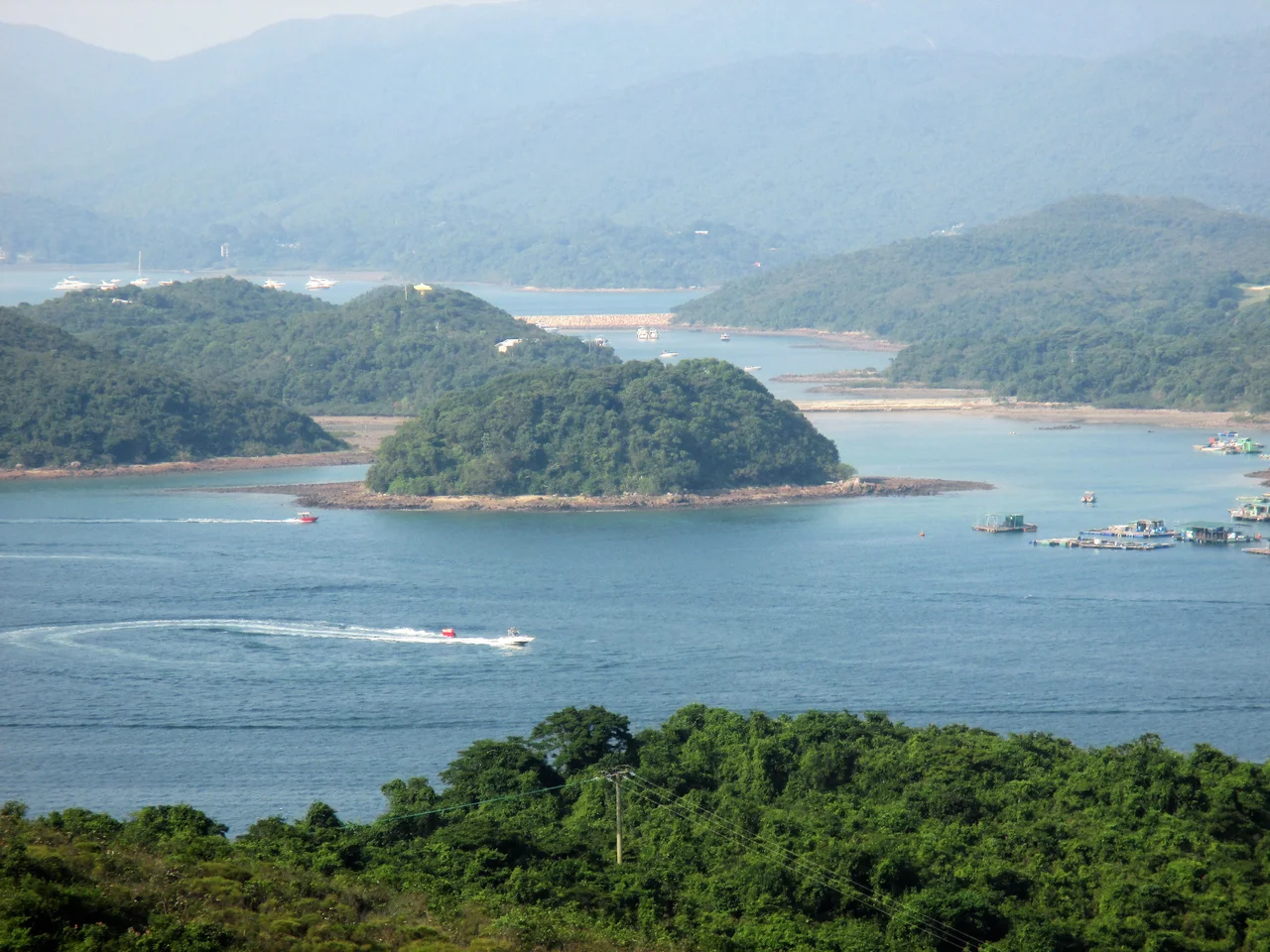

Yim Tin Tsai (Sai Kung District)
Salt and faith kept this island alive for a century, and the combination that seemed most improbable — Hakka Catholics making sea salt on a tiny island in Sai Kung — turned out to be durable enough to outlast the 20th century's disruptions. Yim Tin Tsai, the little salt pan island, sits in Port Shelter south of the Sai Kung Peninsula. By the 1990s it was essentially deserted. By 2015 it had won two UNESCO heritage awards. The island had not changed much. What changed was that people decided it was worth saving.
The Hakka Salt-Makers
Archaeological evidence places human presence on Yim Tin Tsai as far back as the Eastern Han dynasty, around 100 CE. But the island as Hong Kong knows it was shaped by the Hakka Chan clan, who arrived during the 19th century and built their livelihood around three things: farming, fishing, and salt. They worked six acres of salt pan — the smallest of the five salt pans then operating in Hong Kong — raking crystallised salt from shallow pools flooded by the sea. Competition from cheaper salt producers in mainland China and Vietnam eroded the trade steadily. By the 1920s, no salt was being made on Yim Tin Tsai. The pan fell silent, the water stilled, and the island began the slow drift that would take it from working village to near-abandonment over the next half century.
A Chapel in Italian Romanesque Style
In 1890, the Hakka villagers of Yim Tin Tsai inaugurated St. Joseph's Chapel — an improbable structure for a 24-hectare island in the South China Sea. Built in Italian Romanesque style, it stands with rounded arches and a modest campanile, looking like something transposed from a Lombard valley. Catholic missionaries had been active among Hakka communities in the New Territories since the mid-19th century, and the Chan clan's conversion produced this chapel, which served the island community for decades. As the population drifted away in the early 1970s, the building fell into disrepair and became derelict. It was renovated three times across its life, the most recent restoration in 2004, and in 2022 the Catholic Diocese of Hong Kong completed further repairs and reopened it to the public. The rehabilitation earned an Award of Merit at the 2005 UNESCO Asia-Pacific Heritage Awards.
Reviving the Salt Pan
In 2011, the Yim Tin Tsai village committee and Sacred Heart Church Sai Kung founded the Salt & Light Preservation Centre, a charity dedicated to the island's conservation. Villagers and the Catholic Church donated six million Hong Kong dollars. Two years later, on 17 March 2013, a groundbreaking ceremony marked the start of the salt pan's revival. Chief Secretary Carrie Lam and then Vicar-General of the Catholic Diocese of Hong Kong Dominic Chan officiated. The restored salt pan began producing again, and in 2015 the project received an Honourable Mention at the UNESCO Asia-Pacific Awards for Cultural Heritage Conservation. Taken together with the 2005 chapel award, Yim Tin Tsai had achieved something rare: two separate UNESCO heritage recognitions for one small island.
Island Life, Then and Now
The island's 24 hectares hold more than salt pans and a chapel. The Yim Tin Tsai Typhoon Shelter, established in 1968, occupies the eastern side, bracketed by breakwaters and the northern edge of the larger island of Kau Sai Chau, to which Yim Tin Tsai is connected by a causeway. Mangroves grow along that breakwater — a small but intact coastal ecosystem. In the south, the Louisa Landale Campsite, managed by the Hong Kong Girl Guides Association, gives the island a continuing residential use. Ching Po School, the village school, closed in the 1990s when the last students left; no students returned. But the chapel is open, the salt pan produces, and private ferries from Sai Kung Town bring visitors who want to understand what a working island once looked like — and what it took to bring one back.
From the Air
Yim Tin Tsai sits at 22.378°N, 114.303°E in Port Shelter, east of the Sai Kung Peninsula. From 2,000–4,000 feet, the island's compact outline and the causeway connecting it south to Kau Sai Chau are clearly visible. The island is small enough that the white of St. Joseph's Chapel may be distinguishable in good visibility. The nearest major airport is VHHH (Hong Kong International), approximately 50 km to the southwest. The high hills of the Sai Kung East Country Park rise to the north; approach paths into VHHH keep well to the south and west. Best visibility is in the northeast monsoon season, October through March.
Nearby Stories
- Sha Chau and Lung Kwu Chau Marine Park 5.9 km away
- Wanshan Archipelago 22 km away
- Hong Kong 12 25 km away
- Second Battle of Chuenpi 27 km away
- Mount Guanyin (Dongguan) 43 km away
- Battle of Penghu 474 km away
- Penghu Air Raids 482 km away
- Checheng Fu'an Temple 592 km away