
Zamora
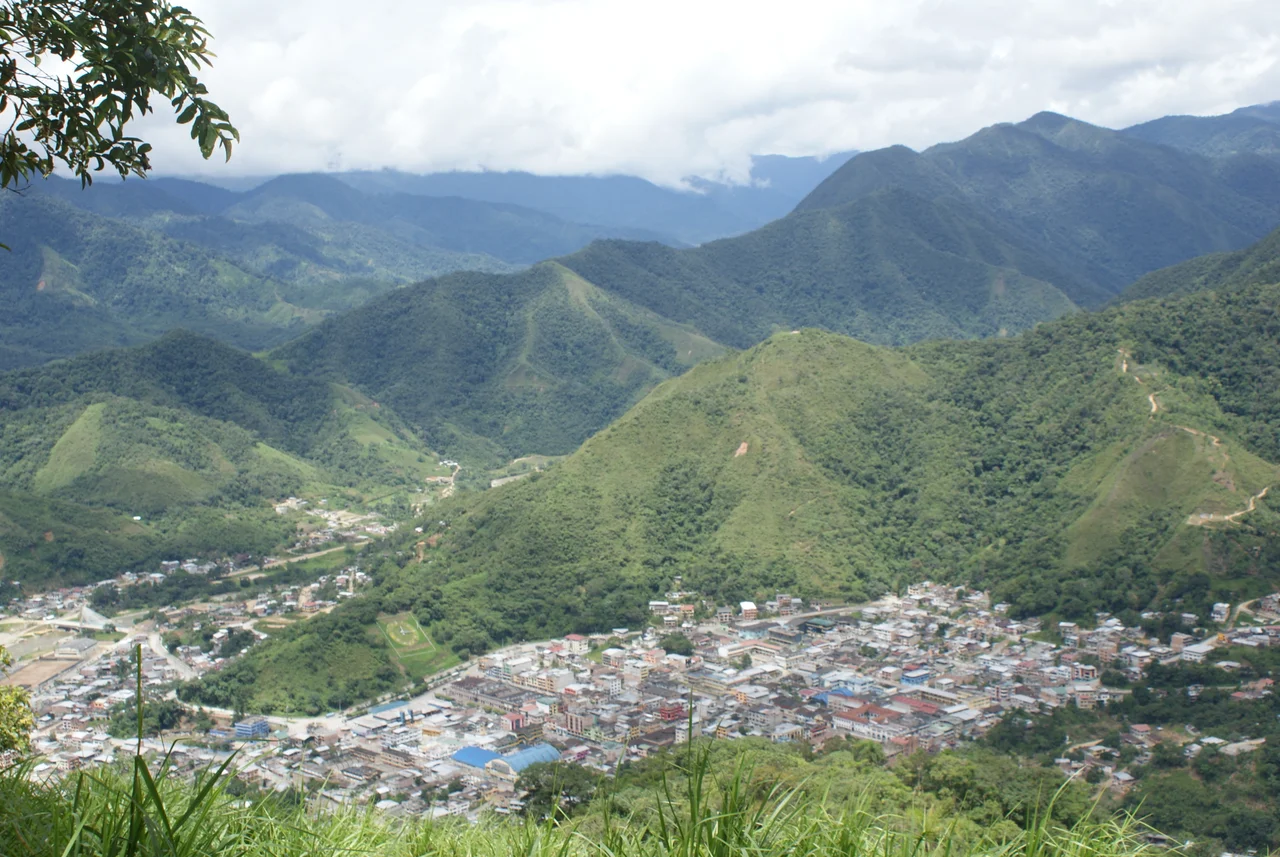
Three rivers meet here. The Zamora, the Bombuscaro, and the Jamboé converge at the foot of the eastern Andes at 970 meters above sea level, and the small town that has grown around their junction has only about 16,000 people, making it one of the least populated cantonal capitals in Ecuador. What Zamora lacks in population it borrows from its setting: this is the doorstep of Podocarpus National Park, one of the most biodiverse protected areas on Earth.
The Town Where Three Rivers Meet
Zamora sits in the foothills of the Andes mountains where the cordillera buckles down toward the Amazon. The convergence of the three rivers shapes daily life. The Parque Lineal runs along the Zamora River, a long ribbon of green where locals walk in the morning and watch the light shift across the water. The town's growth was driven, like so much of southern Ecuador, by gold. Spanish colonists founded a settlement here in the 16th century, were attacked by indigenous people, and the area was reclaimed by the Shuar and Saraguro communities. You can still see Saraguro residents in town, distinguishable by the black shorts that mark traditional dress.
Podocarpus National Park
The real reason most travelers come to Zamora is the park. Podocarpus protects a vast section of cloud forest and tropical foothill jungle that crosses two ecological zones: an upper pre-montane section with walking routes through cool, dripping forest superb for birdwatching, and a lower subtropical section reaching deeper into the wilder forest with virgin stretches and endemic species. Entry runs around US$5 per zone. The park takes its name from the Podocarpus genus, a group of southern-hemisphere conifers that grow in the higher elevations and give the cloud forest its characteristic broken canopy. Hummingbirds here outnumber recognizable species elsewhere, and orchid diversity is among the highest documented anywhere in the Andes.
Breakfast at the Market
Start the day early at the main market, where stalls dedicated to jugos naturales serve some of the most distinctive drinks in this part of Ecuador. Try horchata con savila, an herbal tea brewed from five different medicinal plants and mixed with aloe. It is not the sweet horchata of Mexico or Spain. It is greenish, bitter, slightly slimy from the aloe, and considered one of the healthiest breakfasts a person can have. The combination is medicinal in the literal Andean sense: the plants are chosen for what they do to the body, not for taste. After the horchata, find a stall selling encebollado or a bowl of tilapia from the local fish ponds.
Chicha and Other Local Tastes
Zamora's signature drink is chicha, a homemade alcoholic beverage made from manioc or chonta, a palm nut. The Shuar and Achuar people who live in the surrounding region drink large quantities of it, especially during mingas, communal work gatherings where the whole community pitches in together. Chicha of chonta and chicha of yuca have a deliberately neutral flavor: the natives use no sugar, no salt, no other substances to provoke fermentation, relying on traditional methods that produce a drink with what westerners would call almost no taste at all. It is offered to all newcomers as a gesture of hospitality. Refusing is poor form.
Yamila and the Orquideario
If the rain holds off, the Yamila trek leaves from the Yaguarzongo neighborhood and climbs one of the small hills surrounding the town. The reward at the top is a complete view of Zamora and the valleys carved by its three rivers. About two kilometers from the center, the Orquideario Paphinia is a greenhouse cultivating more than 3,000 native plants, including hundreds of orchid species, aroids, medicinal plants, and timber tree saplings. It is small, quiet, and one of the few places where you can see the diversity of the surrounding cloud forest concentrated in one walk. The closest major airport is Mariscal Sucre in Quito, 440 kilometers away; most travelers fly to Cuenca or Loja and continue by bus.
From the Air
Located at 4.07°S, 78.96°W in the foothills of the Andes at 970 meters elevation. The town sits at the convergence of the Zamora, Bombuscaro, and Jamboé rivers. From the air, the green jungle ridges of Podocarpus National Park rise to the southwest, with the descending Amazon basin opening to the east. Nearest airport is Catamayo (SETM) at Loja, about 60 km away by road; Mariscal Lamar (SECU) at Cuenca is the next closest. Best viewing 5,000 to 12,000 feet AGL; cloud cover and fog are common, especially in the morning, with clearer skies in the dry season June through September.
Nearby Stories
- Zaruma 26 km away
- Loja Province 33 km away
- Santa Ana (La Florida) 36 km away
- Ayabaca province 40 km away
- Saraguro People 44 km away
- Cueva de los Tayos 93 km away
- Borja, Peru 95 km away
- 2021 Northern Peru Earthquake 177 km away