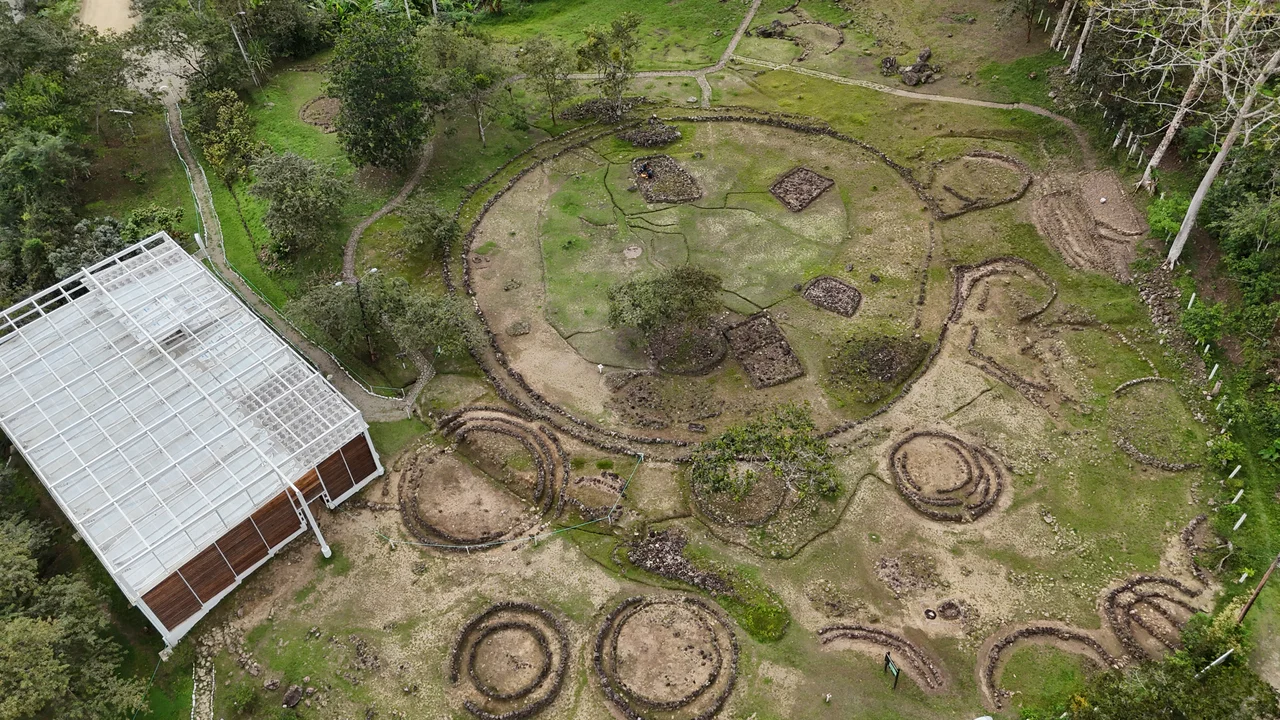

Santa Ana (La Florida)
For most of the twentieth century, the story of chocolate began in Mesoamerica. The Olmec, then the Maya, then the Aztec - cacao was their sacred plant, their ritual drink, their currency. Then in 2018, a team of archaeologists published findings in Nature Ecology and Evolution that moved the origin of cacao use by thousands of miles and several millennia. The evidence came from a hectare of ground in southern Ecuador, on the eastern slope of the Andes, at a site called Santa Ana (La Florida). Cacao residue in pottery vessels dated to roughly 3,300 BC. The Americas had been drinking something like cocoa for 5,300 years.
The River Valley Between Worlds
Santa Ana sits in the Palanda Canton of Zamora-Chinchipe Province, just north of Palanda, in the narrow valley where the Palanda River threads between the highlands and the lowland jungle. The Palanda flows into the Mayo-Chinchipe, which flows into the Rio Maranon, which joins the Amazon far to the east. This geography matters because it places Santa Ana at a transition zone - not highland, not lowland, but the threshold between them. People here had access to both ecosystems. They could grow crops that suited the cool uplands and trade for plants from the jungle. That biogeographic position turns out to have been essential to what they accomplished.
A Spiral Temple and a Sunken Plaza
French and Ecuadoran archaeologists began working at Santa Ana in 2002, under the leadership of Francisco Valdez. What they found was a village organized around a central sunken plaza, flanked by two artificial platforms. One platform held a temple with a spiral configuration - an unusual architectural form for the period - containing a ceremonial hearth and a cache of greenstone offerings. Tombs yielded fine ceramic vessels, polished stone bowls and mortars, hundreds of turquoise and malachite beads, fragments of Strombus sea shells carried hundreds of miles from the Pacific coast, and small sculptures. The major construction phase ran from 2,600 to 1,700 BC, but the earliest carbon dates push back to 3,500 BC. This was not a simple farming village. It was a ceremonial center with regional reach.
The Cacao Proof
Finding ancient cacao use is harder than it sounds. The plant does not always preserve well, and residues degrade. The team used three independent lines of evidence to confirm their finding: starch grains from cacao inside vessels, theobromine residue absorbed into the ceramic walls, and ancient DNA extracted and sequenced to match Theobroma cacao. Theobromine is the stimulant alkaloid that also gives chocolate its distinctive chemistry. All three lines converged on the same conclusion. This was cacao, used deliberately, five thousand three hundred years ago. Cacao's greatest genetic diversity is in the upper Amazon region of northwest South America - not in Mexico - and researchers had long suspected the plant's origin lay somewhere in the western Amazon basin. Santa Ana provided the missing archaeological link.
The Mayo-Chinchipe Culture
The culture responsible for Santa Ana is now known as Mayo-Chinchipe, named for the rivers that define its territory. In Ecuador the river is called Chinchipe; in Peru, further downstream, it becomes Mayo. The cultural zone extends from Podocarpus National Park in southern Ecuador down to the confluence with the Maranon near Bagua, Peru. The related Montegrande site, just across the border on the Peruvian side, shows similar architecture and artifacts. Trade links connected Santa Ana to Huayurco, north of Jaen in Peru, where distinctive stone vessels were produced and exported widely. The Jaen stone vessel tradition now dates as early as 2,500 BC. What this all describes is an integrated Andean-Amazonian exchange network operating thousands of years before the Inca, centuries before most of what we think of as civilization in South America.
What Else They Grew
Cacao was not the only crop the Mayo-Chinchipe people cultivated. Archaeologists have documented corn, beans, manioc, sweet potato, Dioscorea yams, arrowroot, hot peppers, and coca. The list reads like a comprehensive inventory of the plants that would eventually feed most of the pre-Columbian Americas and, later, substantial portions of the globe. These were not opportunistic gatherings. They were managed crops, grown in a village with permanent architecture and elaborate ceremonial practice. The cacao use, when it finally shows up in the archaeological record here, is not an isolated discovery but one piece of a sophisticated agricultural and ritual system. The chocolate bar in a modern supermarket traces back, eventually, to this hectare of ground on the eastern Andean slope - a long chain of selective breeding and trade that started with people who knew exactly what they were doing.
From the Air
Santa Ana (La Florida) sits at 4.64 degrees south, 79.13 degrees west, on the eastern slope of the Andes in the upper Palanda River valley of southeastern Ecuador. The nearest airport is Mariscal Lamar International (SELT/CUE) in Cuenca, about 230 miles north-northwest, or Catamayo Airport (SETM/LOJ) in Loja, about 120 miles to the west. Flying over this area reveals the transition from Andean highlands to the western Amazon basin, with deep river valleys cutting through cloud forest. The site itself is about 1 hectare and not visible from altitude, but the Palanda River valley provides the geographic context. Warm, humid climate with frequent mist.
Nearby Stories
- Vilcabamba, Ecuador 17 km away
- Alamor 48 km away
- Tambogrande 60 km away
- Department of Piura 77 km away
- Marañón Dry Forests 114 km away
- Borja, Peru 135 km away
- Piura 153 km away
- Cueva de los Tayos 161 km away