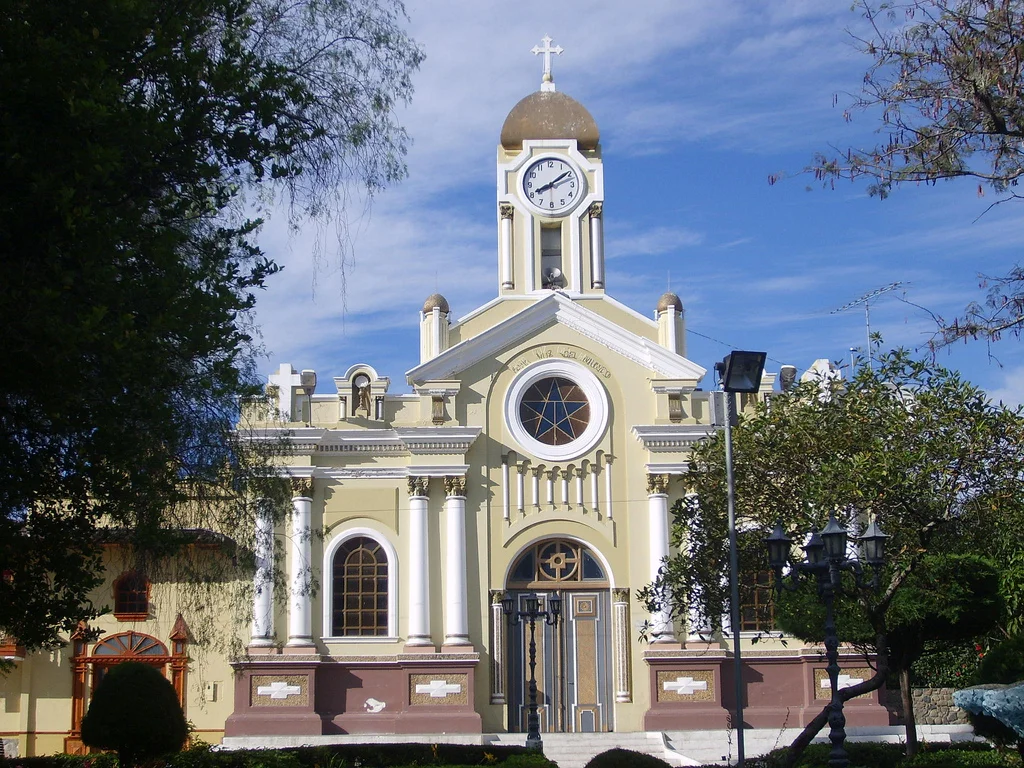

Vilcabamba, Ecuador
In 1971, a Harvard Medical School researcher named Alexander Leaf met a man in Vilcabamba, Ecuador, who claimed to be 122 years old. Three years later, Leaf returned. The same man now said he was 134. Something was off. National Geographic had put Vilcabamba on the cover in 1973 as one of the three great longevity zones on Earth, alongside the Caucasus and Hunza. Magazines called it the Valley of Longevity. Tourists arrived looking for the secret of 120-year-old grandmothers. What Leaf eventually concluded, after calling in colleagues from Wisconsin and Berkeley, was that every extraordinary age claimed in Vilcabamba was wrong - sometimes by decades. There was no centenarian in the village. There never had been.
The Playground of the Inca
Long before it became famous for fictional 130-year-olds, Vilcabamba was something simpler: a beautiful high valley in southern Ecuador, 45 kilometers south of the city of Loja, at the edge of what is now Podocarpus National Park. The name comes from the Quichua huilco pamba - plain of the sacred huilco trees, Anadenanthera colubrina, whose seeds Andean peoples have used for millennia in ritual preparations. The valley was reputedly a retreat for Incan royalty, called the Playground of the Inca for its mild climate and protected geography. A mountain called Mandango - the Sleeping Inca, whose profile from the village really does look like a reclining figure - watches over the valley. Local tradition says Mandango protects Vilcabamba from earthquakes and natural disasters.
1973: The Discovery
It was Dr. Alexander Leaf who introduced Vilcabamba to the world. Leaf, a respected Harvard Medical School gerontologist, visited in 1971 and wrote a 1973 National Geographic cover story announcing three zones where humans appeared to live far past the normal human span: Vilcabamba, the Soviet Caucasus, and Hunza in Pakistan. The pattern seemed remarkable. In all three places, villagers reported not just unusual longevity but extraordinary ages - 120, 130, beyond. Journalists, supplement manufacturers, and tour operators converged. What made Vilcabamba different from the other two alleged longevity zones was that, within a few years, a Harvard researcher was willing to return and double-check.
Mazess and Forman
Leaf recruited Dr. Richard Mazess of the University of Wisconsin at Madison and Dr. Sylvia Forman of the University of California at Berkeley to help settle the question. Their method was careful and unglamorous: cross-reference baptismal records, birth certificates, and self-reported ages, using godparent names to distinguish between identically-named uncles, fathers, and sons who had been confused in earlier studies. The results, presented February 27, 1978, at a National Institutes of Health workshop in Bethesda, were unambiguous. There was no centenarian in Vilcabamba. The oldest person in the village was 96. The average age of those who claimed to be over 100 was, in fact, 86. Life expectancy in Vilcabamba was actually lower than in the United States.
The Case of Miguel Carpio Mendieta
One example made the pattern vivid. Miguel Carpio Mendieta, identified in the researchers' paper by his initials, showed how age inflation worked in practice. In 1944, when he was 61 years old according to his birth records, he reported his age as 70. Five years later he was reportedly 80. In 1970, at the actual age of 87, he claimed 121. By 1974, at 91, he said he was 127. Mazess and Forman speculated that Vilcabambans had traditionally exaggerated their ages to gain status within the community - a custom that predated outside attention. When international media arrived and turned age claims into a tourism pitch, the exaggerations grew faster. Dr. Leaf eventually conceded that his initial reporting had been shaped by this pattern, and the research community quietly retired the Valley of Longevity label.
What the Valley Actually Has
The revision does not mean Vilcabamba is nothing. Researchers found that while individual ages were ordinary, the village did have an unusually high proportion of elderly residents - a demographic fact driven not by extended lifespans but by migration patterns. Young people tended to leave the valley for the cities. The elderly tended to stay or return. The result was a population skewed older than the Ecuadorean norm. The Vilcabamban diet - low in calories, low in animal fat, rich in local fruits and grains - combined with steady physical labor at 1,500 meters altitude did appear to keep residents healthy and vigorous into old age. Longevity, in the literal sense of decades beyond normal life expectancy, turned out to be a legend. A healthy lifestyle in a beautiful valley turned out to be real. Tourists still come. They now drink the Vilcabamba spring water, hike toward Mandango with machete robbery warnings in their guidebooks, and admire a village that, whatever it is not, remains what the Incas called it: a place worth retreating to.
From the Air
Coordinates 4.26 S, 79.22 W, elevation roughly 1,500 meters, in southern Ecuador's Loja Province. Vilcabamba sits in a valley in the Andean foothills, about 45 km south of Loja, bordered to the east by Podocarpus National Park. The distinctive profile of Mandango mountain - the Sleeping Inca - dominates the skyline from the village. Nearest airport is Ciudad de Catamayo (SETM/LOH) near Loja. Temperate mountain climate with mild temperatures year-round and a distinct wet and dry season. Clear mornings typical; afternoon clouds common in the wet season.
Nearby Stories
- Loja, Ecuador 9.9 km away
- Santa Ana (La Florida) 18 km away
- Alamor 24 km away
- Puyango Petrified Forest 50 km away
- Tambogrande 72 km away
- Cueva de los Tayos 126 km away
- Borja, Peru 135 km away
- Marañón Dry Forests 153 km away