.jpg)
2000 Australia Beechcraft King Air Crash
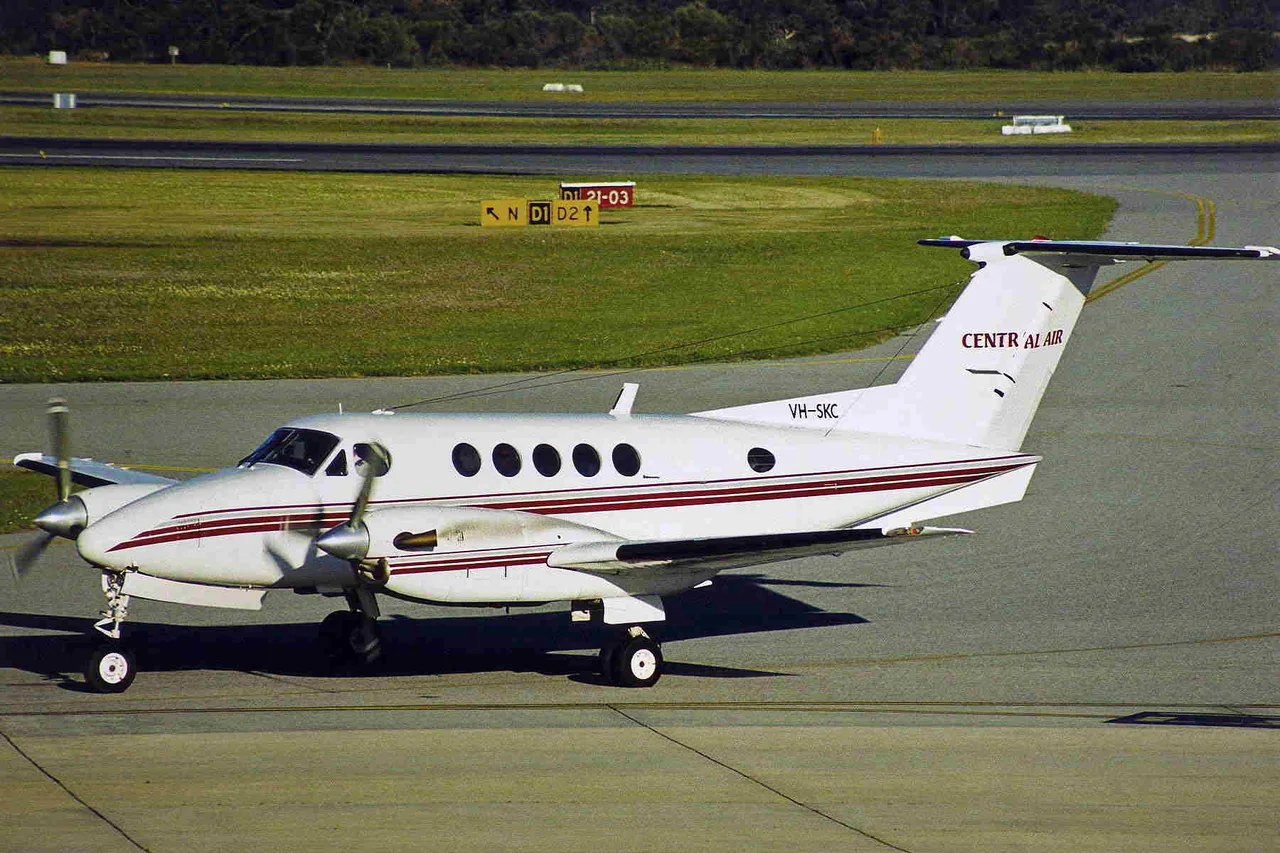
On the morning of 4 September 2000, a small chartered Beechcraft lifted off from Perth and turned for the mining town of Leonora, a routine hop the eight people aboard had every reason to expect would end with lunch and a day's work. It never landed. Somewhere in the climb, as the aircraft pushed above its assigned altitude, the cabin filled not with air but with a slow, invisible deprivation. When a controller called, the pilot's voice came back slurred and failing, the speech of a man already losing himself. Then nothing. For the next five hours the Beechcraft flew on, straight and level on a north-easterly heading, carrying its silent passengers across two thousand kilometres of outback before its fuel ran dry and it came down near Burketown, Queensland. The press would call it the ghost flight.
The Long, Silent Heading
What made the flight so haunting was its eerie composure. This was no spinning, screaming dive. The aircraft held its course with the steady indifference of a machine doing exactly what it had been told, the autopilot tracking a heading no living hand was correcting. At 10:41, a controller tried again over the radio: "Sierra Kilo Charlie, only receiving open mike from you." No reply came. The Beechcraft climbed past 32,500 feet and slipped off radar at 11:02. When a passing business jet was diverted to intercept and pulled alongside, the crew looked through the windows and saw no movement at all, neither on the flight deck nor in the cabin. The aircraft simply kept flying, a sealed room gliding through the stratosphere.
An Invisible Suffocation
The Australian Transport Safety Bureau spent months reconstructing what could not be directly seen. Their conclusion was hypobaric hypoxia: at high altitude in an aircraft that was not properly pressurised, the thin air starved the brain of oxygen. Hypoxia is a quiet killer precisely because it disables judgment first. A person succumbing to it often feels calm, even euphoric, never grasping that anything is wrong, which is why the pilot likely never reached for his oxygen mask and never made a distress call. Investigators could not determine why the supplemental oxygen aboard went unused, nor entirely rule out toxic fumes. There was a deeper grief in the detail that the wreckage was too shattered to reveal whether anyone had tried. The most merciful reading is that the eight aboard lost consciousness gently, unaware, long before the ground rose to meet them.
What the Cockpit Did Not Say
The investigation kept returning to a single, agonising absence. The Beechcraft Super King Air gave only a visual warning of inadequate cabin pressure, a light to be noticed, not an alarm to be heard. The report noted plainly that the aircraft was not fitted with an audible cabin-altitude warning, nor was it required to be. A klaxon might have cut through the creeping fog of hypoxia where a silent light could not. In the aftermath, the Civil Aviation Safety Authority circulated proposals to mandate aural warnings on pressurised aircraft like this one. After consultation, it declined to require them. For families who had lost husbands, fathers, and colleagues to a danger a simple sound might have flagged, that decision landed hard, and their anger was on the record.
An Inquest Without an Answer
Western Australian Coroner Alistair Hope examined the deaths of all eight occupants and found them accidental, yet he too was unable to fix a definitive cause. He recommended what the engineers and the grieving families had urged: an aural alarm for pressurised aircraft, and a low-cost flight data recorder so that the next mystery might leave behind more than wreckage and silence. The coroner was sharply critical of the poor coordination between the safety bureau, Queensland Police, and the aviation regulator, and faulted investigators for failing to take proper notes when interviewing witnesses. More than two decades on, the ghost flight endures as one of aviation's most unsettling cases, not because the science is exotic, but because the human ending was so quiet, so complete, and so nearly preventable.
From the Air
The Beechcraft came down near Wernadinga Station, roughly 65 kilometres south-east of Burketown, at about 18.13 degrees south, 140.05 degrees east, in the flat grazing country south of the Gulf of Carpentaria. The original flight had departed Perth bound for Leonora in Western Australia, but flew on for some five hours to this remote corner of north-west Queensland. The nearest aerodrome is Burketown (YBKT) to the north-west; Mornington Island (YMTI) lies offshore to the north and Mount Isa (YBMA) well to the south. This is open, sparsely settled terrain, best viewed in the clear, stable air of the dry season from May to September.
Nearby Stories
- Burketown Post Office 21 km away
- Burke and Wills Camp B/CXIX 22 km away
- Augustus Downs Station 26 km away
- Leichhardt River 50 km away
- Boiling Down Works, Burketown 51 km away
- Lawn Hill crater 102 km away
- Millungera Station 184 km away