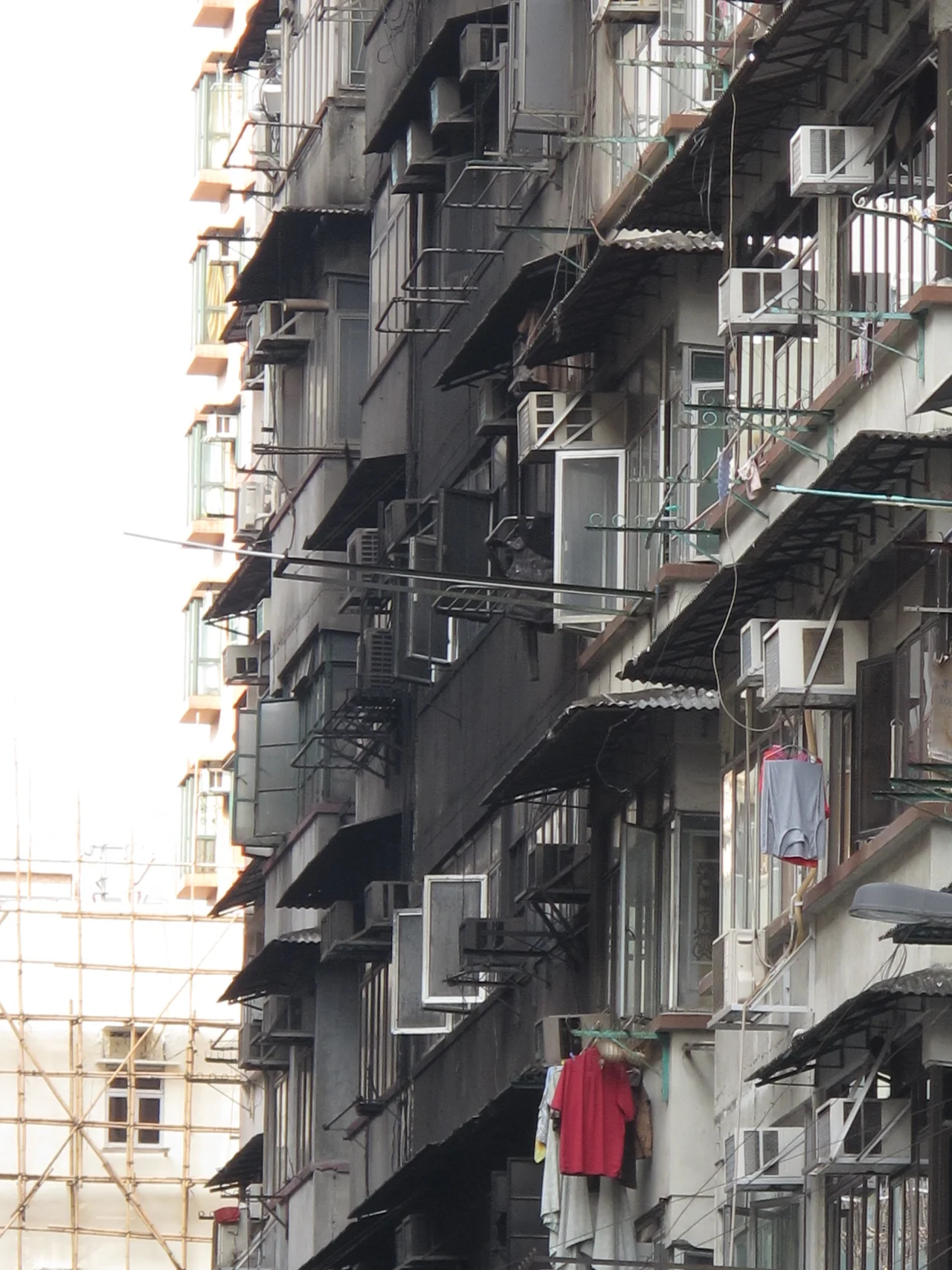

2011 Fa Yuen Street fire
Late on the night of 30 November 2011, fire broke out in a stretch of pai dong — outdoor street stalls — along Fa Yuen Street in Mong Kok, Hong Kong. The nine people who died were not statistics in a housing report. They were residents of cubicle-partitioned flats subdivided out of older tenement buildings, people who paid for shelter in one of the world's most expensive cities and found themselves living in conditions that offered almost no way out when the smoke began to rise. The fire became the deadliest in Hong Kong in 14 years, and it forced a long-overdue confrontation with what it actually meant to be poor and housed in this city.
The Block That Burned
The fire broke out between buildings 188 and 198 on Fa Yuen Street, a busy commercial strip in Mong Kok known for its sports and sneaker shops. But above the shopfronts, many buildings in the area had been carved into subdivided units — tiny cubicle rooms, sometimes with flimsy partitions, stacked floor after floor in buildings never designed for such density. Mong Kok is among the most densely populated urban areas on Earth, and the upper floors of its older tenements had long served as affordable housing of last resort.
The fire killed nine people and injured 34 others. About 118 residents were left homeless. Initial reports cited by the South China Morning Post indicated investigators were treating it as possible arson, and two suspects were sought in connection with the blaze. A subsequent 12-month official probe concluded that faulty electrical wiring, not arson, was the cause. Chief Secretary for Administration Stephen Lam was assigned to oversee the government's response to the disaster. That a cabinet-level official had to be brought in to manage the aftermath said something about how seriously Hong Kong was shaken.
A Crisis Written in Building Codes
After the fire, residents and community advocates were direct about what they saw as the underlying cause: a government that had long looked the other way on illegally subdivided cubicle flats while doing little to expand affordable housing. Critics argued that by favouring property developers and restraining public housing supply, the government had quietly pushed tens of thousands of low-income residents into these firetrap conditions.
Cubicle flats — sometimes called cage homes or subdivided units — are small partitioned rooms rented to individuals or families who cannot afford even a standard flat. They often lack adequate fire escapes, proper ventilation, or compliant electrical wiring. The tragedy on Fa Yuen Street was not the first time such conditions had proved fatal, and critics feared it would not be the last. The comparison that kept surfacing in commentary was to the 1996 Garley Building fire, which killed 41 people, and an arson attack on a karaoke bar in Tsim Sha Tsui in January 1997, in which 17 died — the two deadliest fire incidents before Fa Yuen Street in the preceding 14 years.
Firefighters on the Picket Line
The timing of the fire added an uncomfortable dimension to the tragedy. Around the same time as the blaze, thousands of Hong Kong Fire Services Department personnel staged a 48-hour protest at Southorn Playground in Wan Chai to demonstrate over chronic overwork and understaffing — a complaint that had gone unaddressed for years. Firefighters argued they were required to work 54-hour weeks with inadequate rest.
The protest did not prevent a response to the Fa Yuen Street fire, but the coincidence made unavoidable the question of whether fire safety in Hong Kong was being stretched too thin. The firefighters on the picket line and the nine people who died in Mong Kok that night were, in a sense, casualties of the same systemic failure: a city that had accumulated enormous wealth but was slow to invest it in the safety of its least visible residents.
What the Ashes Left Behind
The fire did not immediately change policy on subdivided units, but it renewed pressure on the government to tighten enforcement and expand access to affordable housing. Advocates renewed calls for stricter regulation of cubicle flats and mandatory fire safety upgrades in older residential buildings. The political conversation about housing inequality in Hong Kong — who gets to live safely and who does not — grew louder in the months that followed.
Fa Yuen Street itself recovered quickly on the surface. The street stalls came back, the sneaker shops reopened, the crowds returned. But for the families of the nine who died and the 118 who lost their homes, the night of 30 November 2011 marked a before and after that no commercial revival could undo.
From the Air
The fire site sits at approximately 22.32°N, 114.17°E in the heart of Mong Kok on the Kowloon Peninsula. Approaching from the west over Victoria Harbour at 3,000–5,000 feet, you can see the tight grid of Kowloon's streets spreading inland from the waterfront — Mong Kok is the dense urban core several kilometres north of Tsim Sha Tsui. Hong Kong International Airport (VHHH) lies about 25 km to the northwest on Lantau Island. The contrast between the gleaming harbour skyline and the tightly packed tenement blocks just inland is visible even from altitude.
Nearby Stories
- Lok Ma Chau Loop 2.3 km away
- Portas do Cerco 2.3 km away
- Kweilin Incident 17 km away
- Wanshan Archipelago Campaign 34 km away
- Nanxiong Formation 115 km away
- Battle of Nanpeng Island 148 km away
- Heyuan 169 km away
- Cape Maobitou 632 km away