
2012 Lamma Island ferry collision
The passengers aboard the Lamma IV had spent their evening touring the Lamma Power Station as part of a company family day organised by Hongkong Electric. They were heading back to Central to watch the National Day fireworks — children among them, families who had joined the outing together. At 8:23 in the evening of 1 October 2012, as the vessel crossed the waters south of Lamma Island, the bow of another ferry, the Sea Smooth, struck its stern. The collision ruptured two watertight compartments. Lamma IV capsized so quickly that more than 100 passengers were thrown into the dark water before they could reach the life vests that were, by all accounts, abundantly available onboard.
An Evening That Turned
The 1 October National Day holiday is one of Hong Kong's busiest nights on the water. Ferries carry spectators toward the fireworks from multiple directions, and the harbour fills with pleasure craft and tour vessels. The Lamma IV was travelling from Lamma Island toward Central, carrying 121 passengers and 3 crew — most of them Hongkong Electric employees and their families. The Sea Smooth was making the opposite crossing, from Central to Yung Shue Wan on Lamma.
The collision happened in the approaches to the western harbour, in darkness. The impact ruptured the Lamma IV's aft compartments, and the vessel went down with brutal speed. Rescue crews from the Fire Services Department deployed 10 launches and mobilised 350 officers; more than 60 ambulances were dispatched to the scene and to five receiving hospitals across the territory. The Hong Kong government requested search-and-rescue assistance from nearby Guangdong province, though ultimately domestic resources proved sufficient. By the time the last count was made, 39 people were dead and 92 others had been injured. One passenger died in hospital four days later.
Thirty-Nine Lives
Seven of the 39 people who died were staff of Hongkong Electric — colleagues who had brought their families on what was meant to be a celebratory outing. There were children among the dead. The South China Morning Post eventually published a full list of the 39 deceased, giving each victim a name and a face rather than a number in a casualty count.
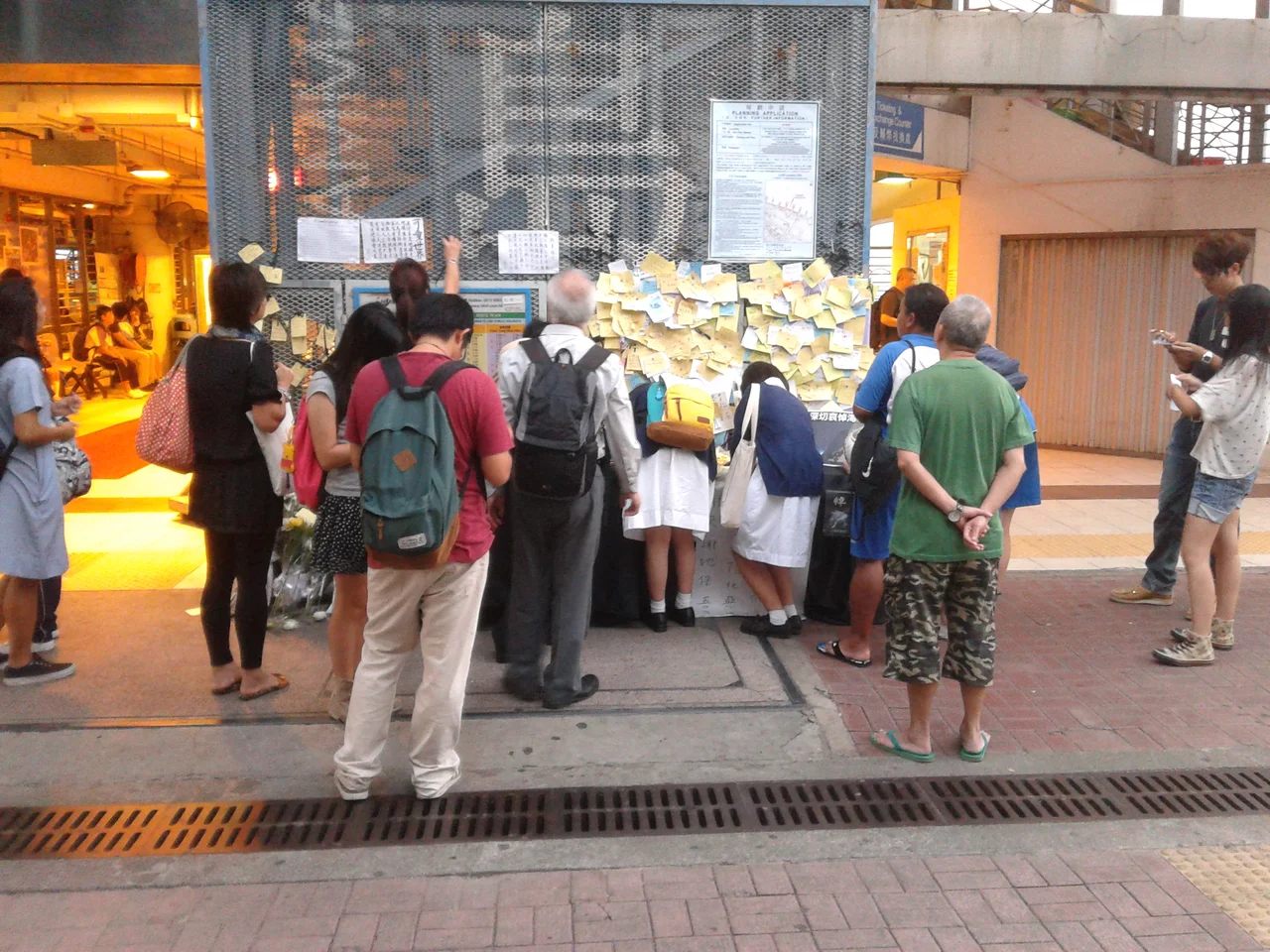
The company and its parent, controlled by Li Ka-shing, responded quickly. HK Electric announced HK$200,000 in emergency relief to the family of each person who died; Li Ka-shing returned to the city the following morning, and the Li Ka-shing Foundation set aside HK$30 million in additional support for victims and their families. Three days of official mourning were declared by Chief Executive Leung Chun-ying, beginning 4 October. Flags across Hong Kong flew at half-mast. Schools observed moments of silence. The government cancelled the 2013 National Day fireworks display.
Questions That Would Not Wait
The captain of the Sea Smooth left the scene after the collision and continued to Yung Shue Wan pier, a decision that ignited immediate controversy. Whether he acted out of fear for his own vessel's safety or at the urging of his passengers — accounts varied — the sight of the striking ship sailing on while people drowned behind her was one that Hong Kong could not set aside.
A Commission of Inquiry was formed to investigate the cause of the accident. Initial speculation about speeding and overloading was examined and largely set aside: witnesses said the Lamma IV was travelling at a steady speed, and the vessel had a certified capacity of 200, carrying 124. Andy Tsang, the Commissioner of Police, announced that seven crew members from both vessels had been arrested within a day of the disaster. After a lengthy legal process, the captain of the Sea Smooth, identified as Lai, was sentenced to eight years in prison in February 2015; the Lamma IV's captain, Chow, received nine months.
Mourning and Memory
The political aftermath was turbulent. Chief Executive Leung's decision to invoke Mainland China's assistance through the Liaison Office drew sharp criticism from pro-democracy supporters, who saw it as an unnecessary symbolic gesture given that Hong Kong's own rescue forces were handling the operation. Mainland China's state news agency, China News Service, initially reported that Chinese rescue ships had saved 95 people — a claim that was later deleted but not fully withdrawn, and that deepened the controversy.
The Lamma ferry disaster, as it came to be known, remains the most deadly maritime accident in Hong Kong since 1971. The waters off Lamma Island, now quiet and popular with weekend hikers and kayakers, carry that history beneath their surface. Every 1 October, when the fireworks return to Victoria Harbour, the anniversary accompanies them.
From the Air
The collision occurred at approximately 22.24°N, 114.10°E, in the western approaches to Victoria Harbour south of Green Island and northwest of Lamma Island's Yung Shue Wan village. Approaching from the southwest at 4,000–6,000 feet, you can see Lamma Island clearly — a hilly, largely undeveloped island about 8 km south of Hong Kong Island, separated from the main harbour by the Sulphur Channel. The Lamma Power Station's twin stacks are a prominent visual landmark on the island's northeast shore. Hong Kong International Airport (VHHH) is approximately 20 km to the northwest on Lantau Island.
Nearby Stories
- Lok Ma Chau Loop 2.3 km away
- Portas do Cerco 2.3 km away
- Kweilin Incident 17 km away
- Wanshan Archipelago Campaign 34 km away
- Nanxiong Formation 115 km away
- Battle of Nanpeng Island 148 km away
- Heyuan 169 km away
- Cape Maobitou 632 km away