.jpg)
2019–2020 Hong Kong protests
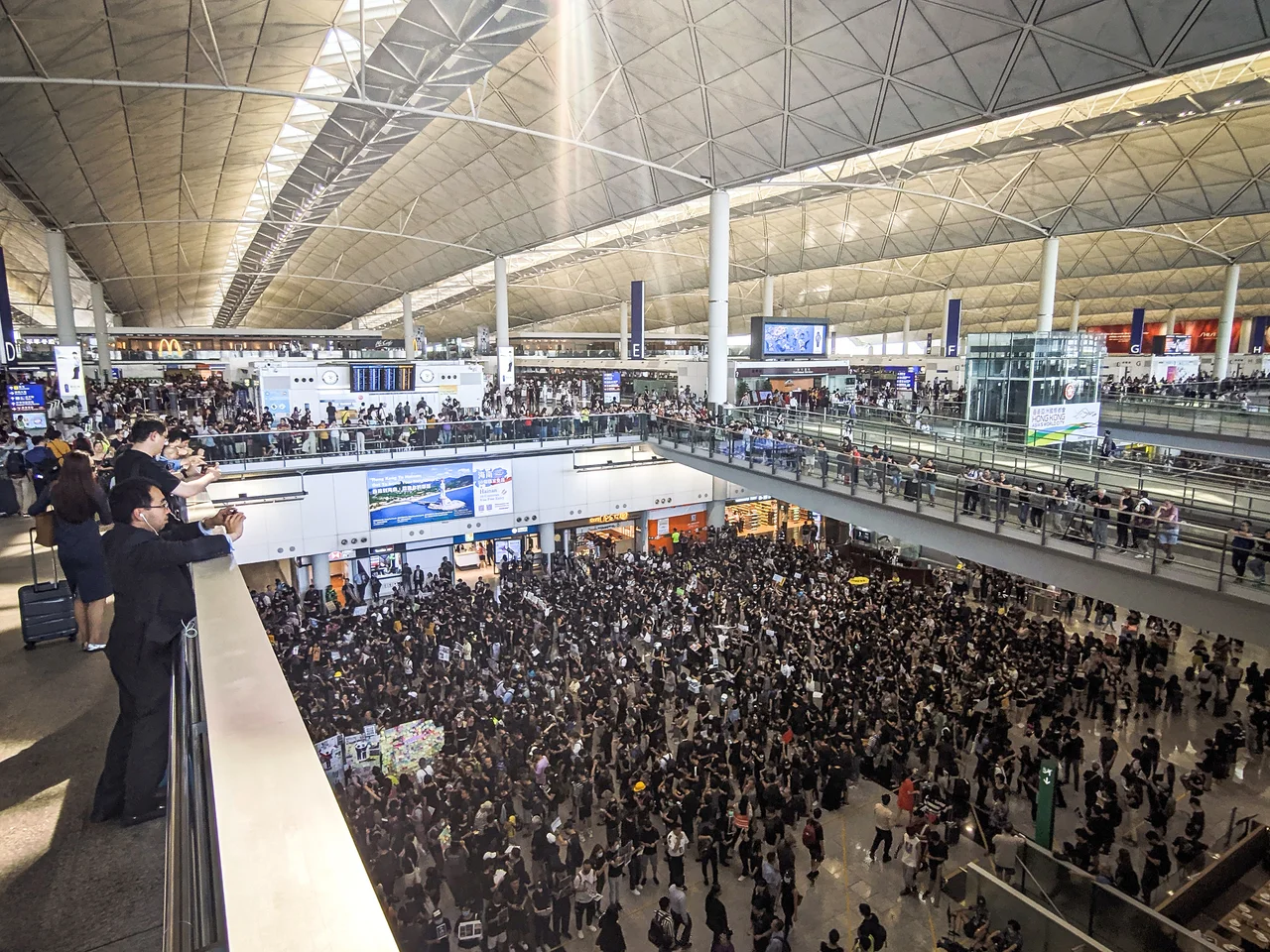
On 9 June 2019, organisers estimated that 1.03 million people marched through the streets of Hong Kong Island in opposition to a proposed extradition bill. A week later, with the bill suspended but not withdrawn, that number nearly doubled. In the months that followed, the demonstrations spread across every corner of the territory — through university campuses, shopping centres, residential neighbourhoods and transport hubs — becoming the largest sustained protest movement in the city's history. The people who took to the streets were not a monolith: students, office workers, lawyers, doctors, parents, and retirees, most of them Hongkongers who had grown up under the promise of 'one country, two systems' and had begun to fear that promise was being quietly unwound.
The Bill That Started It
The immediate trigger was a proposed amendment to the Fugitive Offenders Ordinance, introduced in February 2019 following the 2018 murder of a Hong Kong woman by her boyfriend during a trip to Taiwan. Because Hong Kong had no extradition treaty with Taiwan, the suspect returned to Hong Kong and could not be surrendered. The government's solution was sweeping: a mechanism for case-by-case extraditions to any jurisdiction lacking a formal treaty with Hong Kong — including mainland China.
For many Hongkongers, the inclusion of China was the clause that changed everything. The city's legal community, business associations, and civil society groups warned that the bill would expose Hong Kong residents to a legal system they did not trust, undercutting the autonomy that had made Hong Kong a global financial centre since 1997. Opposition was broad and cross-partisan from the start. Chief Executive Carrie Lam formally withdrew the bill on 4 September 2019, but by then the protests had grown into something the bill alone could not explain or contain.
Five Demands, Not One Less
As police and protesters clashed on 12 June 2019 — the day of a planned legislative reading of the bill — and police Commissioner Stephen Lo declared the confrontations a 'riot,' the protest movement coalesced around five demands: full withdrawal of the extradition bill; retraction of the riot characterisation; release and exoneration of arrested protesters; an independent commission of inquiry into police conduct; and universal suffrage for Hong Kong's elections.
The slogan was precise: 'Five demands, not one less.' The government met the first — formally withdrawing the bill — but refused the rest. That refusal kept hundreds of thousands in the streets through the summer and autumn of 2019, through the storming of the Legislative Council on 1 July, through the coordinated attack on Yuen Long station on 21 July in which white-clad men assaulted commuters while police were absent, and through the November sieges of Chinese University and Hong Kong Polytechnic University, where students barricaded themselves inside and police surrounded the campuses for days.
People Who Did Not Come Home
Two confirmed deaths were directly linked to protest events. Marco Leung Ling-kit, a 35-year-old man, fell from scaffolding at Pacific Place on 15 June 2019 while protesting Lam's decision to suspend rather than withdraw the bill; an inquest jury in May 2021 ruled his death a misadventure. His yellow raincoat became one of the movement's enduring symbols.
Alex Chow Tsz-lok, a 22-year-old student at the Hong Kong University of Science and Technology, fell from a car park in Tseung Kwan O in the early hours of 4 November, near the scene of a police operation. He was found unconscious and underwent two brain surgeries that could not save him; he died on 8 November. Protesters blamed police for his death; police denied involvement. After Chow died, the protests intensified again — a general strike, roadblocks, flash rallies — before the 24 November District Council election offered a different form of expression. The pro-democracy camp won by a landslide in that election, a result widely read as a referendum on how Hong Kong's people felt about their government.
The Law That Changed Everything
The COVID-19 pandemic quieted the streets in early 2020, but the political pressure continued. In June 2020, Beijing promulgated a national security law for Hong Kong, bypassing local legislation entirely. The law criminalised secession, foreign interference, terrorism, and subversion, with penalties of up to life imprisonment. Its scope was broad enough to create what activists described as a chilling effect across civil society — unions dissolved, civic groups disbanded, prominent activists fled abroad.
In the months that followed, more than 50 individuals connected to an informal pro-democracy primary were arrested for alleged subversion. The government delayed and then restructured the Legislative Council election. More than 89,000 Hongkongers left the city in the year following the law's passage, and the city's population recorded a sharp decline. Major Western countries — the United States, the United Kingdom, Canada, Australia, Germany, and New Zealand — suspended their extradition treaties with Hong Kong. The protests that had begun over a single bill had, by their end, reshaped Hong Kong's relationship with the world.
From the Air
The protests unfolded across the entire Hong Kong metropolitan area, centred on Hong Kong Island at approximately 22.28°N, 114.17°E. Key sites include the Legislative Council Complex in Admiralty, the Polytechnic University campus in Hung Hom on the Kowloon Peninsula, Yuen Long station in the New Territories, and the universities in the hills above the city. Approaching from the east at 6,000–8,000 feet, you can see Victoria Harbour dividing Hong Kong Island from Kowloon, with the new Tamar government complex visible at the harbour's edge near Admiralty. Hong Kong International Airport (VHHH) lies about 30 km to the west on Lantau Island. Visibility on clear days extends to the New Territories and the Chinese border beyond.
Nearby Stories
- Lok Ma Chau Loop 2.3 km away
- Portas do Cerco 2.3 km away
- Kweilin Incident 17 km away
- Wanshan Archipelago Campaign 34 km away
- Nanxiong Formation 115 km away
- Battle of Nanpeng Island 148 km away
- Heyuan 169 km away
- Cape Maobitou 632 km away