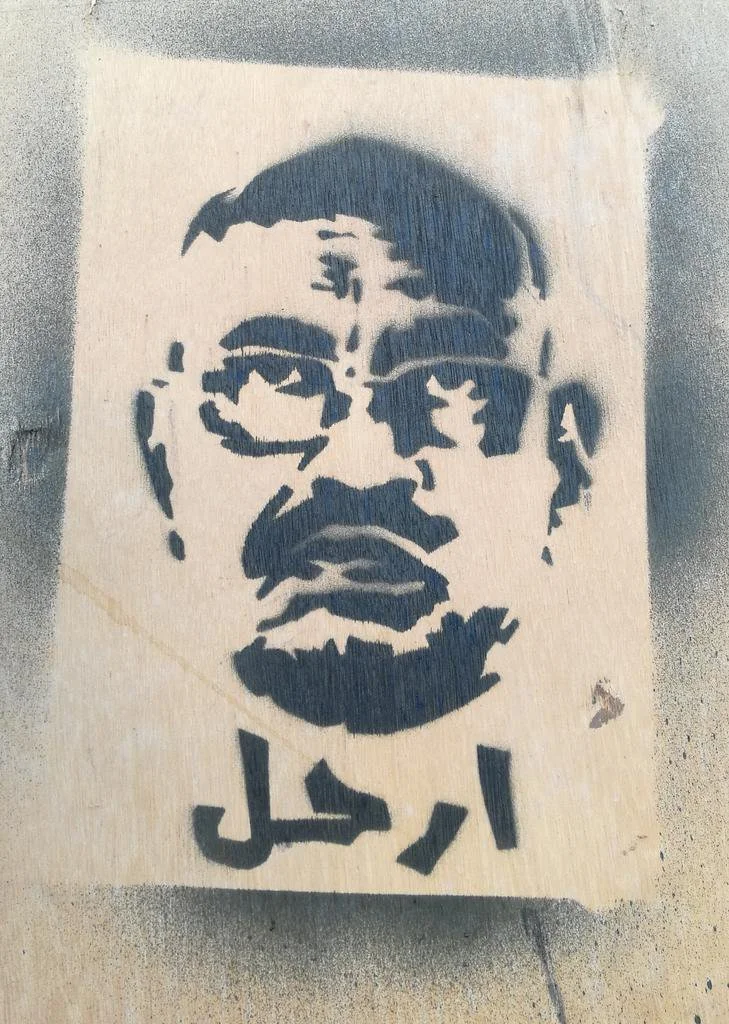

2019 Sudanese coup d'état
The protests began, in December 2018, over bread. The price of a loaf had tripled. For Sudanese living on already-crushed salaries in an economy collapsing under sanctions and the loss of South Sudan's oil revenue, the bread price became the detail that tipped four months of patience into four months of sustained, organized, coordinated resistance. By April 2019, the Sudanese Professionals Association had choreographed daily sit-ins outside army headquarters in Khartoum, and the women leading chants on the shoulders of protesters were visible on every front page of the international press. On 11 April the military finally acted. Omar al-Bashir's thirty-year rule was over.
Four Months on the Street
The Sudanese Revolution that culminated in April 2019 did not begin in April. It began on 19 December 2018 in the city of Atbara - a railway town with a long union history - when demonstrations broke out over the rising cost of bread and fuel. The protests spread. In January they shifted from economic to political demands: resignation of the president. By February 2019, Bashir had declared the first state of national emergency in twenty years, hoping emergency powers would crack the movement. They did not. A striking image emerged from the sit-in at army headquarters in Khartoum: Alaa Salah, a young woman in a white thobe, standing on top of a car singing to a crowd. The photograph went global. The movement was young, largely female-led in its most visible moments, and explicitly nonviolent.
The Generals Fold
On the afternoon of 11 April 2019, the Sudanese military removed al-Bashir as president, dissolved the cabinet and the National Legislature, and declared a three-month state of emergency to be followed by a two-year transition period. Lt. Gen. Ahmed Awad Ibn Auf - both Defense Minister and Vice President of Sudan - announced the changes and declared himself de facto Head of State. He suspended the constitution and imposed a curfew from 10 pm to 4 am. The protestors, instead of going home, dug in deeper. Within 24 hours it became clear that Ibn Auf was unacceptable to the streets. He had been too close to al-Bashir, too implicated in the old regime's worst abuses. On 12 April he stepped down and handed leadership of the Transitional Military Council to Lt. Gen. Abdel Fattah al-Burhan, who was considered to have a cleaner record.
The Khartoum Massacre
The transition was not peaceful. On 3 June 2019, Sudanese security forces and the Rapid Support Forces - the paramilitary successor to the Janjaweed - attacked the main sit-in outside army headquarters in Khartoum. At least 87 people were killed. Dozens of women were raped. Bodies were later recovered from the Nile, weighted down. The attack became known as the Khartoum massacre, and its casualty figures were probably undercounted because so many of the dead were people who had come from across Sudan and whose families in distant villages might never know what had happened to them. The movement did not collapse. It did the opposite. Within days, mass civil disobedience paralyzed the country until the generals returned to the negotiating table.
The Transitional Government
A deal was agreed verbally between the Transitional Military Council and the civilian protesters represented by the Forces of Freedom and Change on 5 July 2019. A written agreement was signed on 17 July. On 3 August, terms for a transitional government and new constitution were finalized. On 4 August, opposition leader Ahmed Rabie and General Mohamed Hamdan Dagalo - the RSF commander known as Hemedti - signed the Constitutional Declaration. Six civilians and five military officers would lead Sudan during a three-year transition toward elections. Abdalla Hamdok, an economist who had worked for the UN Economic Commission for Africa, became prime minister in September. For a few hopeful months, it looked like the Sudanese experiment in civilian-military power-sharing might actually work.
From the Air
The army headquarters compound in central Khartoum - the ground where the sit-in unfolded, where Alaa Salah sang, where the 3 June massacre happened - sits just west of the Blue Nile in the heart of the capital. The Presidential Palace is a short walk away. The streets that filled with demonstrators form the core of central Khartoum's colonial-era grid. Atbara, where the protests began, lies northeast of Khartoum at the confluence of the Nile and Atbara Rivers - about 250 kilometers by rail. Bashir, after his arrest, was moved from his residence to Khartoum's Kobar prison and eventually convicted of corruption. The ICC warrant against him for genocide in Darfur remains outstanding. The transitional government he was supposed to hand the country to would itself be overthrown two years later, in October 2021, by the same general who had taken over from Ibn Auf - al-Burhan.
From the Air
Coordinates: 15.50°N, 32.56°E (central Khartoum). Recommended viewing altitude: FL300-FL350. Visible landmarks: Blue Nile/White Nile confluence, army headquarters compound, Presidential Palace. Primary airport: Khartoum International (HSSS/KRT). Weather: hot desert; haboob dust storms May-September.
Nearby Stories
- Esh Shaheinab 27 km away
- Naqa 56 km away
- Mahdist War 65 km away
- Musawwarat es-Sufra 100 km away
- Gezira State 101 km away
- Northern Sudan 215 km away