.jpg)
2021 Sudanese coup d'état
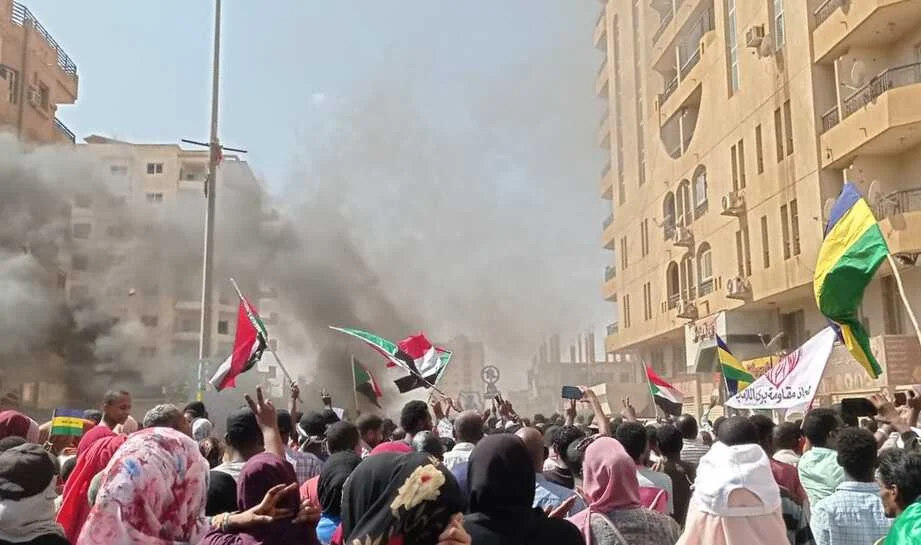
Between 200,000 and two million Sudanese poured into the streets on 30 October 2021, five days after General Abdel Fattah al-Burhan seized power in Khartoum. The chants they repeated were not new; they were the ones they had chanted in 2019 when they helped overthrow Omar al-Bashir. 'The people are stronger.' 'Retreat to military rule is impossible.' 'We are revolutionaries. We are free. We will complete the journey.' The journey, in the years since, has not been completed. But the courage of 2021 remains a record of what ordinary people will still try to do against tanks.
The Partnership That Failed
After 2019, Sudan was supposed to be in transition to civilian rule. The Transitional Military Council and the civilian Forces of Freedom and Change had signed a power-sharing agreement in August 2019. The Sovereignty Council would be led by a military figure for 21 months, then by a civilian for 18 months, with full elections planned for mid-2023. The handover of Sovereignty Council leadership from military to civilian was scheduled for November 2021. The military had never been enthusiastic about that part. Through the first months of 2021, tensions grew. A September 2021 coup attempt by 'remnants of the former regime' was thwarted. Pro-military protests in mid-October called openly for Gen. al-Burhan to seize control. The civilian side, led by Prime Minister Abdalla Hamdok, tried to negotiate. The negotiations failed.
The Morning of 25 October
On 25 October 2021, the Sudanese military took control of the government. At least five senior government figures were initially detained. Prime Minister Hamdok refused to declare support for the coup and called on Sudanese to resist. A majority of the Hamdok Cabinet and pro-government supporters were arrested. The list of detainees, according to documentation by Sudanese and international human rights groups, included 'government ministers, members of political parties, lawyers, civil society activists, journalists, human rights defenders, and protest leaders.' They were held in secret locations without access to their families or lawyers. Al-Burhan declared a state of emergency, dissolved the Sovereignty Council, suspended the transitional constitution, and announced a new technocratic government would lead Sudan to elections in July 2023. In his televised address the next day he said his actions were necessary to avoid civil war.
The Streets Respond
Sudanese responded the way they had responded in 2019: by showing up. The Sudanese Professionals Association and the Forces of Freedom and Change called for mass civil disobedience. Schools, banks, and businesses closed. Neighborhood resistance committees - a form of organization that had emerged during the 2019 revolution - mobilized their streets. On 30 October somewhere between 200,000 and two million people demonstrated across the country. Military forces and plainclothes thugs beat demonstrators in the streets, some injuring protesters by driving cars into crowds. Medical personnel in Khartoum reported soldiers with guns demanding they hand over wounded demonstrators; they refused. The Socialist Doctors' Association reported Royal Care hospital near army headquarters in 'urgent need of blood.' Three hundred protestors were arrested. The internet went out. The protests kept going.
The Hamdok Deal That Broke Him
On 21 November 2021, after weeks of international pressure and continued street protest, al-Burhan and Hamdok signed a 14-point deal. Hamdok would be reinstated as prime minister. All political prisoners would be freed. The civilian-military partnership would continue. The deal was immediately rejected by the civilian groups that had supported Hamdok - the Forces of Freedom and Change, the Sudanese Professionals Association, the neighborhood resistance committees. They refused to accept continued power-sharing with a military that had just deposed the civilian government. Hamdok, without a civilian base, was a prime minister in name only. On 2 January 2022, after two more people had been killed in continuing pro-democracy protests, he resigned. Since then, Sudan has been ruled by the military. In April 2023 a war broke out between al-Burhan's army and Hemedti's Rapid Support Forces - a civil war still devastating the country in 2026.
From the Air
The Presidential Palace in central Khartoum, the army headquarters compound just to the west, the streets that filled with protesters, the universities where the resistance committees coordinated - these locations remain unchanged on any aerial view. What has changed is the country surrounding them. Khartoum itself has been fought over since April 2023 by the rival military factions that had briefly shared power. Many of the buildings photographed during the 2021 protests have since been damaged or destroyed. The people who chanted 'we are revolutionaries' in October 2021 are scattered - displaced, in exile, or still there - holding onto whatever they can of the promise those chants made. From altitude the river still runs. The three cities still form their Y at the confluence. What ordinary Sudanese have endured across six years - and the grace with which they endured it - is not visible from altitude but remains one of the defining political stories of the early 21st century.
From the Air
Coordinates: 15.50°N, 32.56°E (central Khartoum). Recommended viewing altitude: FL300-FL350. Visible landmarks: Blue Nile/White Nile confluence, Presidential Palace, army headquarters compound, Khartoum International Airport. Note: Since April 2023, Sudan's civil war has disrupted civilian aviation operations; overflight permits may be affected. Weather: hot desert; haboob dust storms May-September.
Nearby Stories
- Esh Shaheinab 27 km away
- Naqa 56 km away
- Mahdist War 65 km away
- Musawwarat es-Sufra 100 km away
- Gezira State 101 km away
- Northern Sudan 215 km away