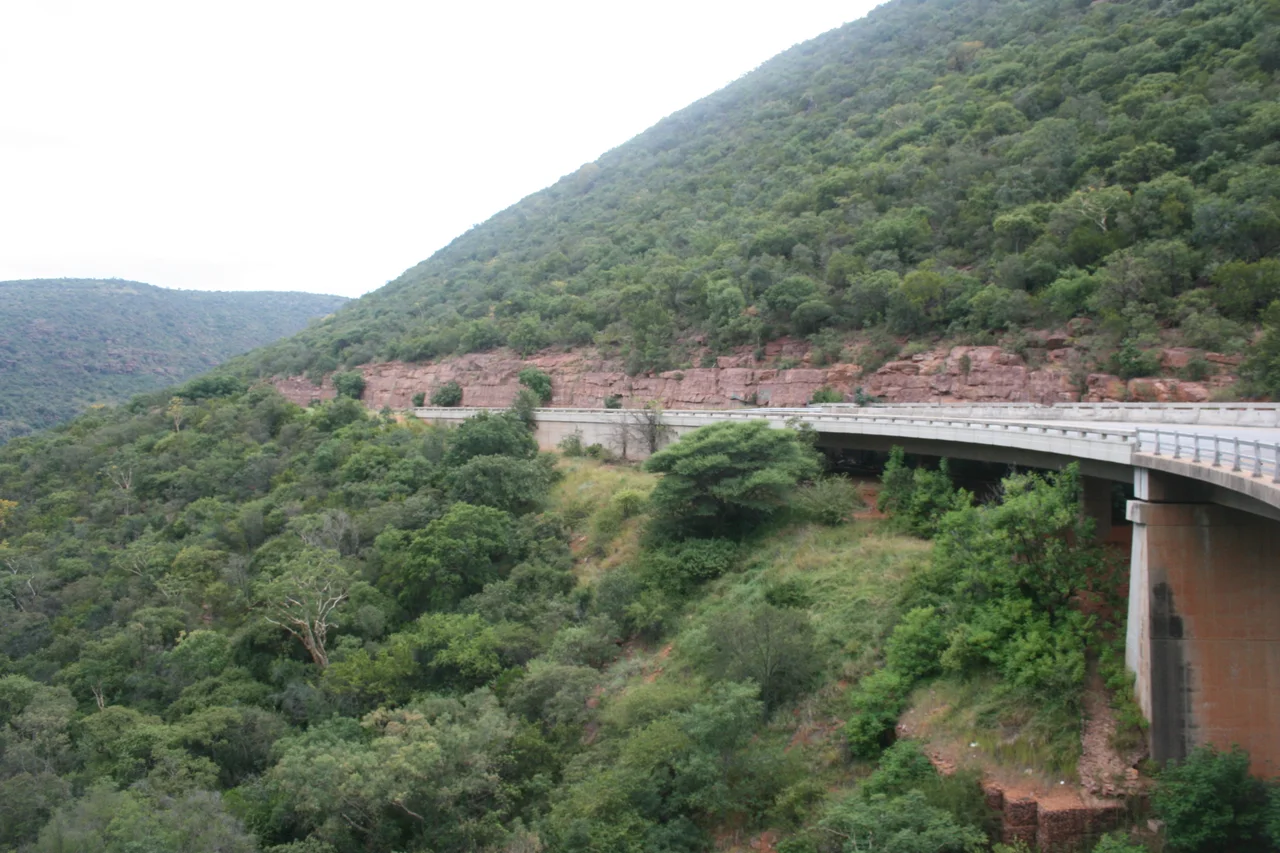

2024 Mmamatlakala Bus Crash
They were almost there. The bus had crossed from Botswana and pushed deep into Limpopo, carrying members of the St. Engenas Zion Christian Church toward Moria, the church's holy city, where millions converge each Easter in one of the largest religious gatherings on the African continent. On 28 March 2024, somewhere near the village of Mmamatlakala, the journey ended on the Mma Matlakala Bridge. The driver appears to have missed a turn-off; the bus left the road, fell roughly fifty meters into the ravine below, and caught fire on the rocks. Forty-five people died. One did not.
A Pilgrimage Generations in the Making
To understand the loss you have to understand the destination. The Zion Christian Church is the largest indigenous religious movement in southern Africa - by some accounts one in ten South Africans belongs to it - and its Easter pilgrimage to Zion City Moria, outside Polokwane, draws somewhere between three and five million people from across the region every year. For the congregation traveling from Molepolole, near Gaborone, this was no ordinary trip. It was the first pilgrimage since the COVID-19 pandemic had forced the gathering to pause, a long-awaited return to a place of blessing and belonging. They were families: grandparents and grandchildren, neighbors and friends, all making a journey their church had made for generations.
The Bridge
The roads of Limpopo gave little warning. South Africa has one of the most developed road networks on the continent and one of its worst safety records, and the Easter weekend is the deadliest stretch of its calendar - the year before, the holiday had brought 225 deaths in four days. Hours before the crash, President Cyril Ramaphosa had pleaded with travelers to take care, saying the weekend did not have to become another tally of tragedy. The bus, pulling a loaded trailer that added dangerous weight, reached the Mma Matlakala Bridge between the towns of Mokopane and Marken. Initial reports suggested the driver had missed the turn-off for the smoother N11. It went over the side, and rescuers worked into the night at a scene where many of the dead could no longer be recognized.
The Girl Who Lived
Amid that wreckage, rescuers found a child alive. She was eight years old - later named in the press as Lorraine Atlang Siako - and she had been traveling with her grandmother, who did not survive. She was pulled from the ravine with lacerations to her arms, legs, head, and back, and was soon reported in stable condition. South Africa's health minister called her survival a miracle that no one could explain. It is the kind of word people reach for when an event has no other handle, and it carried the weight of every family who had lost someone on that bridge. She had survived a fall that killed everyone around her, including the grandmother who had brought her. She would recover, and in time go home - the single thread that the disaster did not cut, and a child who would carry the memory of that journey for the rest of her life.
Mourning Across a Border
The grief did not belong to one country. The driver and every passenger were citizens of Botswana, and the tragedy bound the two nations in loss. President Ramaphosa sent condolences to Botswanan President Mokgweetsi Masisi and pledged support; South Africa's transport minister came to the ravine, promised a full inquiry, and arranged to return the dead across the border. The recovery was painstaking - by the day after the crash, only thirty-four bodies had been found and just nine could be identified. On 4 May, more than a month later, the community of Molepolole gathered to bury forty-four of its own in a single mass funeral. They had set out together for the holiest place their faith knows. The road home became a memorial.
From the Air
The crash site is the Mma Matlakala Bridge near Mmamatlakala, at roughly 23.98°S, 28.54°E, in the Mogalakwena area of Limpopo between the towns of Mokopane and Marken. The bridge spans a deep ravine in broken, hilly country northwest of the main N11 corridor; from the air the terrain reads as a tangle of ridges and dry watercourses cut by mountain passes, the kind of landscape where a missed turn carries no margin. The pilgrims' destination, Moria (Zion City), lies further east near Polokwane. Polokwane International Airport (ICAO: FAPP / IATA: PTG) is the nearest major field, roughly 100 km to the east. The region is best seen in the dry winter months (May-August); recommended altitude 5,000-8,000 ft over the passes.
Nearby Stories
- 2010 FIFA World Cup 30 km away
- Waterberg Biosphere 39 km away
- Marakele National Park 53 km away
- Bushveld Igneous Complex 58 km away
- Sunland Baobab 104 km away
- Tswaing crater 140 km away
- Soutpansberg 148 km away
- Makgadikgadi Pan 468 km away