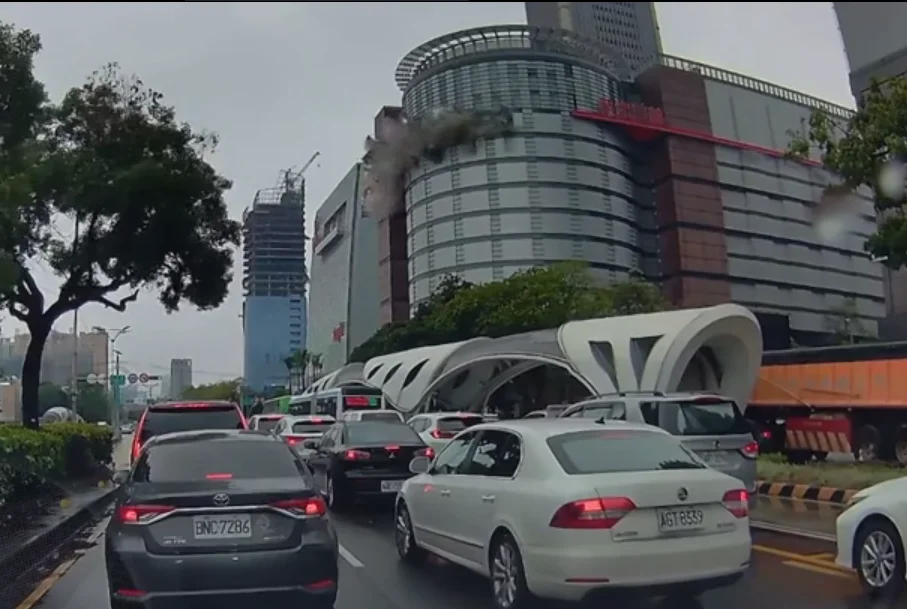

2025 Taichung Shin Kong Mitsukoshi Gas Explosion
A family of seven from Macau had come to Taiwan for a holiday. On the morning of February 13, 2025 — a Thursday, just before the Lunar New Year — they were walking past the Shin Kong Mitsukoshi department store on the sidewalk in Taichung's Xitun District. They were not inside the building. They were simply passing. At 11:33 in the morning, the twelfth floor exploded. The grandparents of the family's two-year-old girl were killed by falling debris. The child herself suffered grave injuries. She died on March 7, 2025, at a hospital in Macau, weeks after being discharged from intensive care in Taiwan. She was two years old. Five people died in total that day. Thirty-eight were injured. It was the deadliest incident in the history of Taiwanese department stores.
The People Who Were There
Beyond the Macau family, two people died inside the building: a department store staff member and a construction worker, on the eleventh and twelfth floors. Five additional victims were initially described as being in serious condition. The injured were treated at hospitals across Taiwan — in Taichung, Taoyuan, Kaohsiung, and Taipei — a geographic spread that reflected both the severity of the blast and the distances families were willing to travel to reach their loved ones.
The two-year-old was taken for emergency brain surgery. She survived long enough to be discharged from China Medical University Hospital on February 26, her family traveling home to Macau with hope. Then, on March 7, Macau's Health Bureau announced she had died at Conde S. Januário Hospital. She had not recovered from her injuries. Her death raised the final toll to five, and it extended the grief of this event far beyond Taichung.
The Twelfth Floor
The explosion originated in the twelfth-floor food court, which had been closed to the public for renovation. Contractors were dismantling counters when the blast occurred. Investigators later established a precise sequence of events: Shin Chung Natural Gas Company had removed some gas meters and sealed some pipes, but had also removed the gas leak detection system without replacing it. An excavator then tore through pipes in the ceiling, allowing gas to accumulate. An electrician — who had not been told about the leak — began using a powered cable cutter. The spark was enough.
The investigation found that contractors had started work without the required interior renovation permits and without an approved fire safety plan for the construction period. Firefighting equipment, including gas leak detectors, had been switched off on the twelfth floor. The Taichung Fire Bureau confirmed the cause on March 28, 2025, and turned its full report over to prosecutors.
Accountability
The legal reckoning was extensive. In December 2025, thirteen people were indicted on charges including negligent homicide, negligent injury, and violations of the Occupational Safety and Health Act. The indictments followed months of investigation involving more than fifty witnesses and a careful examination of who had authorized what, and who had failed to act on what they knew.
Shin Kong Group president Richard Wu stated publicly that the company would take responsibility. The initial compensation offer of NT$1 million per deceased victim was later increased to NT$11 million per family. Whether that figure was adequate was a question each affected family had to answer for themselves. The store itself closed for months of repair and reopened on September 27, 2025, with a refurbished twelfth floor housing 25 new food court brands.
Response and Memory
Taiwan's political leadership responded quickly. President Lai Ching-te visited injured survivors at Lin Shin Hospital and Taichung Veterans General Hospital on February 15, two days after the explosion. Taipei Mayor Chiang Wan-an offered assistance from the capital. Kaohsiung city officials did the same. The Mainland Affairs Council coordinated with Macau authorities to support the Macau nationals caught in the disaster.
The nurses who responded to the blast at Changhua Christian Hospital were later recognized with NT$100,000 awards for their efforts. Their care was one of many quiet acts of professionalism that kept the toll from being worse. The explosion did not happen in isolation — it happened in a place where people worked, where families shopped, where a grandmother and grandfather from Macau were simply walking by on a holiday morning.
A Department Store and a City
Shin Kong Mitsukoshi is a familiar landmark in Taichung's Xitun District, part of Taiwan's 7th Redevelopment Zone — an area that has transformed over recent decades from urban expansion territory into one of the city's most commercially active corridors. Department stores in Taiwan occupy a particular social role: they are places of gathering, of celebration, of routine. The violence of February 13, 2025 arrived in one of those ordinary gathering places without warning.
What the accident exposed was not spectacular negligence but the kind of accumulated shortcut that is hard to see until something fails. Missing permits, removed safety systems, workers not informed of hazards — each decision seemed manageable in isolation. Together, they were not.
From the Air
The Shin Kong Mitsukoshi Taichung Zhonggang store is located at approximately 24.17°N, 120.64°E in the Xitun District of Taichung, Taiwan, within the 7th Redevelopment Zone. Taichung International Airport (RCMQ) lies approximately 8 kilometers to the southwest. From an altitude of 3,000–5,000 feet, the Xitun commercial corridor is visible as a dense cluster of high-rise commercial buildings set against the Taichung basin, with the Central Mountain Range visible to the east.
Nearby Stories
- Taroko National Park 4.5 km away
- Jiji, Nantou 9 km away
- Miaoli Ceramics Museum 9.2 km away
- Smangus 17 km away
- Taixi, Yunlin 23 km away
- Lintianshan Forestry Culture Park 24 km away
- Taiwan Strait 52 km away
- China Airlines Flight 611 60 km away