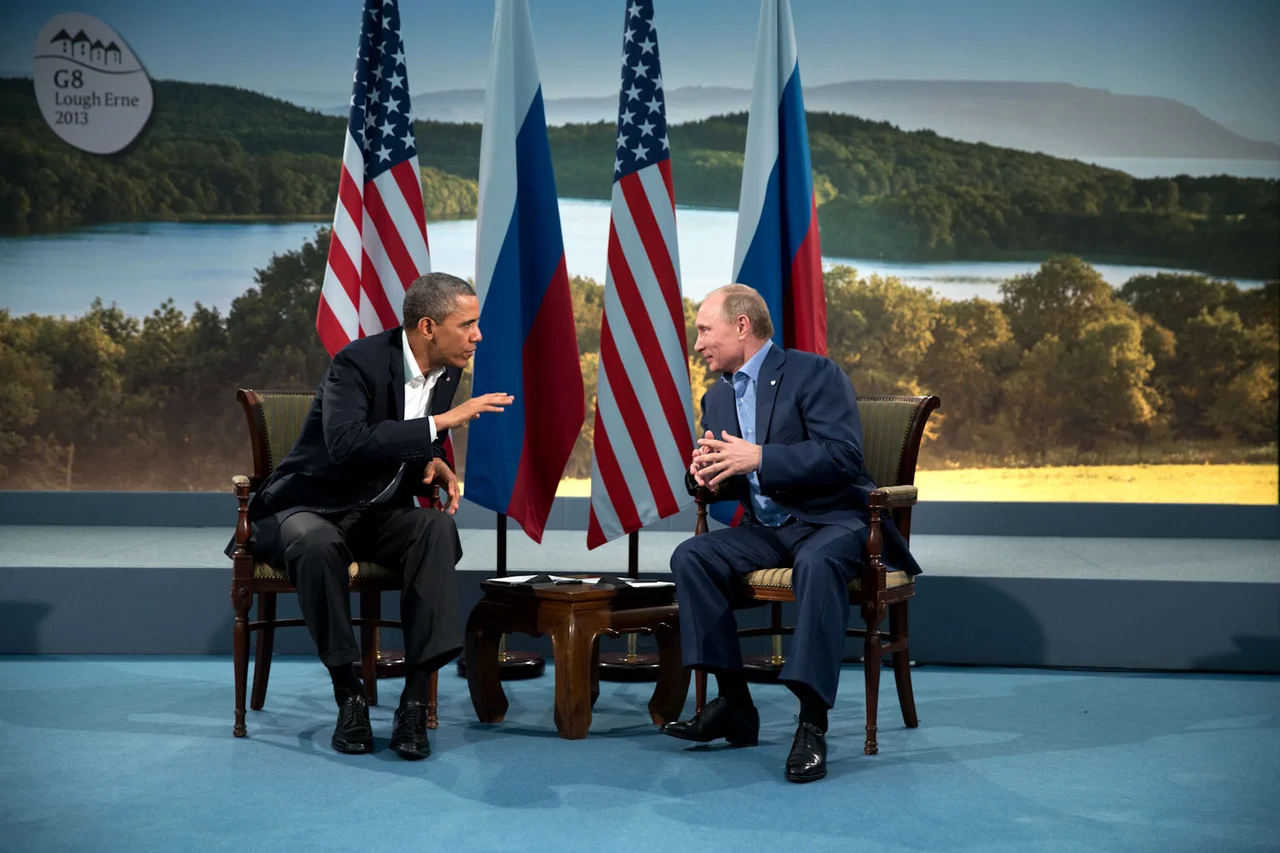

39th G8 Summit
On 23 March 2013, three months before the G8 leaders of the world's largest economies were due to arrive in County Fermanagh, the Police Service of Northern Ireland defused a car bomb sixteen miles from the Lough Erne Resort. The dissident republican group Óglaigh na hÉireann later claimed they had planned to detonate it at the hotel itself but had to abort. By 17 June, when the summit opened, the resort was surrounded by a four-mile metal fence topped with razor wire. About 8,000 police officers were on duty. The waters of Lower Lough Erne were closed to the public. The airspace above was a no-fly zone. American warships sat off the coast of County Donegal. It was the first G8 summit held in Northern Ireland, and it would also be the last G8 summit Russia ever attended.
Why Fermanagh
Prime Minister David Cameron announced the choice of Lough Erne in November 2012. According to Mark Simpson, the BBC's Ireland Correspondent, the British government chose Fermanagh for two main reasons: history and geography. The history was about demonstrating that Northern Ireland was peaceful enough to host global leaders fifteen years after the Good Friday Agreement. The geography was practical. The Lough Erne Resort, a five-star hotel and golf resort on the southern shore of the Lower Lough, sat on a peninsula that could be sealed off relatively easily. It was the sixth G8 summit hosted by the United Kingdom and the first ever in Northern Ireland. The earlier UK summits had been in London in 1977, 1984, and 1991, then Birmingham in 1998, then Gleneagles in Scotland in 2005.
The Security Operation
The Police Service of Northern Ireland mounted what was probably the largest security operation in the province's history. About 4,500 PSNI officers were on duty, with another 3,500 drafted in from other parts of the United Kingdom. Officers from outside Northern Ireland received training in PSNI riot tactics and were taught to drive its armoured vehicles. British Army Chinook and Merlin helicopters escorted political leaders and their entourages between Belfast International Airport and the resort. The PSNI deployed surveillance drones. More than a hundred cells at Northern Ireland's high-security prison at Maghaberry were set aside for any protesters who turned violent. The Irish state contributed its own forces. Eight temporary border checkpoints were manned by Garda units backed by the Irish Army. The Garda's Emergency Response Unit and the Defence Forces' Army Ranger Wing, the country's special operations units, were deployed on land and water. The total cost of the summit ran to around £60 million, with the Northern Ireland government paying £6 million and the British government covering the rest.
The Leaders Who Came
The attendees included the leaders of the eight G8 member states: David Cameron from the United Kingdom hosting, Barack Obama from the United States, Vladimir Putin from Russia, Angela Merkel from Germany, François Hollande from France, Enrico Letta from Italy, Stephen Harper from Canada, and Shinzō Abe from Japan. Representatives of the European Union also attended: Herman Van Rompuy as Council President and José Manuel Barroso as Commission President. Ireland's Taoiseach Enda Kenny was invited as the chair of the rotating EU Presidency. The summit was the first and only one for Enrico Letta, whose government would fall the following year. It was also the last summit for Vladimir Putin and the last in which Russia participated. The annexation of Crimea in 2014 led to Russia's suspension from the group, which reverted to being the G7.
Syria Took Over the Agenda
The official theme of the summit was tax evasion and transparency. But the Syrian civil war dominated discussions. Cameron later said it was the most difficult issue addressed. A declaration signed by all eight nations outlined a seven-point plan for Syria: more humanitarian aid, maximizing diplomatic pressure aimed at peace talks, backing a transitional government, learning the lessons of Iraq by maintaining Syria's public institutions, ridding the country of terrorists, condemning the use of chemical weapons by anyone, and instilling a new non-sectarian government. The phrase by anyone in the chemical weapons clause was the result of intense negotiation. Russia, which supported Bashar al-Assad, refused language that pointed at the Syrian government specifically. The compromise carefully said nothing about who was actually using chemical weapons, while letting everyone agree that the use was condemnable.
Taxes, Trade, and Ransoms
The summit did produce concrete agreements beyond the Syria declaration. The G8 nations agreed to tight rules on corporate tax structures that allow multinationals to shift income across borders to avoid taxes. The Organisation for Economic Co-operation and Development was assigned to gather data on how multinationals evade taxes. Oil, gas, and mining companies would now report payments to governments, and governments would report the resources they obtained, a measure aimed at helping developing countries collect taxes from first-world companies operating in their territories. The G8 also signed a declaration to stop paying ransom demands for kidnap victims, an attempt to remove a major funding source from terrorist groups. The United States and the European Union announced they would enter into trade deal negotiations, beginning what later became known as the Transatlantic Trade and Investment Partnership talks. Stephen Harper noted that the EU and Canada were close to wrapping up their own trade deal after years of negotiations.
A Lake Without Cargo
For the people of Fermanagh, the summit meant a period of profound dislocation. Lower Lough Erne, normally busy with fishing boats and pleasure craft, sat empty. Fishermen lost a week of income. The Lough Erne Resort itself, which had hosted the Lough Erne Challenge golf events in 2009 and 2010 and had been due to host the 2017 Irish Open until the event moved venues, became a fortress. Catering staff worked under heavy security clearance. Helicopters thrummed overhead at all hours. When the leaders departed on 18 June, the security operation began its slow unwinding. The fence came down. The no-fly zone lifted. The lough returned to its boats. The hotel returned to its weddings. The summit had produced more communique than concrete change, but it had also shown that a corner of Northern Ireland that fifteen years earlier had been a war zone could now host the most powerful people on earth, behind four miles of fence, with nothing worse going wrong than a defused car bomb in March.
From the Air
Located at 54.40 degrees north, 7.69 degrees west, at the Lough Erne Resort on the southern shore of Lower Lough Erne, County Fermanagh, Northern Ireland. Recommended viewing altitude 2,000 to 4,000 feet above terrain. The resort sits on a peninsula jutting into the Lower Lough; the surrounding lake landscape is the dominant feature, with islands scattered to the north and west. The town of Enniskillen lies a few miles south. Nearest airports: St Angelo (EGAB) immediately to the east, Belfast International (EGAA) further east, Donegal (EIDL) to the northwest. Atlantic weather brings frequent rain and low cloud. The southern shore of the Lower Lough is particularly photogenic in summer when conditions permit.
Nearby Stories
- Ballyconnell 3.1 km away
- Castlederg 5 km away
- Belleek, County Fermanagh 8.7 km away
- Castlecaulfield 17 km away
- Lissan House 17 km away
- Castleblayney 19 km away
- McDermott's Castle 19 km away
- Gweebarra Bay 32 km away