
Aigaleo
From the top of Mount Aigaleo, in the autumn of 480 BC, the King of Persia watched his empire's ambitions sink. Herodotus tells us Xerxes had his throne set on these slopes so he could observe his vast fleet crush the smaller Greek navy in the straits below. Instead he watched the Battle of Salamis go the other way, his ships breaking apart in the narrows while he looked on, helpless, in disbelief. The mountain that gave the watching king his grandstand also gives this western Athens suburb its name, Aigaleo, drawn from the old words for goat and people. Today some 65,800 residents live on the plain beneath that mountain, in a town whose later history was just as dramatic as its first.
Goats, Then a Great View
Long before factories and apartment blocks, this was grazing country. The tribes of ancient Athens used the land below Mount Aigaleo to farm and raise animals, and the place was known for the quality of its goat meat, an apt origin for a name rooted in the word for goat. The mountain itself earned its lasting fame as the spot where Xerxes watched Salamis unfold, but the slopes stayed pastoral for centuries afterward. Even after the Greek War of Independence began in 1821, life here remained rural and agrarian, a stretch of fields and herds west of the capital. The dramatic ancient moment passed, and the land went quietly back to its goats.
The Powder Town
In 1874 a gunpowder works rose on the plain, and Aigaleo's pastoral peace ended in smoke. The factory grew into PYRKAL, the first modern Greek arms manufacturer, eventually turning out more than sixty thousand rounds a day to supply the national army. It was deadly work for the people who did it. In the dark tunnels of the construction sites, explosions happened often, and workers were buried alive; after each accident the wrecked gallery was simply sealed shut, sometimes without the dead even being named. These were laborers whose lives were spent literally building the thing that killed them, and the factory's early years are a grim reminder of what industrialization cost the men on its floor. The smog of the works hung over the whole district.
New Kydonies
Aigaleo's modern population was born of catastrophe far to the east. After the fall of Smyrna in 1922, during the Greco-Turkish war, waves of Greek refugees from Asia Minor and Pontus, along with Assyrians, were uprooted and resettled here. Many came from one town in particular, Kydonies, today the Turkish city of Ayvalik. They arrived having lost nearly everything, and they brought their old home's name with them, calling the new district Nees Kydonies, 'New Kydonies,' while longtime locals insisted on Baroutadiko, the 'powder mill.' The two names competed until a compromise restored the area's ancient name, Aigaleo. The dispute was small; the human story behind it, an entire displaced community planting itself in a strange suburb, was not.
The Massacre and After
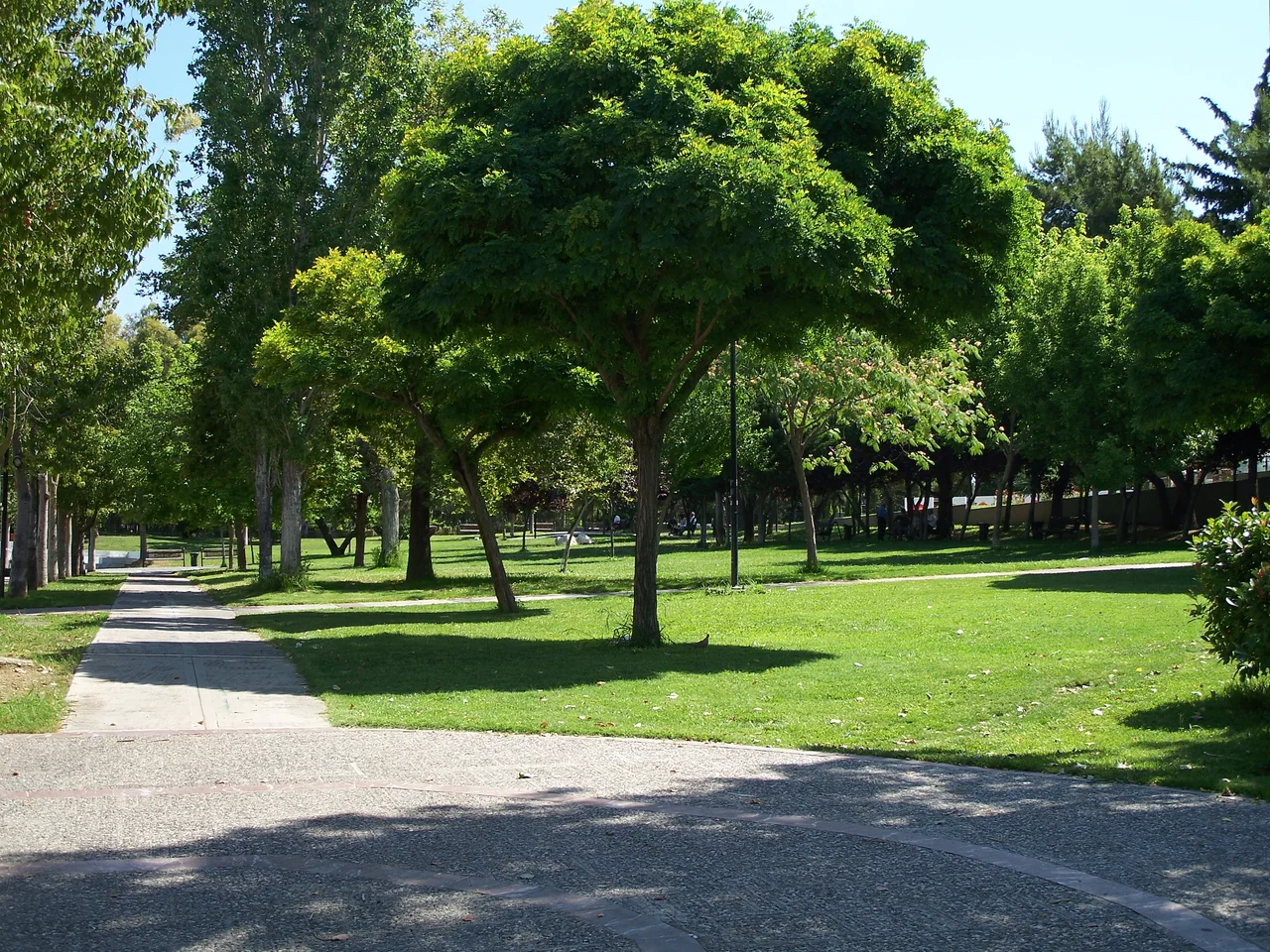
On September 29, 1944, as the German occupation of Greece neared its end, Nazi forces carried out a massacre in Aigaleo's Agios Georgios neighborhood. At least sixty-five civilians were killed, with some estimates reaching as high as 150, ordinary residents murdered as the occupiers tried to terrorize the area on their way out. The town still marks the dead. The factory that had loomed over Aigaleo for a century kept running fitfully through the 1950s, then faded, and after a law banned factories inside city limits it was finally moved to Elefsina in 1974. Its grounds were turned into a forest, and the air cleared at last. The chimney still stands, a marker of what was once a town defined by gunpowder.
Bouzouki Nights
For all its hard history, Aigaleo is remembered by many Greeks for its music. The town was long famous for its nightlife, its clubs and bouzoukia ringing with laiko and rebetiko, the urban folk music of the Greek working class. Some of the greatest names in that tradition lived and played here, among them Stelios Kazantzidis and the bouzouki virtuoso Giorgos Zampetas, who made his home in Aigaleo. There were once more than twenty cinemas in town. Most of the big clubs and screens are gone now, but the taverns remain, pouring wine and raki, and an open-air theater named for the actor Alexis Minotis sits inside the forest that grew over the old powder works, drama where the explosions used to be.
From the Air
Aigaleo lies at 37.990° N, 23.680° E, in the western part of the Athens urban area, southeast of and beneath Mount Aigaleo (Egaleo), the ridge from which Xerxes is said to have watched the Battle of Salamis in 480 BC. The Cephissus (Kifisos) river runs through the industrialized eastern edge of the municipality, and the A1 motorway passes through the town. From the air the green expanse of the forest planted over the former PYRKAL factory grounds stands out amid the dense urban fabric, with the Saronic Gulf and the island of Salamis visible to the southwest. A viewing altitude of 3,000–5,000 ft AGL frames the suburb between Mount Aigaleo and the Athens basin. Nearest airport is Athens International (LGAV), roughly 30 km east; the historic Salamis straits lie just to the southwest.
Nearby Stories
- Great Sand Beach 5 km away
- Battle of Delium 7.7 km away
- Tower of Aliartos 9 km away
- HMHS Britannic 10 km away
- Saronic Gulf 15 km away
- Sousaki Volcano 17 km away
- Sanctuary of Apollo Maleatas 24 km away
- Skyros 66 km away