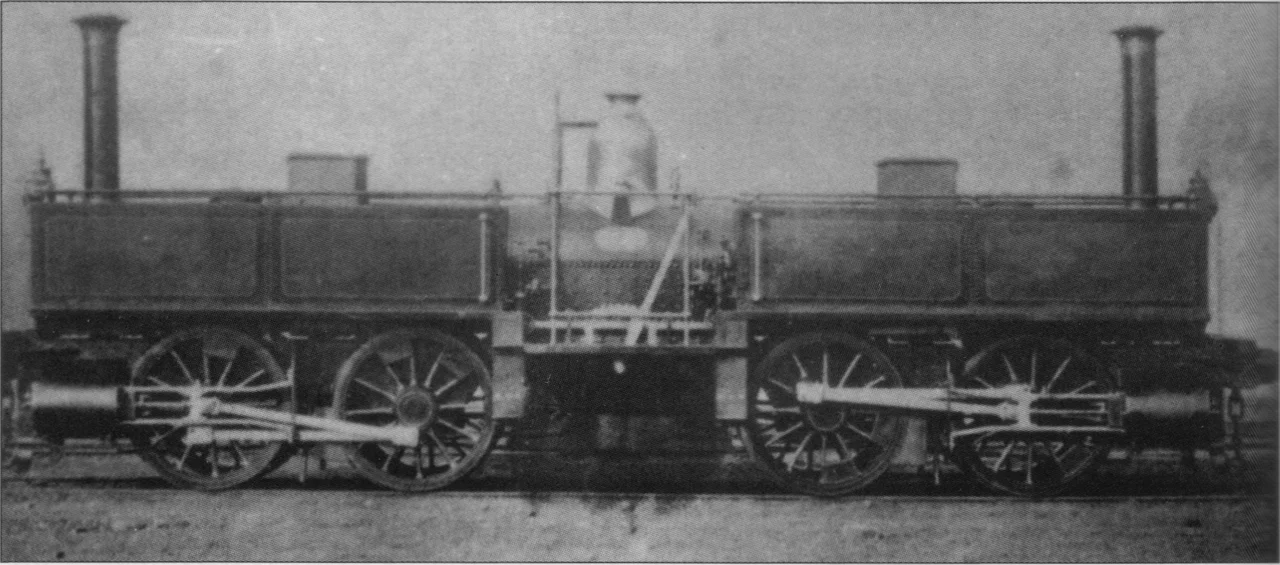

Anglesey Central Railway
On a wet November morning in 1877, the first train of the day pulled out of Llangefni heading north for Amlwch. The driver was William Taylor, standing in for Robert Williams, who had overslept. Heavy rain had breached a mill dam at Rhodgeidio in the night, and the wooden bridge over the Afon Alaw - the Caemawr bridge - had been swept away in the dark. Taylor and his train went straight over the side into the river. Two men died, and the bridge that was rebuilt in stone afterwards is still called Pont Damwain to this day - Accident Bridge. The Anglesey Central Railway was always a small line, but its history has been quietly dramatic.
Built for the Mountain
The Anglesey Central was authorised in 1863 and opened in stages from 1864, running 17 miles from Gaerwen junction on the main north Wales line up to Amlwch on the north coast. Its purpose was simple: get the copper ore from Parys Mountain to the rest of Britain faster than the schooners could. By the time the line opened, the copper boom was already fading, but the railway found other work - cattle for the Thursday market at Llangefni, mail trains leaving Bangor before five in the morning, salted herring from Cemaes, and the goods that any farming island needs to import. The London and North Western Railway took over operations after a court case in 1876 ruled that the original operator's locomotive arrangements were illegal.
A Lifeline and a Limit
Single-track branch lines on small islands have particular problems, and Anglesey's was timetabling. With no passing loop suitable for full passenger trains, only one train at a time could be on the line, which meant two-hour gaps between services. A short passing loop at Llangefni in 1877 helped little. It was 1914 before a proper loop at Llangwyllog finally allowed proper coordination - and the new working section required a third type of signalling staff, the C configuration, which was rare anywhere on the LNWR network. In the boom summers between the wars, ten or eleven trains a day ran each way, with a special Thursday extra for the Llangefni livestock market that had been part of the timetable since 1896.
Bromine, Beeching, and Slow Decline
Passenger services ended on 5 December 1964, victims of the Beeching axe that closed half of Britain's branch lines in a few short years. But the railway had one customer left: the Octel bromine plant in Amlwch, opened in 1953, which moved 70,000 tons of chlorine and bromine compounds a year by rail. For nearly thirty more years the line lived a second life as a chemical-industry artery, with Class 47 diesels hauling tank wagons through deserted stations. In September 1986 the Class 31 locomotive 31296 was named Amlwch Freighter at a ceremony at the Octel plant, marking 33 years and two million tonnes of traffic. Octel switched to road haulage in 1993. The Octel plant closed in 2003. The track has lain dormant since.
The Long Reopening
The campaign to bring trains back has been running almost as long as the line was closed. Restoration groups, Sustrans cyclist advocates, and Anglesey County Council have spent two decades arguing whether the trackbed should carry rails or bikes - and whether it might somehow carry both. The 2008 council elections shifted opinion back toward reopening. In 2020 the bid succeeded for funding under the UK government's Restoring Your Railway initiative, with the Welsh Government promising to match-fund. Network Rail has surveyed the route. Vegetation has been cleared at Llangefni. A small heritage centre opens in summer at Llanerchymedd station, where the original sign still stands. The trains have not run since 1993, but no one has yet given up on them.
From the Air
The line of the Anglesey Central Railway runs roughly south to north across central Anglesey, from Gaerwen junction at 53.22°N, 4.27°W up to Amlwch at 53.41°N, 4.35°W. From low altitude the trackbed is visible as a long gentle curve through farmland and forest, still showing as a cleared corridor for most of its 17 miles even with three decades of vegetation. Nearest airports: Anglesey/Valley (EGOV) 8 nm west of midpoint, Caernarfon (EGCK) 10 nm southeast. Lligwy reservoir and Llyn Alaw both sit close to the route. The weather is the same maritime mix as the rest of the island - frequent low cloud off the Irish Sea, clear cold easterlies in winter.
Nearby Stories
- Llandudno Lifeboat Station 3.8 km away
- Glynllifon 6.1 km away
- German submarine U-1024 9.4 km away
- Irish Sea Bridge 11 km away
- Ysbyty Ifan 12 km away
- Irish Sea 18 km away
- Celtic Array 18 km away
- Birkdale Palace Hotel 56 km away