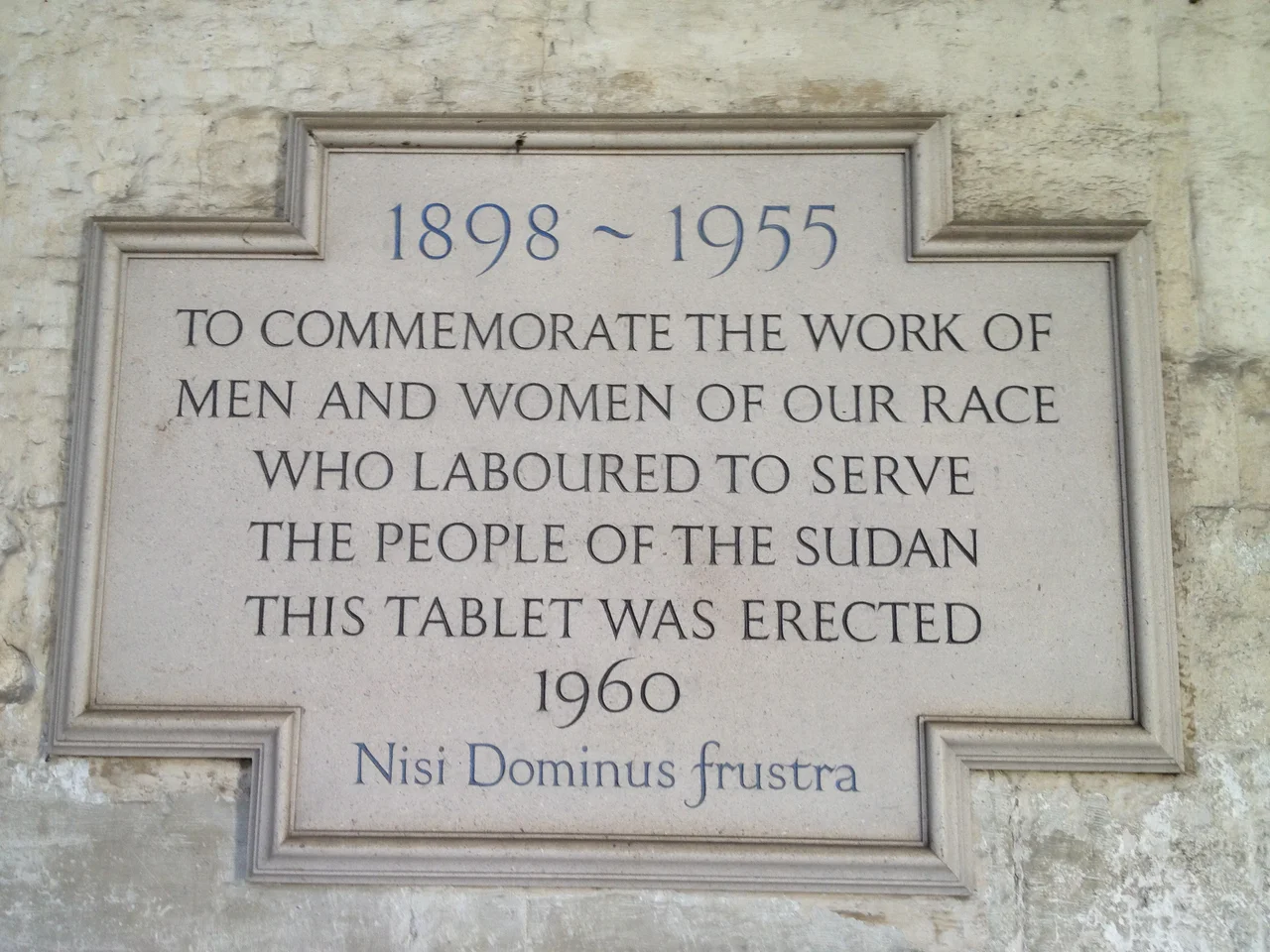

Anglo-Egyptian Sudan
The condominium was a fiction that lasted fifty-seven years. On paper, sovereignty over Sudan was shared between the United Kingdom and Egypt from 1899 to 1956. In practice, the Governor-General in Khartoum was almost always British, the real decisions happened in London, and Egypt, herself under ever-heavier British influence, was the junior partner in an arrangement Egyptians had never truly wanted. The Sudanese, whose country this actually was, were not given a meaningful vote on the matter until the final years. When they finally did vote, they chose independence, and both their co-rulers left on the same day: 1 January 1956.
The Pasha Who Wanted an Empire
The long road to the condominium began in 1820, when the army of the Egyptian wali Muhammad Ali Pasha, commanded by his son Ismail Pasha, marched south and annexed Sudan. Muhammad Ali was nominally a vassal of the Ottoman sultan, but he had larger designs: to supplant the Ottomans as the dominant power in the region and to build an African empire of his own. His grandson Ismail Pasha pushed Egyptian control south to the Great Lakes, took territory in what is now Chad, Eritrea, Djibouti, and Somalia, and received the title of Khedive from the Ottoman sultan. Then came the ruinously expensive modernization programs, the defeat in the Ethiopian-Egyptian War, the bankruptcy, and the deposition of Ismail by the Great Powers in 1879. Egypt retreated from everything except Sudan, and Egypt itself, and both would soon slip out of meaningful Egyptian control.
The Mahdi, Gordon, and the Gap
In 1881, Muhammad Ahmad of Sudan proclaimed himself the Mahdi, the Islamic redeemer, and began a revolt that would pull Egyptian forces out of most of the country. At El Obeid in November 1883, the Mahdi's army destroyed an Egyptian force under the British officer William Hicks; a year and a half later, on 26 January 1885, the Mahdists captured Khartoum and killed the British General Charles Gordon, whose death became a Victorian myth. For thirteen years, the Mahdist state ruled Sudan. Then came Kitchener. The British and Egyptian reconquest campaign of 1896–1898 rolled south along the Nile, building railway as it went, and finished the Mahdist army at the Battle of Omdurman on 2 September 1898 with machine guns against spears.
The Condominium, in Theory
In 1899, the British forced Khedive Abbas II to accept a new arrangement. Sudan would no longer be an integral part of Egypt; instead, it would be a condominium, shared sovereignty, administered by a Governor-General appointed by Egypt with British consent. In reality, as historians have long noted, Sudan was run as a British imperial possession. Egyptian nationalists, and Sudanese who favored union with Egypt, despised this. Pursuing a policy of divide and rule, the British worked to separate the northern, Arabic-speaking, predominantly Muslim provinces from the southern, largely Animist and Christian provinces. From 1924 onward, the two halves were administered nearly as separate territories, with Christian missions encouraged in the south and English taught as the educational language. The seeds of later Sudanese civil wars were planted deliberately.
White Flag League, Then the Long Wait
In 1924, a group of Sudanese military officers known as the White Flag League, led by Ali Abd al Latif and Abdul Fadil Almaz, attempted an insurrection against British rule. Almaz led a cadet revolt at the military training academy. The British responded by blowing up the military hospital where he was garrisoned; he died, and the rising was crushed. The Egyptian garrison in Khartoum North, which had promised artillery support, never fired. For the next three decades, Sudanese politics developed inside the narrow corridor the British allowed: advisory councils, eventual legislative representation, gradual self-government. The British ended their occupation of Egypt proper in 1936, with the exception of the Suez Canal Zone, but kept their forces in Sudan. Successive Egyptian governments declared the condominium abrogated and were ignored.
A Half-Sudanese Revolutionary
The Egyptian Revolution of 1952 changed everything. King Farouk was overthrown. Muhammad Naguib and Gamal Abdel Nasser came to power. Naguib was born and raised in Khartoum, the son of an Egyptian army officer serving in Sudan; he was, as some historians put it, half-Sudanese. Naguib and Nasser concluded that the only way to end British domination of Sudan was for Egypt to voluntarily relinquish its own claim of sovereignty. On 12 February 1953, an agreement between Egypt, Britain, and Sudanese political representatives set the path to self-government. Sudan was granted self-government in March 1953; Ismail al-Azhari became Chief Minister in 1954. In October 1954, Egypt and Britain signed the treaty that would grant Sudan independence on 1 January 1956.
The End, and What Came After
On 1 January 1956, Egyptian and British sovereignty over Sudan ended. The Republic of the Sudan was born. The condominium ran out the clock on its 57 years and disappeared from current politics into history books. The borders it had established stayed. The north-south divide it had sharpened stayed. Two civil wars eventually grew out of it: the first from 1955 to 1972, the second from 1983 to 2005, the second eventually ending with the independence of South Sudan in 2011. Darfur, which Britain had invaded and incorporated into Anglo-Egyptian Sudan in 1916, would explode into genocide in 2003 and into renewed war with the Rapid Support Forces in 2023. The condominium's afterlives have been long and terrible. But in its own terms, it was a brief thing: two foreign powers, administering a country that was never theirs, until the Sudanese and the Egyptians together pushed them out.
From the Air
Khartoum, the capital of Anglo-Egyptian Sudan, lies at approximately 15.63°N, 32.53°E at the confluence of the Blue and White Niles. Nearest airport is Khartoum International (IATA: KRT, ICAO: HSSS). The territory of the former condominium covered what is now Sudan, South Sudan, and parts of southeastern Libya. Recommended viewing altitude 10,000+ ft AGL to appreciate the scale of a country that was once Africa's largest by area.
Nearby Stories
- Esh Shaheinab 27 km away
- Naqa 56 km away
- Mahdist War 65 km away
- Musawwarat es-Sufra 100 km away
- Gezira State 101 km away
- Northern Sudan 215 km away