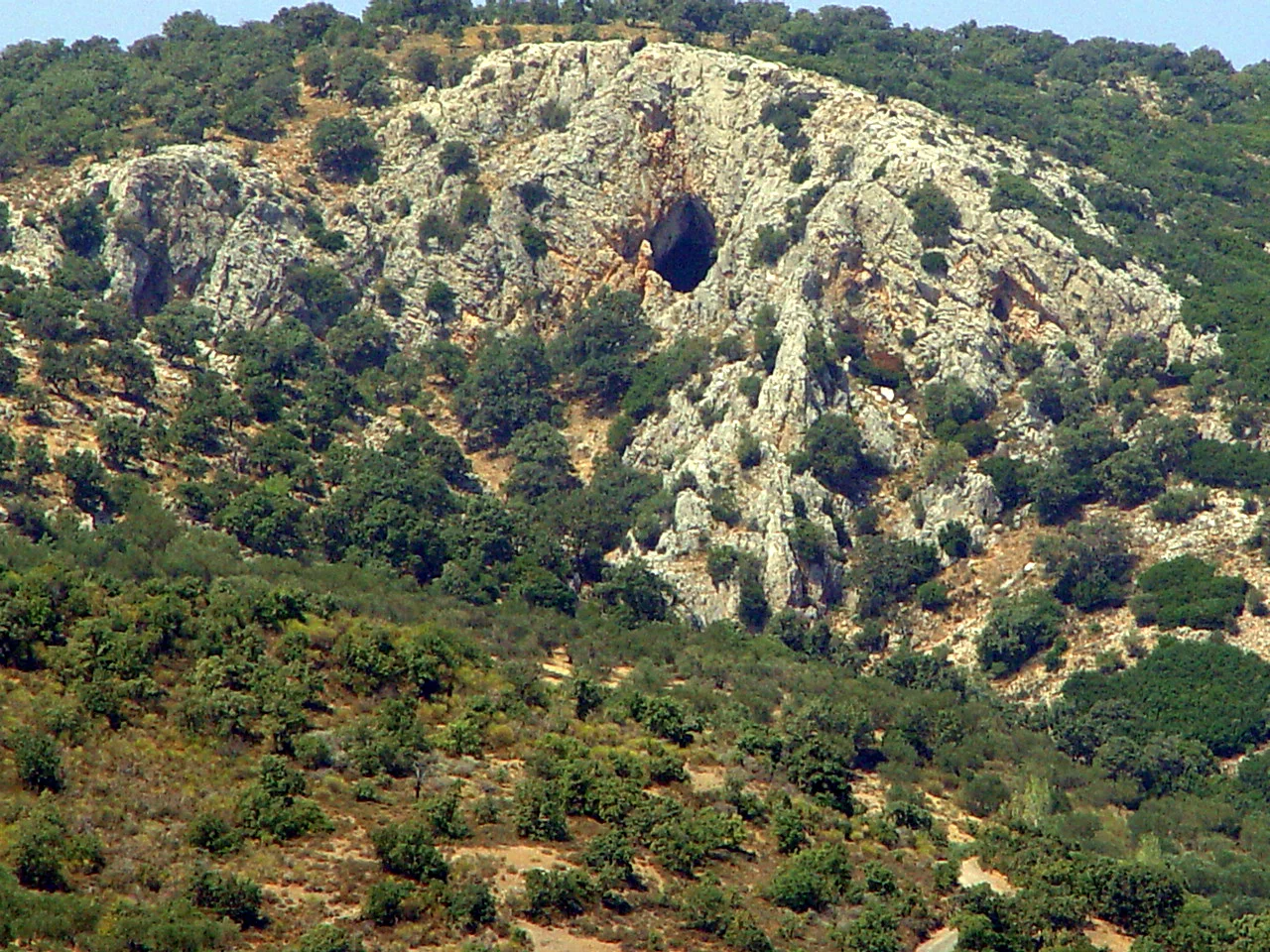

Antissa
Legend says the head of Orpheus washed ashore here. After the great musician was torn apart, the story goes, his severed head drifted down the river Hebros and out to sea, still singing, until it came to rest on the shore of Antissa. The local historian Myrsilus recorded that a tomb marked the spot, and that around it the nightingales sang more sweetly than anywhere else on earth. Whether or not you believe a word of it, the tale fits this place. Antissa, on the rocky western tip of Lesbos near Cape Sigri, was a city steeped in music long before it was a ruin.
Where Music Was Born
Antissa claimed the inventor of the seven-stringed lyre. Terpander, born here in the seventh century BC, is credited with expanding the instrument from four strings to seven and shaping the foundations of Greek music. For a small Aeolian city on the edge of the Aegean, this was no small inheritance. The Greeks themselves were unsure where the name Antissa even came from. One tradition said it honored a daughter of Macar, the legendary king of Lesbos; another, his wife. A cleverer guess broke the word into ant' Issa, opposite Issa, claiming Antissa had once been an island facing a larger landmass then called Issa. The historian Myrsilus, writing in the third century BC, favored this version, and the city's low promontory jutting just offshore lent it some plausibility. Even the ancients, it seems, were guessing at their own origins.
A City That Chose the Losing Side
Antissa had a habit of backing the wrong cause. In 428 BC it joined the revolt of Mytilene against Athens during the Peloponnesian War and fought off an attack by neighboring Methymna, only to be recovered by Athens once Mytilene fell. Decades later it sheltered the Athenian general Iphicrates when he fled a quarrel with his Thracian father-in-law. In the 330s a tyranny ruling Antissa and nearby Eresos was overthrown by the forces of Alexander the Great. The end came in 168 BC. When the Antissans gave harbor and supplies to Antenor, an admiral of Perseus, the last king of Macedonia, Rome punished the city for the choice. After Perseus fell, the Romans destroyed Antissa and moved its people to Methymna. The city that had survived Athens and Alexander did not survive Rome.
What the Sea Left Behind
The British archaeologist Winifred Lamb excavated Antissa for the British School at Athens, uncovering stretches of the city wall and Iron Age buildings, among them an apsidal structure from the deep past. The original island site is now tied to the mainland by a sandy isthmus, the sea having slowly stitched it to the shore, and its most conspicuous remains are not ancient at all but those of a medieval castle. Traces of the old harbor mole still run along the eastern side. A village called Antissa carries the name today, with the cave of Orpheus nearby, and an older alternate name, Telonia, meaning sprite. The nightingales Myrsilus heard may be long gone, but the western end of Lesbos keeps its strange, half-mythical quiet, where the line between recorded history and Orpheus's drifting song was never quite firm.
From the Air
Ancient Antissa lies on the western coast of Lesbos near Cape Sigri at roughly 39.29°N, 26.02°E, where the land turns rocky and bare compared with the green east. From the air, look for the low promontory and sandy isthmus on the coast northeast of Cape Sigri, with the medieval castle ruins the most visible landmark; the modern village of Antissa sits inland. The nearest airport is Mytilene International (Odysseas Elytis), ICAO LGMT, far to the east-southeast across the island, about 65 km away. Best viewed in clear afternoon light against the stark western terrain.
Nearby Stories
- Antandrus 6.8 km away
- Agios Isidoros, Lesbos 19 km away
- Adramyttium 30 km away
- Troy 45 km away
- Destruction of Psara 51 km away
- St. Helena Church 72 km away
- Psara 82 km away
- Battle of Athos 85 km away