
Archaeological Museum of Mystras
Most museums are built to hold the past. This one is part of it. The Archaeological Museum of Mystras occupies the west wing of the metropolitan complex, a building that itself dates from the medieval Byzantine city cascading down the slopes of Mount Taygetus above Sparta. Step through its doors and the gap between container and collection collapses: the stone friezes on display were carved for churches whose ruins stand a short walk away, and the marble reliefs were pulled from the rubble of a civilization that ended not in ancient times but in 1460, when Ottoman forces climbed this same hill.
A Museum Within a Monument
The museum's origins are as layered as the site itself. The French Byzantine scholar Gabriel Millet first gathered sculptural and architectural fragments in the east wing of the metropolitan complex in the late 19th century — not so much a museum as a scholar's accumulation, pieces salvaged from Mystras's churches and palaces before they could be carried off or lost entirely. By the early 20th century the Metropolitan of Sparta, Theoklitos Minopoulos, had enriched the collection further. The museum was officially inaugurated in 1951 and formally established in 1952 by the Ephorate of Antiquities of Laconia, taking shape in its current home in the west wing. Despite carrying the word 'archaeological' in its name, it is classified as a Byzantine museum — a distinction that matters, since almost everything here dates from the Christian medieval world rather than classical antiquity.
What the Stones Remember
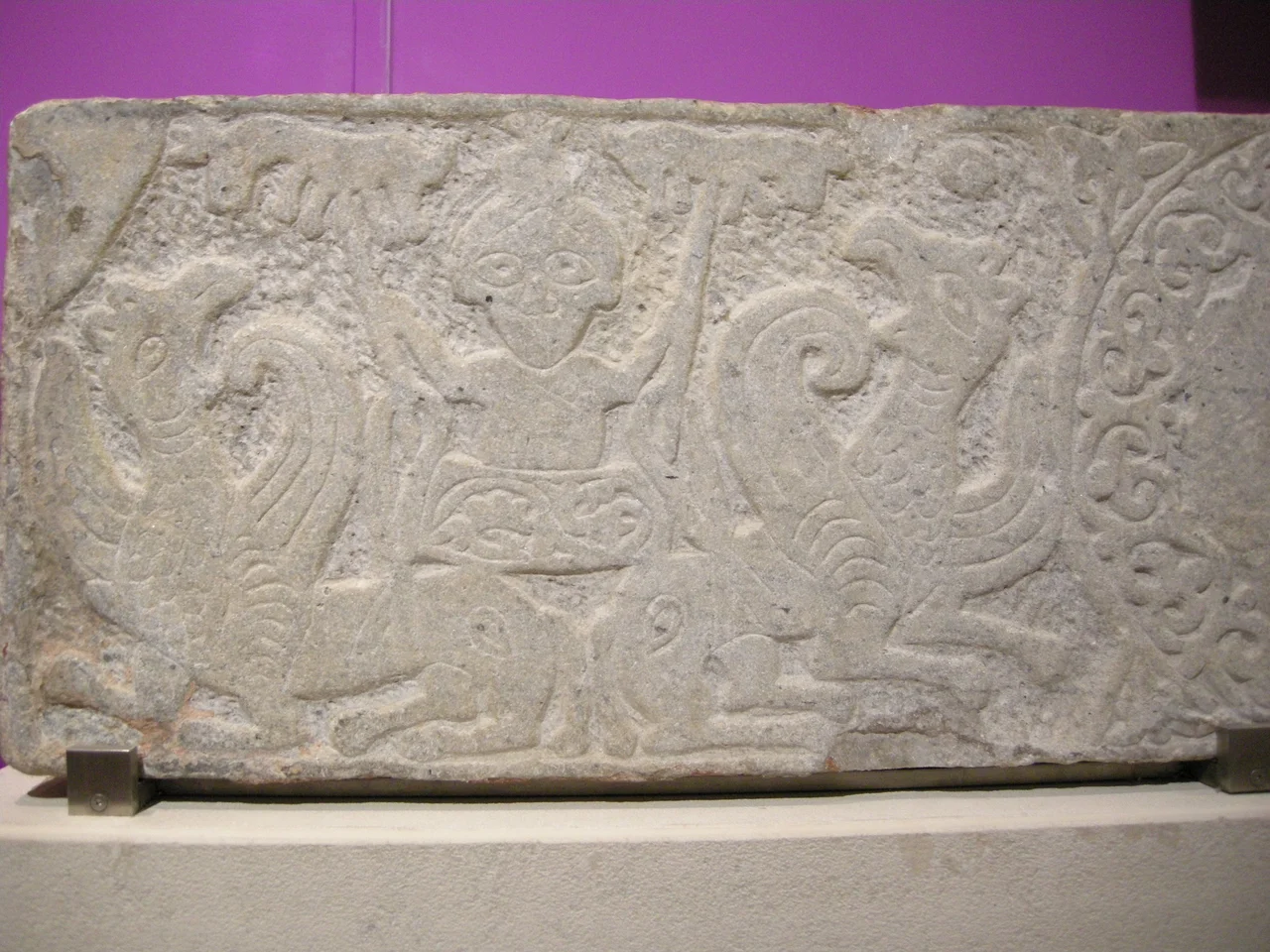
The collection spans from the early Christian era through Post-Byzantine times, with a few older and newer items woven in for context. Among the pieces that stop visitors mid-step is a carved relief depicting the Ascension of Alexander the Great, dated to the second half of the 14th century. That Alexander — the ancient conqueror — should appear in a Byzantine church relief is not as strange as it sounds: medieval Byzantine culture absorbed and recast classical figures through a Christian lens, turning the pagan king into a symbol of earthly power straining toward heaven. Nearby, an enthroned Christ in carved stone from the same period makes the theological counterpoint explicit. Both pieces remind visitors that Mystras was not a provincial backwater but a city where sophisticated ideas moved freely.
The Mummy of Mystras
Among the museum's most arresting objects are the remains of the Mystras mummy and a carefully reconstructed version of the outfit in which the figure was buried. The mummy itself is fragmentary, but the textile reconstruction — worked out from surviving scraps — reveals something of the material culture of late Byzantine Laconia: embroidered fabrics, layered garments, the kind of burial dress reserved for someone of standing. Who exactly this person was remains uncertain, a small mystery lodged at the heart of a city already full of them. The museum's 2001 renovation reorganized the permanent exhibition around thematic and museological lines, drawing on the latest research to present these objects not as curiosities but as evidence — fragments of a living world.
Reading the Collection
A manuscript codex from 1642 sits among the displays, a reminder that Mystras's cultural life continued well into the Post-Byzantine period, even after the Ottoman conquest. The codex is a quiet object, easy to overlook beside the carved reliefs and Byzantine plaque sculptures, but it carries weight: it represents the persistence of Greek letters and Orthodox faith through centuries of political upheaval. Taken together, the museum's holdings offer something rare — not just beautiful objects in isolation, but a compressed record of how one medieval city thought, prayed, buried its dead, and kept its stories alive across more than a thousand years of continuous habitation.
From the Air
Mystras sits at approximately 37.076°N, 22.369°E on the western slope of the Taygetus range, visible from the air as a cascade of ruined towers and church rooftops climbing toward a Frankish castle above the modern village. Approaching from the south at 5,000–8,000 feet, the Eurotas valley opens to the east with the flat agricultural plain of Sparta below. The nearest major airport is LGKL (Kalamata International), approximately 55 km to the west-southwest. Visibility is generally excellent in summer; the mountain backdrop of Taygetus (peaks exceeding 2,400 m) creates strong thermal activity in afternoon hours.
Nearby Stories
- Iklaina 6.6 km away
- Kalamakia Cave Site 7.8 km away
- Cleomenean War 9.7 km away
- Epidaurus Limera 16 km away
- Leonidio 18 km away
- Lepreum 20 km away
- Franchthi Cave 30 km away
- El-Kouf National Park 448 km away