
Archaeological Museum of Piraeus
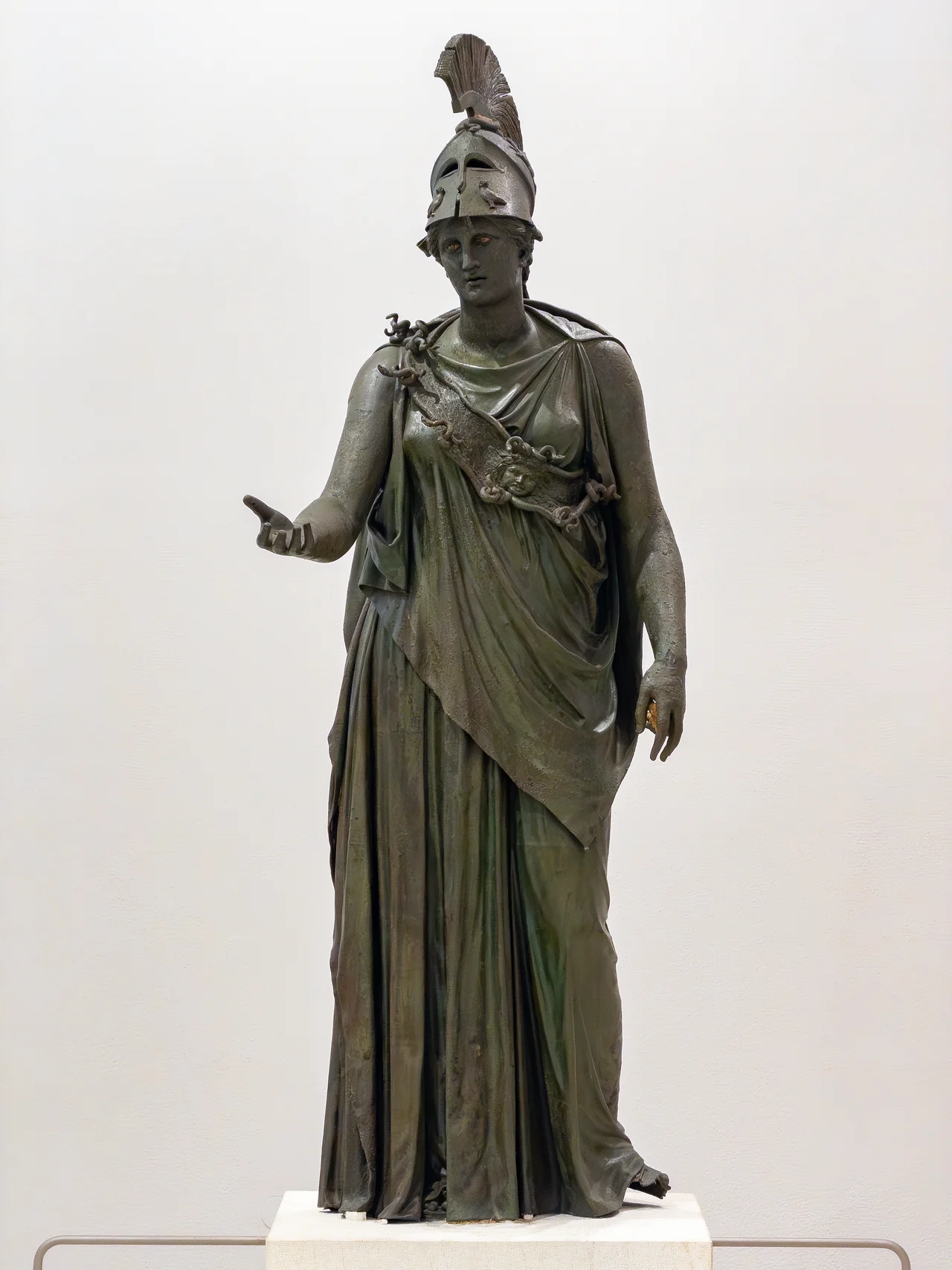
In 1959, a construction crew digging up a street in Piraeus broke through the floor of an ancient storage room and found bronzes. Not coins, not pottery sherds — bronzes. Full-scale figures of gods, wrapped in lead sheeting and packed into a cache that had been sealed underground for roughly two thousand years. The Piraeus Apollo, an archaic kouros of extraordinary quality, was among them. So was the Piraeus Athena, a classical-period figure of the goddess in full armor. And the Piraeus Artemis, attributed to the sculptor Euphranor. These statues had been stored in the first century BC — probably looted from Greek sanctuaries by the Roman general Sulla, hidden and never retrieved — and the intervening millennia had preserved them almost perfectly. They are now in the Archaeological Museum of Piraeus, which otherwise receives only a fraction of the visitors who queue for the National Archaeological Museum in central Athens. The crowd goes elsewhere. The bronzes stay here.
The Harbour's Deep Memory
The museum collects sculptures and artifacts discovered in Piraeus and along the broader Attic coast, spanning from the Bronze Age through Roman times. The collections are organized by period and type: a prehistoric Mycenaean section; pottery; the celebrated bronze statues; a reconstruction of a Classical sanctuary to Cybele; Classical gravestones; large funerary monuments; Hellenistic sculpture; and Roman work. The building itself is in two parts — an older structure of 330 square meters, and a newer two-story wing inaugurated in 1981, bringing the total to 1,394 square meters. Both buildings neighbor the Zeas theater, an ancient classical theater whose site may eventually become an open-air sculpture exhibition. The neighborhood, tucked behind Piraeus port, is not a tourist quarter. It is a working port district, and the museum sits in it without fanfare.
The Piraeus Apollo
The Piraeus Apollo is the oldest large-scale hollow-cast bronze kouros known to survive from antiquity — a standing male figure dating to the late archaic period, probably around 530–520 BCE. Kouros figures, the standing nude males that mark so much early Greek sculpture, are usually known only in marble, because bronze was too valuable to leave in the ground; when a culture collapsed or a city was sacked, the bronzes went into the melting pot. The Piraeus Apollo survived because it was hidden. Standing in a museum room, it carries the gravity of something that was never supposed to be seen again. The face has the archaic smile — that slight upward curve of the lips that ancient sculptors used before the classical period introduced naturalistic expression. It looks serene in a way that modern faces rarely achieve.
Bronze Gods in a Port City
The Piraeus Athena is from the classical period, her helmet and posture conveying the controlled authority that characterized Athenian artistic production at its height. The Piraeus Artemis — attributed to the 4th-century sculptor Euphranor — shows the goddess in hunting stance, her bronze surface darkened with age but her presence still commanding. A bronze tragic mask from the mid-4th century, attributed to the sculptor Silanion, rounds out the extraordinary bronze collection. Silanion is known from ancient sources as a sculptor of exceptional skill, and the mask — theatrical, expressive, its open mouth caught mid-utterance — has the quality of a work made by someone who understood both the theater and the metal. The museum also holds fragments of a colossal statue of the Emperor Hadrian, a reminder that Piraeus mattered to Roman power as much as it had to Athenian.
Getting There
The Archaeological Museum of Piraeus is a fifteen-minute walk from Piraeus Metro station, or a short walk from several bus lines. It sits close to the cruise ship reception area of Piraeus port, a detail that has not, apparently, converted thousands of cruise passengers into museum visitors — the bronzes await, largely undiscovered by the tourist circuit. Piraeus itself is one of the great ports of the Mediterranean, handling more passenger traffic than any port in Europe, and the museum's neighborhood hums with the logistics of that commerce: ferries, containers, the smell of the sea and diesel. The statues inside came from the same harbor. They were made for sanctuaries, hidden from Roman looters, swallowed by centuries, and returned to the port that knew them first.
From the Air
The Archaeological Museum of Piraeus sits at approximately 37.94°N, 23.64°E, within the Piraeus port district. Approaching from LGAV (Athens International Airport, Eleftherios Venizelos) to the northeast, Piraeus harbor is the most prominent feature — the vast enclosed port with its ferry terminals and container infrastructure visible from altitude. A viewing altitude of 1,500–2,000 feet reveals the Zeas harbor (the ancient trireme harbor, now a marina) adjacent to the museum. The Saronic Gulf extends southward; on clear days, the island of Salamis is visible to the west, where the decisive naval battle of 480 BCE took place.
Nearby Stories
- Parnitha 3.4 km away
- Kea (island) 7.3 km away
- Sanctuary of Apollo Maleatas 11 km away
- Sousaki Volcano 12 km away
- Battle of Leuctra 14 km away
- Great Sand Beach 18 km away
- Agios Georgios (island) 23 km away
- Skyros 84 km away