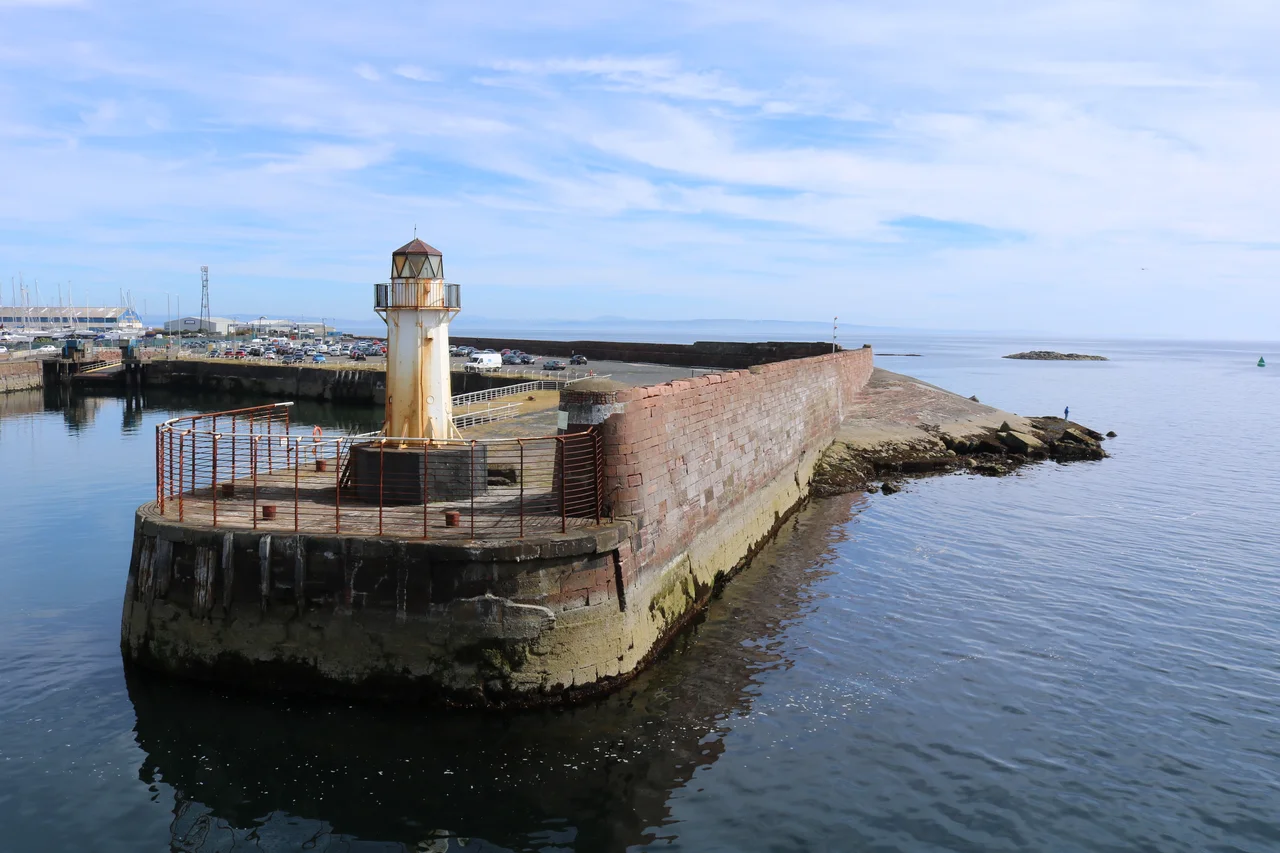

Ardrossan Lifeboat Station
On 1 March 1880, the Ardrossan lifeboat *Fair Maid of Perth* answered a distress call from the barque *Matilda Hilyard*. Her crew of twelve were saved. But on the way back to harbour, under tow from a steam tug in heavy seas, the lifeboat capsized. Two of her own crew - William Grier and Alexander McEwan - were lost. So were two of the barque's sailors, John Hickey from the United States and Vincent Luthemburger from Austria. Coxswain William Breckenridge survived the capsize but died later of what the records called congestion of the lungs. In the cold language of the RNLI committee minutes a month later, none of this was mentioned. Only that a replacement lifeboat was on the way, and that ten lives had been saved. The men who pulled at oars from this small Ayrshire pier had families, names, and graves - and they deserve to be remembered as more than a footnote in a meeting.
A Gift from the Earl
The lifeboat at Ardrossan was a gift before it was an institution. In 1807, Hugh Montgomerie, 12th Earl of Eglinton, gave the town a boat and founded the Ardrossan Lifeboat Society. Twenty-four years later, in November 1831, a coastguard officer and ten volunteers launched that private lifeboat to the aid of the brig *Lady Montgomerie*, sinking off Saltcoats harbour. The master, mate, and one crewman were lost; two apprentices were rescued. Lieutenant William Lyons, RN, of HM Coastguard, who led the launch, was awarded the Silver Medal of the Royal National Institution for the Preservation of Life from Shipwreck - the body that would, in 1854, become the RNLI. The institution awarded such medals from its founding, recognising gallantry at sea regardless of whether one of its own lifeboats was involved. The Ardrossan boat itself did not pass to the RNLI until 4 November 1869, when the committee voted to take over the existing station and provide a new boat and boathouse.
Flags, Bands, and the Fair Maid of Perth
The new boat arrived in style. A 33-foot self-righting sailing and pulling lifeboat with ten oars, costing £277-17s-6d, was conveyed free of charge from Carlisle to Ardrossan by the Glasgow and South Western Railway. On 18 June 1870, the lifeboat was paraded through the town to the outer harbour. Vessels, houses, and public buildings flew flags. The lifeboat committee marched alongside the Town Council, the local artillery volunteers, the Freemasons, and two bands. At the harbour, in front of a watching crowd, the boat was launched and demonstrated. The entire cost of station, lifeboat, carriage, and equipment was met by a single donor, Mr Peter Reid of London, who had previously funded the lifeboat *Palmerston*. At his request, the new boat was named *Fair Maid of Perth* after the heroine of Sir Walter Scott's novel. A decade later, in 1881, after the *Fair Maid* had capsized and been lost, the RNLI journal reported tersely that "the crew having lost confidence in the old boat, consequent on her having upset when in tow," a new 34-foot lifeboat had been provided. Peter Reid paid for that one too, and asked for it to be named *Fair Maid of Perth* again.
The Last Boats and the Closure
Ardrossan kept lifeboats on station for 80 years more. Through the steam age and into the early twentieth century, the boats answered distress calls on the busy Firth of Clyde, where the Arran ferries crossed and the cargo trade serviced Glasgow and the wider world. On Thursday 10 April 1930, the RNLI committee of management decided to close Ardrossan Lifeboat Station - one of four closures that day, as the institution rationalised coverage with motor lifeboats stationed at fewer, better-equipped sites. The last boat at Ardrossan was *James and John Young* (ON 636). She went to the relief fleet and was sold out of service in 1939. Her hull survived: turned upside down, it became a feature outside the People's Palace in Glasgow, where it can be seen today. The boathouse on the lighthouse pier is gone - the harbour is now a busy CalMac terminal, the pier rebuilt for car ferries that load and unload toward the Isle of Arran. Nothing of the original RNLI building remains. But in 2024, a plaque was unveiled in town commemorating the lifeboat heroes who served from Ardrossan - including the men who never came back from the *Matilda Hilyard* rescue.
From the Air
Coordinates 55.6402°N, 4.8256°W. The former station stood on the outer west pier at Ardrossan Harbour, on the North Ayrshire coast - a working ferry port today, with regular CalMac sailings to Brodick on the Isle of Arran. Recommended viewing altitude 1,000 to 2,000 feet AGL to make out the harbour structure, the breakwater, and the route across the Firth of Clyde to Arran. Nearest ICAO airports: Glasgow Prestwick (EGPK) about 13 nm south-east, Glasgow International (EGPF) about 26 nm north-east. The Firth of Clyde is notorious for sudden weather changes - low cloud and rain squalls can sweep through quickly on a westerly wind.
Nearby Stories
- Battle of Drumclog 2.2 km away
- Culzean Castle 3.3 km away
- Greenock 5.9 km away
- Lochranza 7.9 km away
- Battle of Kilsyth 16 km away
- Loch Fyne 19 km away
- Dunaverty Castle 25 km away
- Moniaive 27 km away