.jpg)
Army Ranger Wing
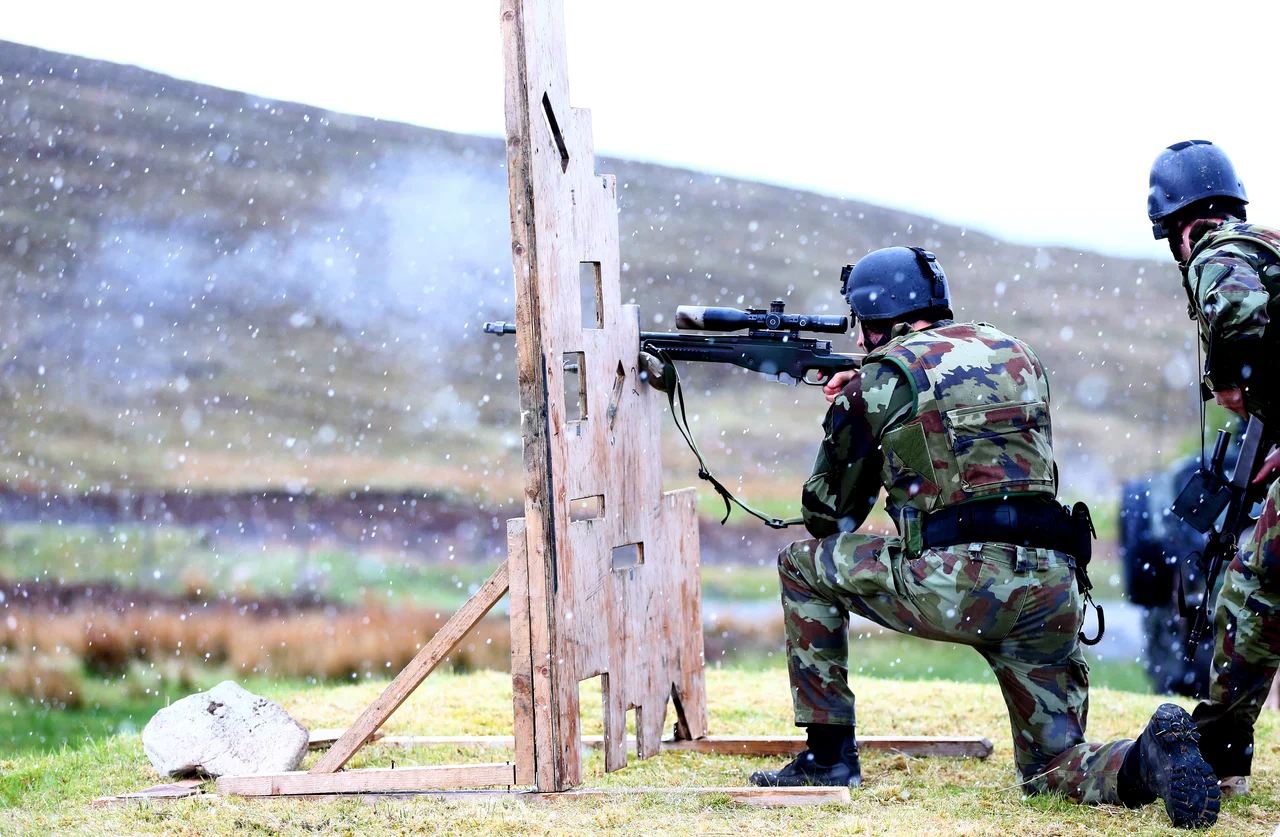
Eighty-five percent of candidates fail Module One of selection. The Army Ranger Wing - the special operations force of the Irish Defence Forces - typically tests 40 to 80 applicants each year through a ten-month selection course called the SOFQ, and most do not make it past the first five months. Those who pass earn the unit's motto, taken from an old Fianna poem: 'Glaine ar gcroi, neart ar ngeag, agus beart de reir ar mbriathar' - the purity of our hearts, the strength of our limbs, and our commitment to our promise. The unit lives by it on the gallops at the Curragh Camp in County Kildare, where it has been based since its founding on 16 March 1980.
From a Course to a Wing
The thread starts in 1969, when Irish Army officers returned from the United States Army Ranger School at Fort Benning, Georgia, and ran the first Ranger course in Ireland. The courses produced Special Assault Groups - 40 Rangers trained in combat skills, engineering, and ordnance. The Munich massacre at the 1972 Olympics and a series of Provisional IRA hostage-takings convinced the Irish government that a permanent counter-terrorism unit was needed. After Rangers trained with the M-Squadron of the Royal Netherlands Marine Corps, the cabinet approved the formation of the Army Ranger Wing by Government order on 16 March 1980. The unit received its colours in 1981 - black, red, and gold, signifying Secrecy, Risk, and Excellence.
Green Role and Black Role
The Wing's missions are divided into two operational modes. The 'Green Role' covers conventional wartime special operations - offensive operations behind enemy lines, long-range reconnaissance patrol, sabotage, the capture of key personnel, intelligence gathering. The 'Black Role' covers counter-terrorism - hostage rescue, anti-hijack operations, airborne and seaborne interventions, the recapture of terrorist-held objectives, and close protection of VIPs. The Wing is on one-hour alert for anti-terror operations anywhere in the Republic, and 96 hours' notice to deploy overseas. Its operators may carry weapons in plain clothes and need not wear uniforms on operations. The numerical strength of the unit is classified, but estimates put it at 140 to 150 personnel divided into operational task units. By 2028, under a Defence Forces reorganisation, the Wing is scheduled to be renamed the Ireland Special Operations Force, with Land, Air, and Maritime task groups based at the Curragh, Casement Aerodrome, and Haulbowline Naval Base.
Liberia, Chad, Mali
Most of the Wing's overseas deployments have been with United Nations and EU peacekeeping missions. In Liberia in 2003, twenty heavily armed Rangers were dropped by helicopter at the town of Gbapa to defuse a hostile situation in their area of operations - which by area covered all 4.7 million people and 111,000 square kilometres of the country. Sergeant Derek Mooney, age 33, of Blackrock in Dublin, was killed when his Land Rover Defender overturned on poor roads forty kilometres south of Monrovia on 27 November 2003. In Chad in 2008, fifty-eight Rangers deployed to Abeche with the EU force, patrolling the Chad-Sudan border in Ford F-350 Special Reconnaissance Vehicles. In Mali from 2019, the Wing conducted long-range reconnaissance patrols with a German-led ISTAR task force in what UN officials describe as the most dangerous peacekeeping mission in the world; in February 2020, three Rangers were injured by an IED blast east of Gao. Two other Rangers - Sergeant Kevin Mayne in 1987 and RQMS Patsy Quirke in 1998 - died while serving with the unit, though details have not been publicly released.
Kabul, Sudan, the Boarding of Matthew
Some of the Wing's most public operations have been extractions. In 2005, Rangers and Arabic-speaking intelligence officers deployed to Baghdad after the journalist Rory Carroll was abducted by al-Qaeda-affiliated militants; Carroll was released unharmed. In 2011, during the Libyan Civil War, the Wing helped evacuate more than 115 Irish citizens out of Tripoli airport, printing fake boarding passes when Libyan authorities refused to let aircraft land. In August 2021, an Emergency Consular Assistance Team including Rangers deployed to Kabul during the Fall of Kabul; the last members of the team left the airport minutes after the deadly suicide bombing there. In April 2023, twelve Rangers deployed via Djibouti to evacuate Irish nationals from Sudan. The most spectacular domestic operation came in the early morning of 26 September 2023, when Rangers fast-roped from an Air Corps helicopter onto the deck of the MV Matthew, a Panamanian-registered bulk carrier off the Cork coast that had refused to halt for inspection. They found 2,200 kilograms of cocaine on board the next day - the largest narcotics seizure in Irish history, with an estimated street value of 157 million euro.
From the Air
ARW headquarters sit at the Curragh Camp at 53.15N, 6.83W. Cruise 3,000-5,000 ft to take in the Curragh plain, the M7 motorway, and Newbridge to the east. The Curragh is the centre of Ireland's horse racing industry as well as its military training. Nearest commercial airport is Dublin (EIDW), 50 km northeast. Casement Aerodrome (EIME) at Baldonnel is the Air Corps base used to deploy the Wing on counter-terrorism alerts.
Nearby Stories
- River Liffey 3.3 km away
- Swords 7.6 km away
- Avoca, County Wicklow 10 km away
- Clonard Abbey 10 km away
- County Westmeath 10 km away
- County Offaly 12 km away
- Templemore 19 km away
- Kilcooly Abbey 30 km away