
Arranmore
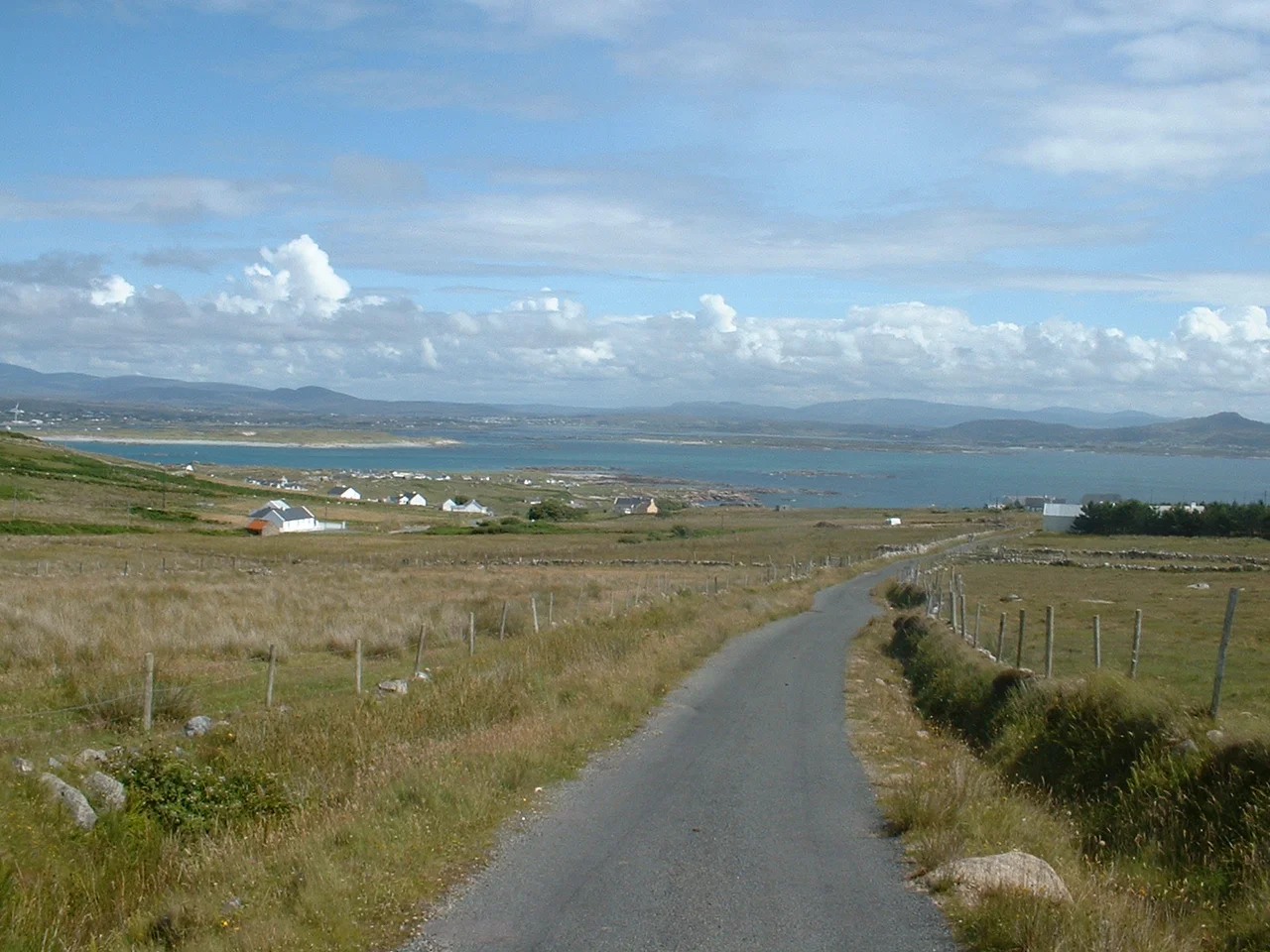
In 2019, the people of a small Irish island wrote open letters to the United States and Australia. The pitch was simple: come live with us. The island had high-speed internet now, thanks to a new co-working facility opened in partnership with 3 Ireland. The population was falling. There was room. There was time, said the letters, 'time for living.' The island is called Árainn Mhór, or Arranmore in English, five kilometres off the west coast of Donegal, sixty-two percent of its 478 residents speaking Irish daily. Three years later, in 2022, the island became one of the Irish places that took in Ukrainian families fleeing the Russian invasion. The invitation, it turned out, was real.
Aran of the O'Donnells
The Irish name was traditionally just Árainn. The adjective mór, meaning large, was added fairly recently to distinguish it from other islands called Aran. It was sometimes called Árainn Uí Dhomhnaill, 'Aran of the O'Donnells,' for the great Gaelic clan whose Donegal territory this once was. It should not be confused with the Aran Islands off Galway Bay, or with the Scottish Isle of Arran in the Firth of Clyde. Arranmore is the largest inhabited island in County Donegal, lying off the coast at Burtonport in the area called the Rosses. Two ferry services connect it to the mainland, both running former Caledonian MacBrayne vessels capable of carrying cars and trucks as well as passengers.
Speaking Irish
Arranmore is in the Donegal Gaeltacht, and 62% of residents are native Irish speakers, one of the higher proportions anywhere in Ireland. The Ulster Irish spoken here has its own distinct character. Every summer, the island fills with students of all ages from across Ireland who come for three-week Gaeltacht courses at Coláiste Árainn Mhóir, the island's college. The students attend school during the day and ceilí dance and play games in the evenings. Irish must be spoken at all times. For many young people who first arrive here from English-speaking suburbs, it is the most concentrated exposure to the language they will ever get. The same college schools the local children year-round through Irish.
Wired and Wireless
Arranmore was the first offshore Irish island to receive Rural Electrification, back in 1957. It was among the last places in the country to get reliable piped water (1973-75) and an automatic phone exchange (1986). The exchange jumped straight from manual switchboard to ISDN, and the new system had to be upgraded within weeks because consumer demand massively outran what had been planned. In 2019, partnering with 3 Ireland, the island opened a co-working facility with proper broadband, and 3 ran a marketing campaign called 'The Island' built around it. The island has its own dedicated transmitter at 125 metres above sea level, providing TV and radio coverage that the mountainous Rosses mainland struggles to receive. Three Ireland and Vodafone have LTE on the mast; Eir has 3G. The post office is purpose-built and has been retained despite the population falling below An Post's normal cutoff.
Beaver Island
In the mid-1800s, a large number of Arranmore residents were evicted from their land during the Famine and its aftermath. Many of them resettled together on Beaver Island in northern Lake Michigan. Today, families on Beaver Island still trace their roots to Arranmore. The two islands are formally twinned. A monument to the twinning stands in the main reservoir on Arranmore. The Donegal band Goats Don't Shave released a 1994 track called 'Arranmore' that referenced the island's emigration history and the 'Tunnel Tigers' of Northwest Donegal, the famous gangs of Donegal men who dug London's tube lines and the great hydroelectric tunnels of Scotland, many of them from Arranmore. Some of those tunnellers eventually retired back to the island. Some did not. The pattern of leaving and sometimes returning is older than living memory here.
Severn Class on the Mooring
Emergency cover on an island this remote is its own engineering. The RNLI station at Poolawaddy operates a Severn class lifeboat, the largest the institution has. A helipad at Aphort can land a Sikorsky S-92 from the Irish Coast Guard. The HSE has based an ambulance at the Health Centre for decades, though the vehicle has been replaced with cascaded second-hand units more than once when the previous one failed. For serious emergencies, patients are transferred to the lifeboat or the helicopter; for non-urgent cases, the ferry. The fire station, built in 2005 with a purpose-designed engine for the narrow island roads, is by now considered sub-standard and needs replacement. The island's main settlement is Leabgarrow, surrounded by smaller hamlets: Aphort, Ballintra, Pollawaddy, Plohogue, Fallagowan. The middens on the beaches show people have been here for a very long time. The new arrivals from Australia and Ukraine join a place that has always negotiated its own continuation.
From the Air
Located at 54.99°N, 8.53°W in the Atlantic 5 km off the Donegal mainland at Burtonport. Best viewed at 2,000-4,000 feet to catch the whole island, the lighthouse on the northwest point, and the lighthouse on Tory Island visible to the north. Nearest airport is Donegal (EIDL), 35 km south. Arranmore is unmistakable, the largest island in the immediate area, with a clear village pattern on the eastern shore.
Nearby Stories
- Glenveagh National Park 11 km away
- Killybegs 11 km away
- Battle of Tory Island 14 km away
- St Patrick's Purgatory 15 km away
- Rosguill 16 km away
- RMS Empress of Britain (1930) 45 km away
- Ballycastle, County Mayo 45 km away
- Killala 80 km away