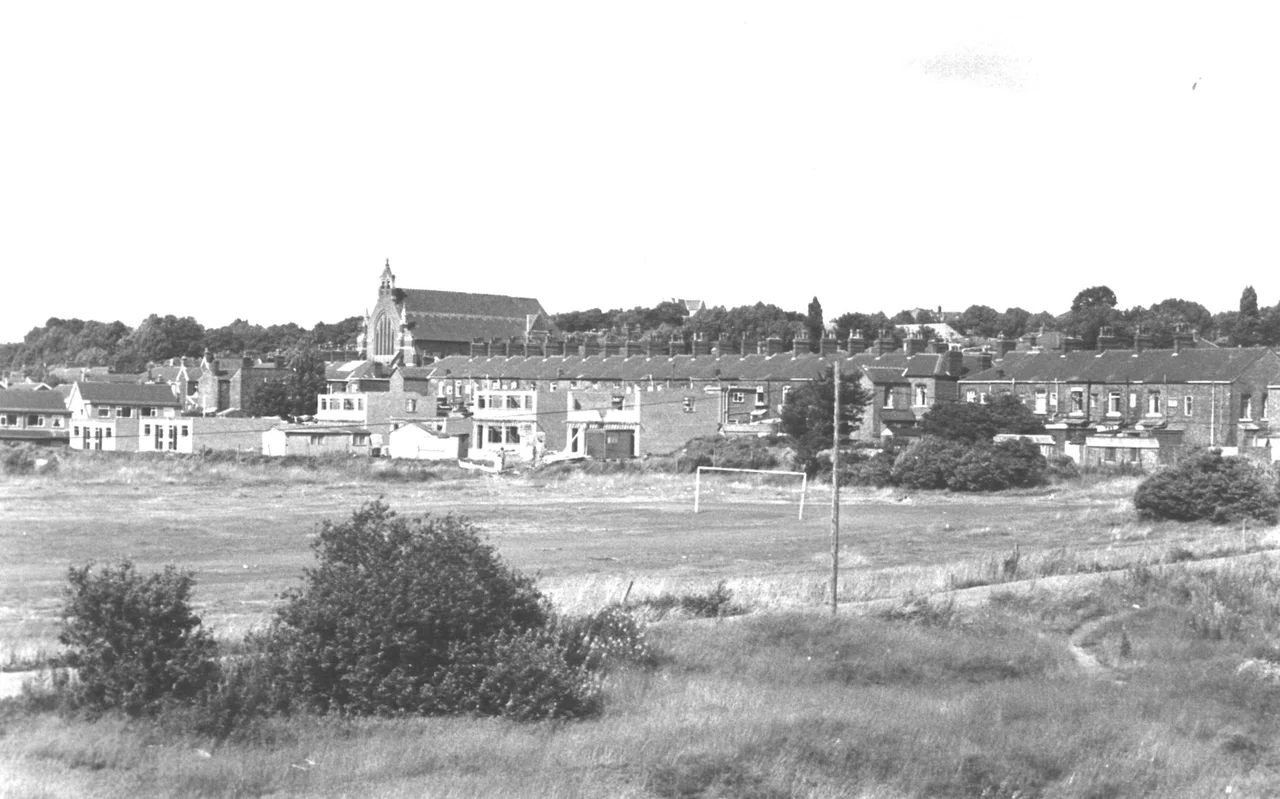

Astley Deep Pit Disaster
Fifty-four. That is the number to hold in mind. Fifty-four men and boys went into the Half Moon Tunnel at the bottom of the Astley Deep Pit on 14 April 1874, and fifty-four were carried out dead. Some were skilled colliers in their forties. Some were boys not yet shaving. They were buried in the following week in Dukinfield's churchyards, and their funerals filled the town for days. The mine kept burning. The New York Times reported, on 16 April, that the fire was "still burning fiercely" two days after the explosion.
The Deepest Hole in Britain
Astley Deep Pit was a monument to Victorian ambition and Victorian indifference. Sunk from 1846 onwards by Francis Dukinfield Palmer Astley, the mine took twelve years to reach the celebrated Lancashire Black Mine, a four-foot seam of high-quality coal that fetched ten shillings a ton at the pit's mouth, more than double the price of ordinary coals. When the mine opened in 1858, its main shaft reached 686.5 yards, 2,060 feet, making it the deepest coal mine in Britain and possibly the world. A later shaft went down to 717 yards. At that depth the temperature climbed roughly one degree Fahrenheit for every sixty feet descended, leaving the men working in oppressive heat. About 400 people worked the pit in shifts around the clock. The total cost was over £100,000, a fortune for a single mine.
What Went Wrong
The Half Moon Tunnel had a history. It had caught fire in an earlier incident, and falls of stone and earth were a regular problem. On the morning of 14 April, miners and workers were sent to repair the roof with hand tools and, reportedly, a steam engine. Then the roof gave way completely. A collapse alone would not have killed anyone; it would have meant hours of digging to free the trapped men. But this collapse released a large pocket of firedamp, the naturally occurring flammable gas that had already caused an explosion at the same pit in 1870. The men working nearby were using open-flame lamps. Davy lamps and other safety lights had existed since 1815, but miners were expected to buy their own, and most could not. The firedamp found the flame. The explosion that followed tore through further shafts, set fire to the support beams, and brought down more of the workings.
The Inquest
The coroner's jury did not mince words. Of the 1870 accident, they had already found that the manager "is not competent to have the sole management of such a mine as this. The persons have been killed by want of good management." Now, considering the 1874 disaster, they returned a verdict equally damning: "That the primary cause of the explosion was the blocking up of the mouthing leading to the smithy mines. That this was an act of gross ignorance or a culpable negligence. The jury consider that there is distinct evidence as to the employment of incompetent persons and placing them in authority. The jury desire to express their strong opinion that the present system of inspection is inadequate." The Mines Regulations Act of 1873 had been passed only the previous year. In 1873, mining deaths had fallen to a record low of 100. Astley Deep Pit alone added 53 to the 1874 figures. The Act, the jury said in effect, was not enough.
The Town in Mourning
Dukinfield is a small town. In 1874, the loss of fifty-four working men and boys meant that nearly every street had lost someone, often more than one. The miners' union helped the families and a public memorial was raised, though its location has since been lost. The injured, 91 of them, were carried home to be nursed. Some recovered. Many never worked again. The Manchester Guardian reported on a tangled ownership dispute, with a Mr George Newton having sold his quarter share to a Mr Ashton, and noted that no charges were brought against any owner. The men, their families, the town: they carried the cost. The shareholders kept their dividends.
Where the Pit Stood
The mine closed in 1901, after 43 years of a promised hundred. The slag heap loomed over the site until it was bulldozed flat in the 1970s. The three shafts were filled with concrete in the 1980s. Houses now stand on what was the colliery: Ashbridge Drive, Kingsbridge Drive, and Kentwell Close. A Blue Plaque on Woodbury Crescent, placed by Tameside Council, marks the only visible memorial: "A previously burnt tunnel was temporarily being repaired when the roof collapsed and pockets of unknown gas were ignited by open flame lamps." The men's names are recorded on a website maintained by local historians at Pitt-Dixon. The youngest were barely teenagers. The oldest were grandfathers. None of them needed to die.
From the Air
The former Astley Deep Pit site lies at 53.47°N, 2.09°W in Dukinfield, Greater Manchester, now built over with residential streets (Ashbridge Drive, Kingsbridge Drive, Kentwell Close). Best viewed at 2,000-3,000 feet AGL over the eastern suburbs of Greater Manchester. Nearest airports: Manchester (EGCC) 8 nm west, Manchester City (EGCB) 7 nm west, Leeds Bradford (EGNM) 35 nm northeast. The Peak District National Park rises distinctively 8 nm to the east; Stockport and the Mersey Valley lie just to the south.
Nearby Stories
- Lundhill Colliery Explosion 1.2 km away
- Pretoria Pit Disaster 2.1 km away
- Weaver Hall Museum and Workhouse 3.6 km away
- Haworth 4.9 km away
- Peckfield Colliery disaster 5 km away
- Markham Colliery disaster 5.4 km away
- Litton Mill 11 km away
- Forest of Bowland 20 km away