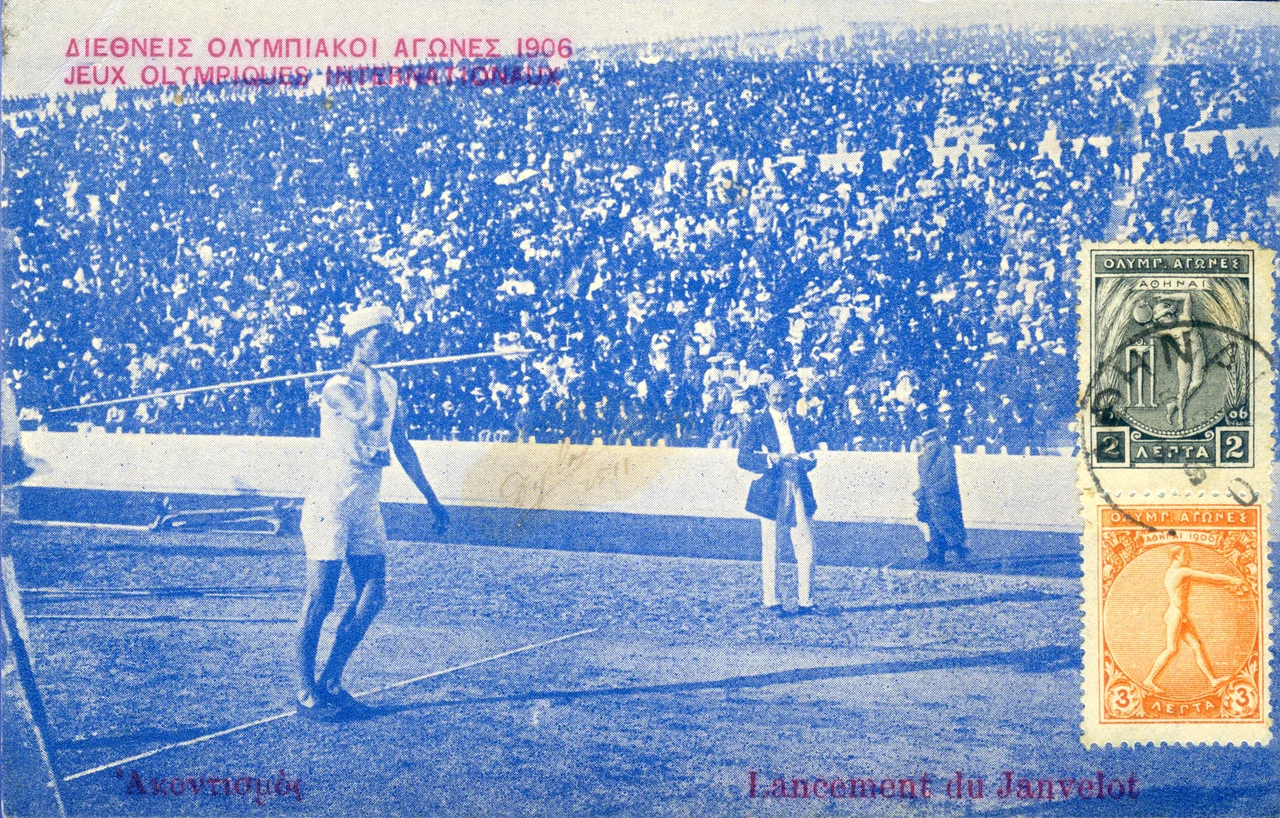

Athletics at the 1906 Intercalated Games
There was once an Olympic Games that the Olympics decided never happened. In the spring of 1906, athletes filled the marble seats of Athens to compete in 21 track-and-field events, winning 65 medals - 21 gold, 23 silver, 21 bronze. Spectators bought postcards of the runners and jumpers as souvenirs. Newspapers reported the results. And yet today, if you ask the International Olympic Committee, these Games are a non-event: the records do not stand, the medals do not count, and the whole thing has been folded into a footnote called the Intercalated Games.
The Olympics In Between
The idea was simple and, for a while, official. After the chaotic 1900 and 1904 Games - both buried inside sprawling world's fairs - the movement needed steadying. So Athens, which had hosted the revived Olympics in 1896, would hold a second set of Games at the midpoint of each four-year cycle, an 'intercalated' Olympics to keep the flame visible between the main editions. The 1906 Games were the first and, as it turned out, the only one. They were a success on their own terms, drawing real international fields and tightening the loose definition of what an Olympic Games should be. The athletics events were the heart of the program.
Older Rules, Stranger Events
The 1906 athletics program still carried traces of antiquity that modern track has since shed. The pentathlon was not the five events we know now: it combined a standing long jump, a discus throw in the 'ancient style,' a javelin throw, a 192-metre run, and a bout of Greco-Roman wrestling - a deliberate echo of the classical Greek pentathlon. There was a stone throw, contested with a 6.4-kilogram weight, a direct descendant of an ancient field event. Even the marathon refused to settle: contemporary Greek newspapers measured the course at 41.775 kilometres, a few hundred metres short of the 42.195 that would later become the global standard. These were Games still arguing with their own history.
Souvenirs of a Lost Olympics
Some of the best surviving evidence of the 1906 athletics comes not from official records but from postcards. The postcard was at the peak of its popularity, and Greek printers raced to capture the action. The Aspiotis brothers, working in Corfu, issued a whole series: the 100-metre dash, the 800, the 1000 and 1500 runs, the pole vault, long jump, the shot put, the javelin. These cards circulated through the mail of a Europe on the edge of enormous change, carrying images of athletes whose victories would one day be unwritten. Held in collectors' albums now, they are among the warmest records of an Olympics the rulebook tried to forget.
Erased by Committee
The reversal came decades later. In 1949, the IOC's Brundage Commission - formed after a 1948 proposal to formally enshrine the 1906 Games - concluded that recognizing them would add no prestige and might set an awkward precedent. The decision stuck: the Games, their results, and their medals were stripped of official Olympic status. Many sports historians have argued ever since that the call was a mistake - that 1906 did more than either 1900 or 1904 to save the young Olympic movement. The athletes themselves never got the question. They ran their races in a full stadium, won their medals, and went home champions of a Games that the record books would later pretend was never quite real.
From the Air
The 1906 Intercalated Games were held in Athens, with the athletics staged at the marble Panathenaic Stadium near the city centre, around 37.984 degrees N, 23.728 degrees E. From the air the white horseshoe of the stadium sits just southeast of the Acropolis and the National Garden, a distinctive bright sliver among the rooftops. Nearest airport is Athens International (LGAV), roughly 25 km east-southeast. Best viewed in clear daytime conditions when the marble catches the sun.
Nearby Stories
- Great Sand Beach 5 km away
- Battle of Delium 7.7 km away
- Tower of Aliartos 9 km away
- HMHS Britannic 10 km away
- Saronic Gulf 15 km away
- Sousaki Volcano 17 km away
- Sanctuary of Apollo Maleatas 24 km away
- Skyros 66 km away