
Attack on UDR Clogher Barracks
Eva Martin was twenty-eight years old. Her husband Richard was a few rooms away, working as a clerk inside the same Georgian building, when the rocket struck the tree outside her window. He would witness her death. The training night at the Deanery barracks in Clogher, County Tyrone had been winding down toward eleven o'clock on 2 May 1974 when roughly forty IRA volunteers opened up from two hillsides with rifles, mortars, and rocket-propelled grenades. By the time the firefight ended twenty-five minutes later, Martin had become the first greenfinch - and the first female soldier - killed in action during the Troubles.
The Georgian Outpost
The barracks itself was an unlikely target: a handsome eighteenth-century building called the Deanery, requisitioned by the British Army and manned by the 6th Battalion of the Ulster Defence Regiment. Clogher sits on rolling country in County Tyrone, less than ten miles from the border with the Republic, and the rural geography that made it a peaceful market town also made it ideal ground for guerrilla warfare. In the spring of 1974, the political ground in Northern Ireland was crumbling. The Sunningdale Agreement and its power-sharing assembly were collapsing. Within weeks the Ulster Workers' Council strike would finish the deal off entirely. The IRA had stepped up its campaign precisely to ensure that nothing held.
Twenty-Five Minutes of Fire
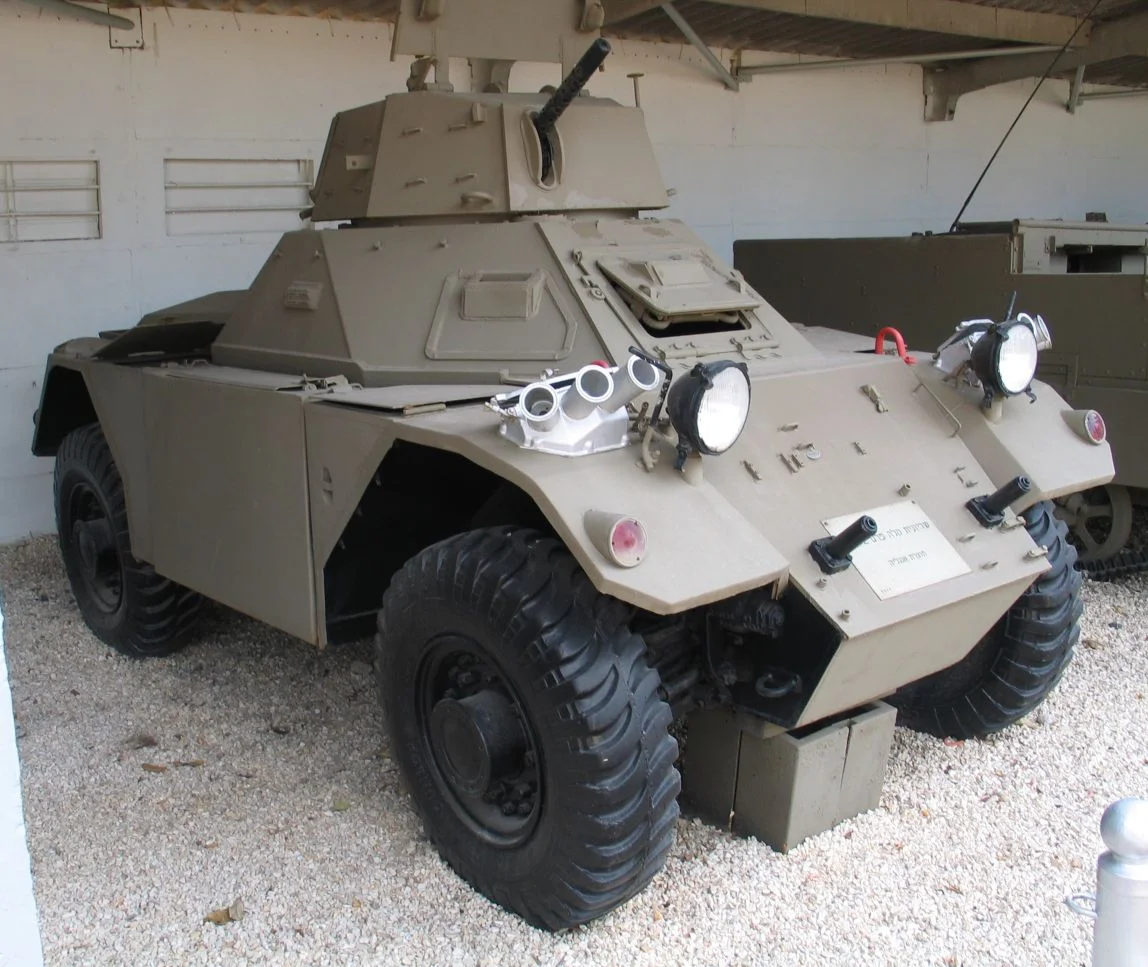
The attack began at 11:10 pm. Hostile fire poured in from a hill 800 yards to the north, with a secondary position to the south and forward observers carrying radios to coordinate the assault. The IRA team fired two or three rockets and fifteen mortar rounds. Most missed cleanly or did little damage - one rocket passed through the perimeter fence, bounced off open ground, and exploded against the opposite fence. Another hit a tree outside a window. That was the one that mattered. The blast sent a metal fragment through the glass and into Eva Martin. A lieutenant standing nearby took shrapnel in his legs, stomach, and head; he would survive but eventually leave the regiment. The building lost power. Two surviving greenfinches kept the operations room running while Ferret armoured cars from the 1st Royal Tank Regiment returned fire with their Browning machine guns.
Across the Border
By the time UDR patrols from neighbouring battalions arrived to mount ambushes and seal the roads, the IRA unit was already moving south toward the frontier. They covered their retreat by hijacking nine vehicles and blocking the lanes behind them. The Garda Síochána was alerted on the southern side, but the attackers slipped back into the Republic. Sean O'Callaghan, who took part and later became one of the most famous IRA informers turned 'supergrass', estimated the engagement at twenty-five minutes. On the same day, a Loyalist bomb at a Belfast pub killed six Catholic civilians. The violence ran in both directions, and on both that night it was civilians and part-time soldiers who paid.
A Name in the Hedgerow
Eva Martin had joined the Women's UDR - the 'greenfinches', so called for the green tunic of their uniform - in a regiment that did not expect women to die. Her death changed that assumption, and it changed how the Troubles would be remembered. She is commemorated on rolls of honour and remembered locally as a young woman who chose, in a tense and dangerous place, to wear the uniform of a deeply contested regiment. The building still stands, the borderlands still roll away west toward the Republic, and the only marker now is the quiet of the Tyrone countryside at night - the same quiet, perhaps, that the IRA unit waited in for the right minute to open fire.
From the Air
Coordinates 54.40°N, 7.20°W, near the village of Clogher in County Tyrone, about five miles from the Northern Ireland-Republic of Ireland border. Best viewed from 3,000-5,000 feet AGL on a clear day; the rolling drumlin country of the Clogher Valley stretches west toward the Sperrins. Nearest airports are Belfast International (EGAA) about 55 nautical miles east, and City of Derry (EGAE) roughly 40 nm north-west. Visibility in Tyrone is often hampered by low cloud and Atlantic drizzle.
Nearby Stories
- Gortin 4.9 km away
- City Status in Ireland 6.2 km away
- Boho, County Fermanagh 7.3 km away
- Ulster Canal 10 km away
- Shannon-Erne Waterway 11 km away
- Castledawson 15 km away
- Ring of Gullion 16 km away
- Newmills Corn and Flax Mills 29 km away