
Auckland Castle
Jonathan Ruffer wrote a £15 million cheque in 2011 to stop the Church Commissioners from selling twelve paintings. The pictures - Jacob and his twelve sons by the 17th-century Spaniard Francisco de Zurbarán - had hung in the Long Dining Room at Auckland Castle since Bishop Richard Trevor bought them at auction in 1756. The Church had voted in 2001 to sell. Ruffer, an investment manager and philanthropist, intervened. The following year he bought the entire castle and its contents. By 2019, after a multi-million-pound restoration, the home of the Prince Bishops of Durham reopened to the public as the Auckland Project, with the twelve Zurbaráns back where they belonged.
Eight Hundred Years of Bishops
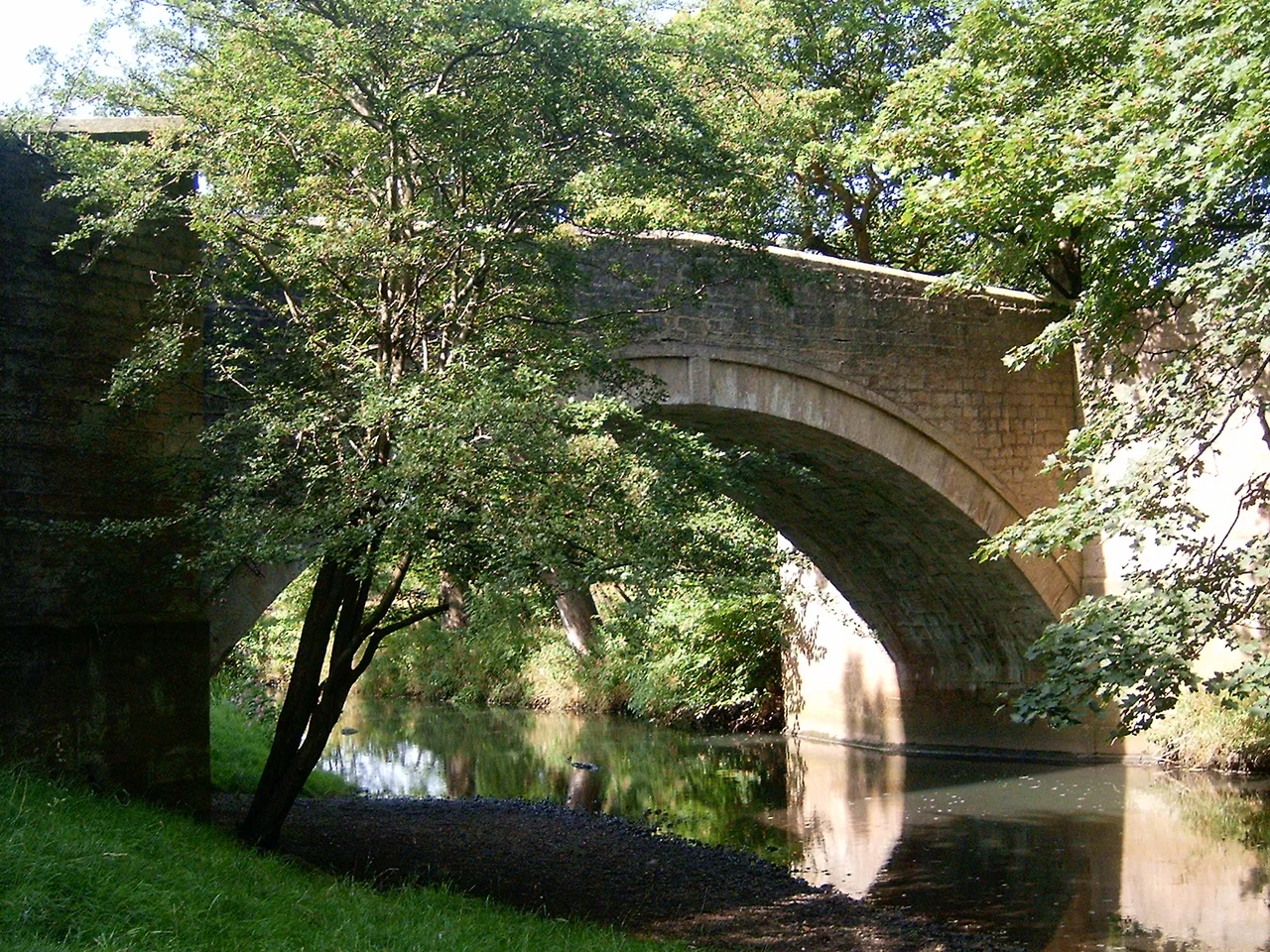
The site occupies flat ground above the confluence of the River Gaunless and River Wear, the land falling steeply on three sides. The bishops of Durham have used it since around 1183. After the disestablishment of the Church of England at the end of the First English Civil War in 1646, the castle was sold to the Parliamentarian Sir Arthur Haselrig, who demolished much of the medieval building - including the original two-storey chapel - and built a mansion. After the Restoration in 1660, Bishop John Cosin took the castle back, tore down Haselrig's mansion, and rebuilt. He converted the medieval great hall into the chapel that still stands - one of the finest rooms in North East England, the Buildings of England series calls it - with woodwork combining Gothic and Baroque forms that Cosin himself commissioned. Bishop Antony Bek, the warrior-bishop of c. 1300, had built his own chapel on the grounds at a cost of £148; archaeologists rediscovered its foundations in February 2020. The castle's first floor still houses the bishop's offices. The clock tower gate, built in 1760 by Bishop Trevor in the Gothick style, still opens onto Bishop Auckland's market place.
Jacob and His Twelve Sons
Bishop Trevor bought twelve of Zurbarán's thirteen portraits at auction in 1756 through the dealer James Mendez. The paintings may have been intended originally for South America - the genealogy of the twelve tribes of Israel was popular subject matter in colonial Spanish churches, where it carried theological weight in evangelising indigenous peoples. They never reached their supposed destination. The thirteenth portrait, Benjamin, had been sold separately to the Duke of Ancaster and hangs at Grimsthorpe Castle in Lincolnshire. Trevor commissioned the painter Arthur Pond to produce a copy of Benjamin, and that copy hangs at Auckland Castle today alongside the twelve originals. Trevor redesigned the Long Dining Room specifically to hold the set. For more than two centuries the pictures hung in what was essentially a private home, viewable only by invitation or special arrangement with the Bishop's staff. The 2019 reopening as a public museum was the first time anyone could simply walk in and see them. In 1832 William van Mildert, the last bishop to rule the County Palatine of Durham, handed over Durham Castle to found Durham University - and Auckland Castle became the bishops' sole episcopal seat.
The Auckland Project
Ruffer's intervention turned into a regional regeneration project. By the 2019 opening day a new 35-metre tower had risen as a visitor centre, with a lift, a staircase and balconies for views down on the castle and parkland. Fourteen restored rooms now tell the story of fourteen different former bishops. In October 2023 the Faith Museum opened - designed by Niall McLaughlin Architects, covering 6,000 years of British religious history from the Neolithic to AD 2000, housed in the castle's Scotland Wing and a new stone-built extension. In May 2024 the 17th-century walled gardens reopened with a new glasshouse and a faith garden. The Great Garden was scheduled to open in 2025. Nearby attractions include the Mining Art Gallery in a former bank, the Spanish Gallery, and Kynren - an open-air night-time theatrical production with a cast of 1,000 staged on a 7.5-acre arena across the Wear, telling "an epic tale of England." In June 2024 archaeologists found a Golden Primrose flower decoration on the grounds, along with seven large wall remains believed to belong to Haselrig's demolished Civil War mansion. The Daily Telegraph reported in 2025 that Ruffer had given at least £200 million to the Auckland Project. The Zurbarán paintings are central to the entire enterprise.
From the Air
Coordinates 54.6664N, 1.67065W. Auckland Castle stands in the centre of Bishop Auckland, on the east side of the market place, overlooking the confluence of the River Gaunless and River Wear. From the air the 35-metre Auckland Tower visitor centre, the castle's irregular footprint, the clock tower gate, and 800 acres of surrounding parkland make the complex easy to identify. Best viewed at 1500-3000 ft AGL. Nearest aerodromes: Durham Tees Valley (EGNV) about 13 nm east-southeast, Newcastle (EGNT) about 22 nm northeast. The Kynren arena lies just north of the castle across the Wear; Raby Castle is about 6 nm west.
Nearby Stories
- Gisborough Priory 4.9 km away
- Beamish Museum 6.9 km away
- Hutton-le-Hole 9 km away
- Battle of Stainmore 9.8 km away
- Jervaulx Abbey 12 km away
- Hadrian's Wall Path 21 km away
- Gordale Scar 27 km away
- German submarine U-2367 70 km away