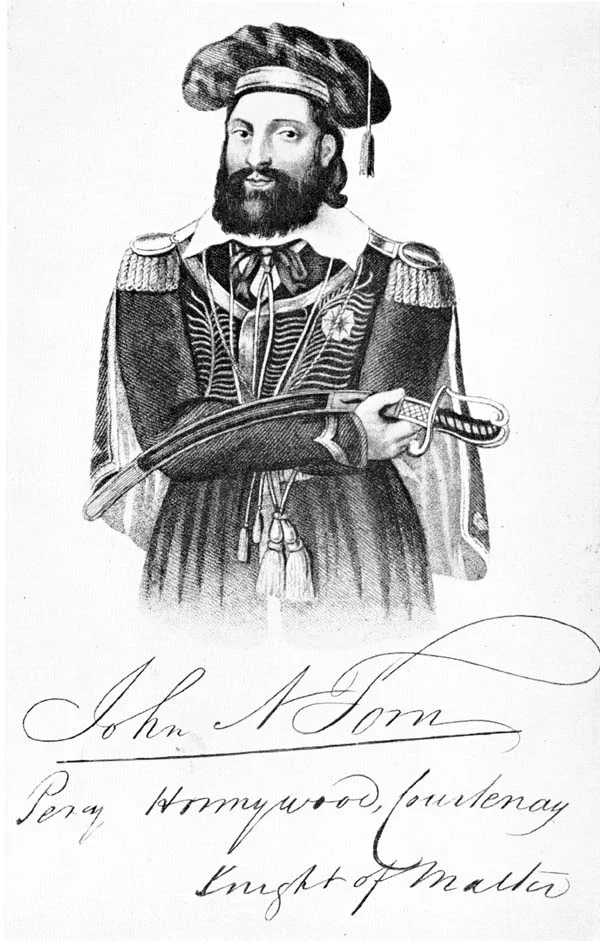

Battle of Bossenden Wood
Eleven men died in a Kent wood on 31 May 1838 in what historians have called the last battle on English soil. Eight of them were farm labourers - men named Stephen Baker, William Foster, William Rye, Edward Wraight, Phineas Harvey, William Burford, George Griggs, George Branchett, the youngest 22 and the oldest 62 - who had marched with sticks behind a charismatic stranger they believed was their saviour. The stranger was John Nichols Thom, a Truro maltster who had spent four years in the Kent County Lunatic Asylum. Lieutenant Henry Bennett of the 45th Foot was shot dead by Thom moments before Thom himself was killed. A young man from Faversham named George Catt, helping the magistrates, was caught in the crossfire. The verdict at the inquest was justifiable homicide. The men were buried in Hernhill churchyard.
Hunger in a Year of Reform
To understand why a group of rural workers in their twenties and thirties would follow a stranger into a fight against trained infantry, you have to understand the New Poor Law of 1834. It abolished the older parish-based system of relief and replaced it with workhouses - deliberately designed to be worse than the worst paying job, so that the poor would not turn to the state. Families were split up on entry. The food was meagre, the discipline harsh, the stigma deliberate. For the agricultural labourers of Kent, already battered by enclosures and falling wages, this was a system that promised to make their suffering official. The area around Hernhill, Dunkirk, and Boughton under Blean had already seen agrarian protests, and four years earlier the Swing Riots of 1830 had spread anti-threshing-machine sabotage across the south of England. These were not random crimes. They were the responses of a working community whose ability to feed its children was being systematically removed.
A Man Who Said He Was Coming Back
John Nichols Thom, a maltster from Truro, had drifted into Canterbury in 1832, contested the December general election unsuccessfully, and become a popular local figure despite suspicions that he was an impostor. In 1833 he was convicted of perjury after testifying for some smugglers, originally sentenced to transportation. Then a Cornish woman named Catherine Tom identified him as her missing husband and said he had previously been treated for mental illness; he was transferred to the Barming Heath Asylum and held for four years. Released in October 1837, he chose not to return to his wife. Instead he stayed in Kent and gathered a following around Boughton under Blean, preaching a millenarian message - the world is ending, a better one is coming, and he was the one who would bring it. He called himself Sir William Courtenay. Some of his followers came to believe he was Christ returned. To the farm labourers and smallholders who heard him, his promises of a better life were not delusion - they were the only hope on offer.
Oak Apple Day
On 29 May 1838, Oak Apple Day - the traditional anniversary of Charles II's restoration - Courtenay and a band of followers began to march around the countryside. The symbolism was layered: a loaf of bread on a pole, the old protest emblem of the hungry; a flag; a march that was peaceful, public, and visibly a demonstration. Courtenay rode a grey horse. His followers walked. The marches alarmed wealthier landowners. On 31 May, the magistrate Dr Poore issued a warrant - it is unclear whether to arrest Courtenay himself or the workers who had broken contract with their employers by walking off the fields. A parish constable, John Mears, went to Bossenden Farm with his brother Nicholas and an assistant Daniel Edwards. Courtenay shot and killed Nicholas Mears - the first death of the day, and the moment the protest crossed into something else.
Pincer in the Wood
Word reached the magistrates. A detachment of the 45th Foot was dispatched from the Canterbury barracks - about a hundred regular soldiers under Major Armstrong, with three junior officers. The regiment had recently come back from India; the following year these same soldiers would kill twenty Chartists at Newport in south Wales. While the troops were on their way, armed local gentry and farmers had already taken shots at Courtenay's band as they moved through the Hernhill area; some of his followers had melted away. About 35 or 40 men remained when the soldiers arrived, armed only with sticks. Courtenay had two pistols and a sword. One follower had a pistol. The soldiers split for a pincer movement, one group under Captain Reid and the magistrates Knatchbull and Baldock, led on the field by Lieutenant Henry Boswell Bennett. The other circled round under Major Armstrong with magistrate Poore. The fight in the clearing lasted only a few minutes. Courtenay shot Bennett dead. Armstrong's men opened fire and charged with bayonets. Courtenay was killed where he stood. Eight of his followers - eight men with sticks - were killed or mortally wounded. George Catt of Faversham, on the wrong side at the wrong moment, was killed by friendly fire.
Justifiable Homicide
Lieutenant Bennett was buried on 2 June in Canterbury Cathedral precincts with full military honours. On the same day the inquest at the White Horse, Boughton, returned a verdict of justifiable homicide on Courtenay and his followers. Stephen Baker (22), William Foster (33), William Rye (46), Edward Wraight (62), Phineas Harvey (27), William Burford (33), George Griggs (23), and George Branchett (49) - the eight dead labourers - were named in the record. Griggs and Branchett were buried at Boughton; the others, including Courtenay himself, were buried in Hernhill churchyard, where a plaque still lists them. About thirty more followers were arrested over the following days. Sixteen went to trial at Maidstone Assizes in August. The jury found Thomas Mears and William Price guilty of Nicholas Mears's murder with a recommendation for mercy; Lord Denman pronounced the death sentence and immediately told them it would not be carried out. The nine men charged with Bennett's murder then pleaded guilty and were reprieved. Thomas Mears and William Wills were transported to Australia for life. William Price was transported for ten years. The rest got a year in prison. They had brought sticks to a battle they could not have won; the law's mercy was that it did not hang the survivors. The Battle of Bossenden Wood is remembered as a footnote - the last battle on English soil - but its real meaning is that a generation of rural workers were so hungry and so abandoned by the new welfare system that following a delusional preacher into a clearing of bayonets seemed like the better choice. That is what a society can do to its poor. Hernhill has not forgotten it.
From the Air
Bossenden Wood is at 51.30 degrees North, 0.99 degrees East, in rural Kent between the villages of Hernhill, Dunkirk, and Boughton under Blean, just south of the A299 road and the Faversham-Canterbury rail line. Best viewed at 1,500 to 3,000 feet AGL - the wood itself sits among mixed farmland and orchards typical of the Kent countryside, with Canterbury about 6 miles to the south-east. Nearest airfield: Manston (EGMH) about 12 nautical miles east. Watch for the controlled airspace around Manston and the busy Channel routes.
Nearby Stories
- Hadlow Castle 2 km away
- HMS Niger (1892) 3.2 km away
- Rye Harbour 9.3 km away
- RAF Hornchurch 11 km away
- Kursaal Amusement Park 11 km away
- Hellingly Hospital Railway 12 km away
- 2008 Channel Tunnel fire 18 km away
- Maunsell Forts 44 km away