
Battle of Kendari
Kendari II was, by all accounts, the finest airfield in the Dutch East Indies. Constructed in 1938 about 27 kilometers from the city of Kendari in southeast Celebes, it had three runways, space for expansion, barracks for 500 troops, and by early 1942 held 3,000 bombs and a million liters of aviation fuel for American bombers staging operations against the southern Philippines. On January 24, 1942, the Japanese captured it in a single day. The defenders, roughly 500 Dutch and colonial troops, were already in disarray before the first landing craft touched the beach.
The Airfield That Mattered
Kendari II was a linchpin. Japanese planners needed it to establish an unbroken air support network stretching from Ambon to Kupang and Bali, enabling raids on eastern Java while maintaining cover for their southward advance toward the island's heart. The airfield sat on the Menado-Kendari-Makassar operational line, one of several chains of bases the Imperial Japanese Navy had to seize to make the conquest of Java feasible. Four KNIL brigades of 15 to 18 troops each garrisoned the field, reinforced with anti-aircraft guns, machine guns, and mortars sent from Java. On paper, the defense was adequate. In practice, the structure was rotting from within.
Desertions and a Captain Who Ran
Japanese reconnaissance aircraft flew over Kendari II on January 12. The next day, a plane dropped leaflets urging surrender. Nine bombers struck on the 14th, and Zero fighters strafed the field on the 15th. The physical damage was minor. The psychological damage was total. After the first bombing raid, the entire Indonesian crew of the anti-aircraft detachment deserted, along with several other troops. Captain Anthonio had to send two brigades to track them down -- troops he could not spare. Worse, the Dutch officers set no example of steadiness. During the first air raid, Captain Van Straalen fled at the sound of the siren and did not return until 90 minutes after the all-clear. The machine guns that had been allocated to the garrison were reassigned to Makassar in January, leaving Anthonio's troops without automatic weapons. Thirty trucks meant for motorization were consumed by construction and fuel-hauling duties. The defense plan called for half the force to repel beach landings and half to guard against paratroopers, but by the time the Japanese arrived, the plan existed only on paper.
A Signalman's Bluff
One of the battle's most remarkable moments belonged not to the Dutch defenders but to the crew of the American seaplane tender USS Childs. Lieutenant Commander J. L. "Doc" Pratt had arrived on the night of January 22 to deliver 30,000 gallons of aviation fuel. When a schooner was spotted nearby, Pratt sensed surveillance and got underway at 05:25 on the 24th. Steaming south, his lookout reported four Japanese destroyers closing to intercept. One challenged Childs with the signal "A8Y...A8Y...A8Y." Signalman Rodney Nordenfelt simply flashed the same signal back. The bluff bought Pratt enough time to duck into a narrow channel under the cover of a heavy rain squall. Childs escaped. The defenders onshore were not so fortunate.
Collapse in a Day
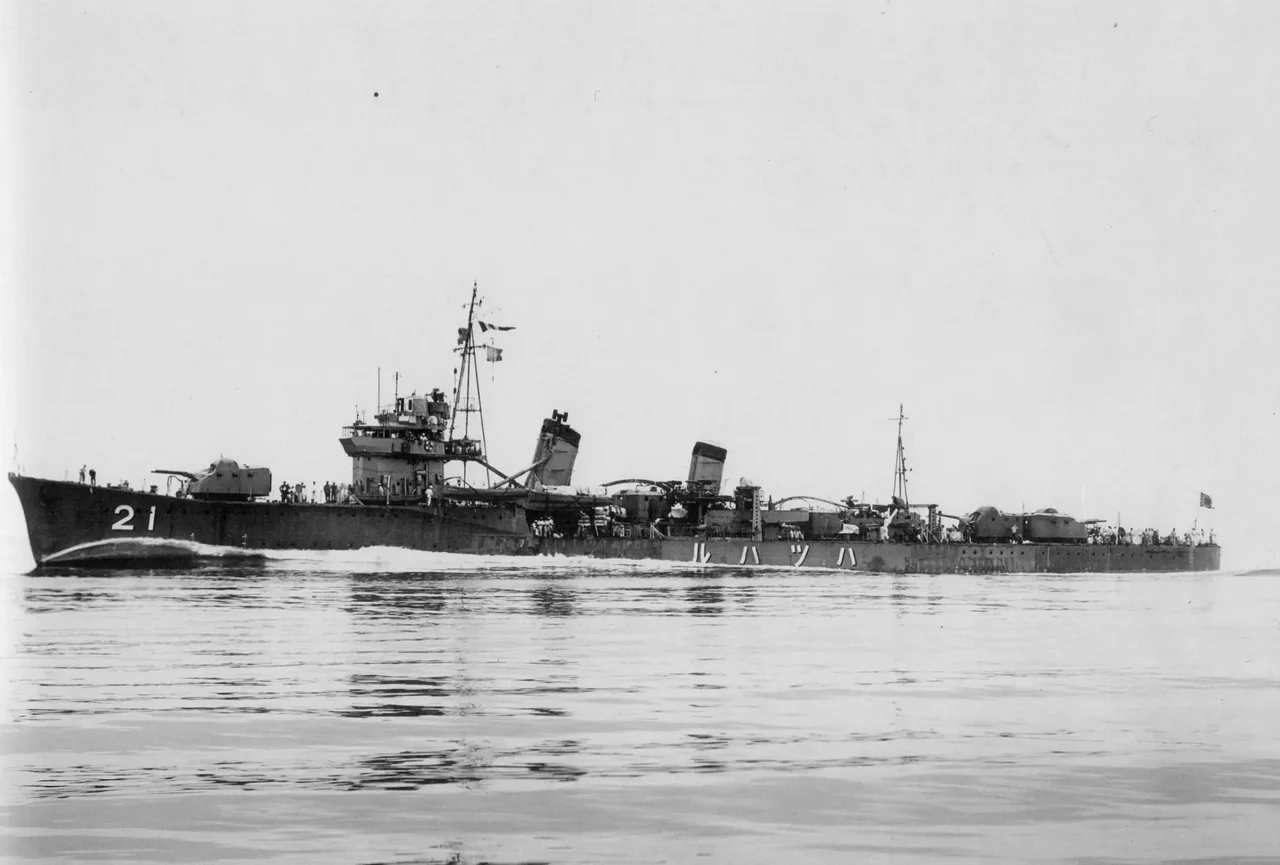
Captain Mori's Sasebo Combined Special Landing Force came ashore at 04:28 on January 24. Communications between Dutch units failed almost immediately. Anthonio received coded telegrams about the approaching fleet but was still stunned when told it had anchored off Kendari. He drove to the coastline to see the warships with his own eyes, then drove back to organize a defense that never materialized. He split his troops into two groups and ordered them inland. One group escaped. Mori's soldiers captured the second and beheaded the two sergeants leading it. Van Straalen retreated from Kendari II, leaving two brigades under Sergeant van Duuren and Sergeant Major Vellinga to face the Sasebo Force entering the airfield. By 17:00, Kendari II was in Japanese hands. Mori's report was succinct: the airfield was immediately available for 30 fighter planes and could handle medium-sized land-based attack aircraft without problem. Within hours, 25 Zeros and five reconnaissance planes staged in, followed by the 21st Air Flotilla headquarters and 27 bombers.
Wandering Through Celebes
The retreat was as disorganized as the defense. Anthonio's group wandered aimlessly through central Celebes before reaching Enrekang in the south on March 8. Van Straalen's group reached the rendezvous point at Tawanga on January 31 and set up a guerrilla base. Sergeant Major Vellinga's group encountered Japanese forces en route and Vellinga died in the firefight. Lieutenant Bruijnius and 33 soldiers ended up south of the Boroboro Mountains, could not find the assembly point, and decided to leave Celebes entirely -- reaching Timor, where the machine-gunners garrisoned at Kupang and the AA gunners shipped on to Java. The guerrilla campaign that followed produced little. The local population, caught between fear of the Japanese and contempt for their colonial rulers, offered no support. Among themselves, Celebes locals summarized the Dutch military in a phrase: Kompeni tida lakoe, Marine tida berani -- the army does not know what it is doing, the navy has no courage. Japanese casualties for the entire operation: four wounded.
From the Air
Located at 1.16°N, 124.86°E in Southeast Sulawesi, Indonesia. The site of Kendari II Airfield lies approximately 27 km from modern Kendari city. Today the area is served by Haluoleo Airport (WAWW). The bay where the Japanese fleet anchored is visible from altitude. The Celebes Sea stretches to the north, and the mountainous interior of Sulawesi rises to the west. Staring Bay, where the USS Childs made her escape, lies to the southeast.
Nearby Stories
- Waruga 1.6 km away
- Buyat Bay 31 km away
- Gorontalo 163 km away
- Otanaha Fortress 174 km away
- USS Shark (SS-174) 197 km away
- Fort Kastela 201 km away
- North Maluku 211 km away
- Indonesia-Malaysia Border 588 km away