
Battle of Khartoum (2023–2025)
Dozens of babies and toddlers died in an orphanage in Khartoum over the first six weeks of the battle, by late May 2023. The supplies had simply run out. No bullets were involved. Their deaths, from malnutrition and circulatory failure, do not appear in most histories of the Battle of Khartoum because they were not killed in the fighting, and yet they are exactly what the fighting did. By the time Sudanese Armed Forces commander Abdel Fattah al-Burhan stood on the Presidential Palace steps on 26 March 2025 and declared that "Khartoum is free," the battle had lasted nearly two years, become the longest continuous battle in Sudanese history, the longest in an African capital ever, and one of the deadliest in African history. More than 61,000 people were dead.
April 15, 2023
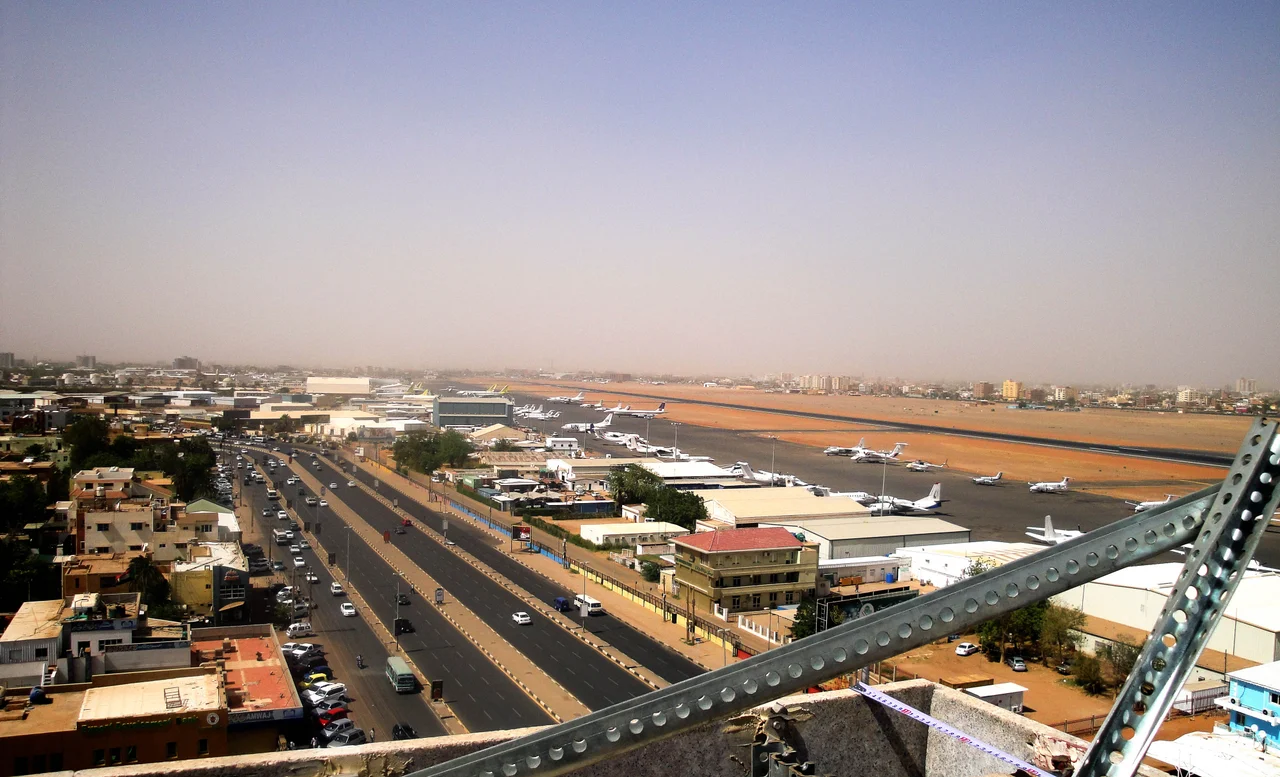
Tensions rose on 13 April 2023 when Rapid Support Forces mobilized in Khartoum and Merowe. The Sudanese Armed Forces issued an ominous statement warning of possible confrontation. On the evening of 14 April, RSF fighters assaulted Khartoum International Airport, a military base, and the Presidential Palace. By morning the war was on. Khartoum, the capital of Sudan, is a metropolitan area of more than five million people spread across three cities: Khartoum proper, Omdurman on the west bank of the Nile, and Khartoum North (Bahri) across the Blue Nile to the north. All three would become battlefields. General al-Burhan's residence was itself attacked; he picked up an AK-47 and fought back alongside his bodyguards, more than thirty of whom were killed. He escaped. Hemedti, the RSF commander, claimed to control most of the city. Burhan disputed it. Neither was wrong for long.
A Civil War That Had Been Coming
The roots ran back at least a decade. In 2013 the Janjaweed militias, infamous for their role in the Darfur genocide of the 2000s, were reorganized into the Rapid Support Forces to fight rebels in the Nuba Mountains. Their commander was Mohamed Hamdan Dagalo, known as Hemedti. In 2019, after popular protests toppled Omar al-Bashir, a civilian-military transitional government emerged under Prime Minister Abdalla Hamdok. In 2021, Burhan and Hemedti together overthrew that civilian government in a coup, cementing military rule. By 2023, Burhan wanted the RSF integrated into the regular army; Hemedti wanted the RSF to keep its autonomy. The two men had co-ruled Sudan for two years. Now they would spend two more trying to destroy each other, while the city they both ostensibly served burned around them.
The Hospitals
Of the eighty-six hospitals in the Khartoum metropolitan area, only one was operating at full capacity by 1 May 2023, just over two weeks into the battle. The Khartoum Teaching Hospital, the sister al-Shaab Teaching Hospital, and many others shut down under RSF shelling. Some were converted into military bases by the RSF: Sharg El Nil Hospital among them. Patients were moved under fire. On 29 April, the El Baraha hospital in Bahri was bombed. By one count, sixteen hospitals had been bombed since the war began and nineteen more converted to military use. A WHO-monitored national health laboratory was seized by one side with its biological samples still inside, including polio, measles, and cholera isolates; the technicians were forced out. A child at the University of Khartoum, Khalid al-Tageea, was killed by a shell and buried on campus because his body could not be transported elsewhere. These are not details. They are what the war was.
Ceasefires That Did Not Hold
There were many ceasefires. The first, for Eid al-Fitr on 21 April 2023, collapsed within hours. The Jeddah ceasefire of May 2023 worked briefly and then failed. The ceasefire extension worked better but ended on 4 June. A 24-hour ceasefire on 9 June held; the next day the fighting resumed. A three-day Jeddah ceasefire in June came and went. Each time the talks resumed in Jeddah, civilians hoped for food convoys and lulls in shelling. Sometimes they got them. The World Food Programme was eventually able to deliver donations during a lull. The Sudanese Red Crescent tried to operate between attacks. But the ceasefires were tactical pauses for both armies to reposition. The civilians between them simply kept dying.
Daily Life, If That Is the Right Phrase
Civilians in Khartoum had to steal to survive. Water was impossible to get safely; residents boiled water from the Nile, and fetching it risked sniper fire. Decaying bodies in the streets made disease routine. Flour doubled in price. Sugar went from 32,000 to 50,000 Sudanese pounds. Cooking oil rose similarly. Street gangs targeted poorer neighborhoods. Resistance committees, the neighborhood-level civic structures that had emerged during the 2019 revolution, took over the humanitarian burden in places like Jabra. Mothers buried their own children in backyards, in courtyards, in the floors of houses, because the cemetery was too dangerous to reach. The National Museum of Sudan was raided by the RSF on 3 June, artifacts burned or destroyed. The Libya Market in Omdurman burned to the ground. Khartoum was being systematically disassembled.
The Long Grind Back
Late in 2024 the Sudanese Armed Forces began to turn the battle. A major offensive launched on 26 September 2024 retook bridges connecting Omdurman to Khartoum. By February 2025, Bahri was fully in SAF hands. On 21 March 2025, they confirmed control of the Presidential Palace. On 25 March, Khartoum International Airport. On 26 March, al-Burhan announced at the palace: "Khartoum is free." The RSF claimed its forces had repositioned, not retreated. Jabal Awliya, their last stronghold in central Sudan, fell to the SAF. On 20 May 2025, the SAF took full control of Ombada and the rest of Omdurman, ending the battle after more than two years. The RSF had been pushed into the Darfur and Kordofan states, where the war continues.
What the Numbers Do Not Say
More than 61,000 dead. Across Sudan, over 12 million displaced -- the largest displacement crisis in the world. Forty-one thousand wounded, by some estimates, in the Khartoum area alone. A city of more than five million mostly emptied by evacuation, flight to Port Sudan or Wad-Madani, escape to Chad or Egypt or Ethiopia. The figures understate the reality. The babies in the orphanage. The worshippers killed in mosques by shelling. The Congolese students sheltering at the International University of Africa, killed by an artillery round. The twenty-seven civilians killed in the Mayo neighborhood on a single night. Asia Abdelmajid, one of Sudan's first professional actresses, killed in Bahri on 4 May 2023. What the numbers cannot say is that before April 2023, Khartoum was a city where people lived ordinary lives. They went to work, to school, to the market, to the Acropole Hotel for coffee. All of that has to be rebuilt now, if it can be. The battle may be over. The city is still in pieces. The civilians who survived carry what they carry, and Sudan, the country the war was fought over, is still at war.
From the Air
The Battle of Khartoum centered at approximately 15.53°N, 32.54°E, covering the tripartite metropolitan area of Khartoum, Omdurman (west of the Nile), and Bahri (Khartoum North, east of the Blue Nile and north of the confluence). Khartoum International Airport (IATA: KRT, ICAO: HSSS) was a major battle site and remains limited. Recommended viewing altitude 10,000+ ft AGL to appreciate the scale of urban destruction across the Blue-White Nile confluence.
Nearby Stories
- Esh Shaheinab 27 km away
- Naqa 56 km away
- Mahdist War 65 km away
- Musawwarat es-Sufra 100 km away
- Gezira State 101 km away
- Northern Sudan 215 km away