
Battle of Manado
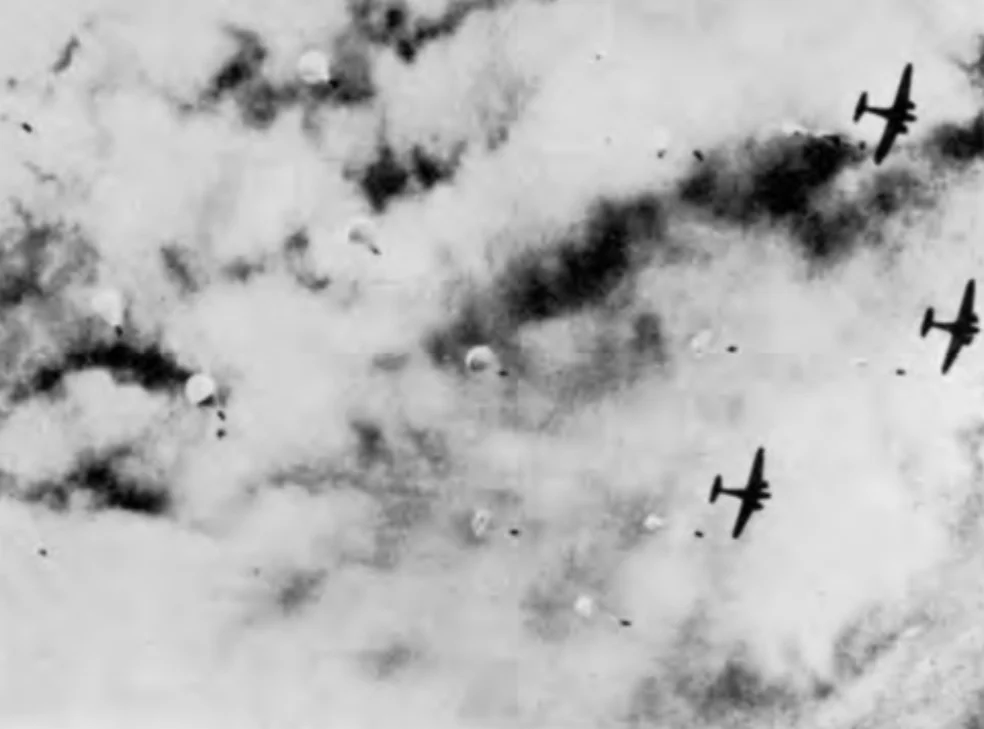
On January 11, 1942, something happened above the Minahasa Peninsula that had never happened before in Japanese military history. Paratroopers jumped from transport aircraft over Celebes, descending on the Dutch colonial positions around Manado and Lake Tondano. It was the first airborne operation Japan had ever conducted, and it targeted not a grand strategic fortress but a cluster of seaplane bases and modest airfields on the northern arm of a spider-shaped island. The battle that followed lasted barely two days, but it introduced a new dimension to the Pacific War in the Dutch East Indies.
Sheltered Waters, Strategic Skies
The Minahasa Peninsula held no oil, no rubber, no great industrial installations. Its value was geographic. The sheltered bays around Manado and Lake Tondano provided excellent anchorages for seaplanes, and the Dutch had established a naval base on the southeast shore of Tondano Lake near Tasuka, with a seaplane facility near Kakas on the lake's southern end. Inland, two airfields added to the area's significance: Menado II at Langoan near Kalawiran, and the Mapanget Airfield northwest of Manado. For the Japanese, Minahasa was a stepping stone. Its capture would extend the air umbrella southward along the Menado-Kendari-Makassar line, enabling the next phase of the campaign to seize Java. Rear Admiral Takeo Takagi commanded the Eastern Attack Unit assigned to the operation, though he left tactical details to Rear Admiral Raizo Tanaka.
A Plan on Three Axes
The Japanese assault converged from three directions. Captain Kunizo Mori's Sasebo Combined Special Landing Force would conduct amphibious landings on both the northern and southern coasts of Manado simultaneously, then envelop the Dutch garrison and push inland toward the Kakas seaplane base via Tomohon. A second amphibious force would land at Kema on the east coast and advance overland toward Lake Tondano. Most dramatically, the 1st Yokosuka Special Naval Landing Force would drop from the sky -- 334 paratroopers tasked with seizing the Langoan airfield and the Kakas base directly. The Dutch defense plan called for holding the beaches, delaying the advance, and falling back to defend the airfields. But the garrisons were thin, funding for defensive positions had been inadequate, and the troops spread across multiple points could not reinforce each other once communications broke down.
Paratroopers Over Tondano
Mori's forces hit the beaches at 04:00 on January 11. At Manado, the Dutch Compagnie Menado withdrew immediately to rear positions at Pineleng and Tinoor without fully engaging. Local militia units under Masselink put up stiffer resistance, forcing the Japanese to bring heavy automatic fire to bear before the defenders fell back. The paratroopers jumped later in the day, landing near Langoan airfield. The drop was chaotic -- Japanese airborne doctrine was new and largely untested -- but the Dutch were in no position to exploit the confusion. Some parachutists landed far from their objectives, and Dutch defenders did inflict casualties, but the overall effect was decisive. The sight of soldiers descending from the sky shattered whatever defensive cohesion remained. By the end of January 12, the Japanese controlled Manado, the airfields, and the approaches to Lake Tondano.
Guerrillas in Open Country
On the night of January 11, at Roeroekan, Dutch Major Schilmoller distributed money to three of his commanders -- Captains Kroon and Abbink and Lieutenant Van de Laar -- and ordered them to begin guerrilla operations in their sectors. It was a forlorn hope. Minahasa's terrain was open, not the dense jungle that favors partisan warfare. Underground supply caches had already been looted by the local population. Schilmoller himself planned to lead his group toward central Celebes but was captured along the way. Sergeant Johan Meliezer's E-Detachment, stationed at Amurang when Japanese ships opened fire on January 11, tried to reinforce Langoan Airfield but arrived on January 12 to find the Japanese already in possession. His 20 troops dispersed and returned home, many too afraid to fight again. The guerrilla campaign faded quickly -- not from Japanese counterinsurgency, but from the impossibility of sustaining a resistance without local support, supply lines, or terrain to hide in.
First Jump, Lasting Lessons
The Battle of Manado was a small engagement with outsized significance. For Japan, it validated airborne operations as a tool of island-hopping warfare, though the paratroopers' own performance revealed the limits of improvisation under fire. For the Dutch, it exposed the consequences of defending a vast archipelago with garrisons too small, budgets too thin, and communications too fragile. The local Minahasan population, caught between occupiers old and new, had little reason to risk their lives for either side. The peninsula changed hands in two days, and the Japanese air umbrella pushed further south -- toward Kendari, toward Makassar, toward the final prize of Java.
From the Air
Located at 1.16°N, 124.86°E on the Minahasa Peninsula of North Sulawesi, Indonesia. The modern city of Manado sits along the coast where the 1942 amphibious landings occurred. Lake Tondano, the site of the Dutch seaplane base, lies approximately 25 km to the south and is clearly visible from altitude. Sam Ratulangi International Airport (WAMM) serves the area today. The terrain is a mix of coastal lowlands and volcanic highlands, with Mount Lokon and Mount Klabat prominent landmarks.
Nearby Stories
- Waruga 1.6 km away
- Buyat Bay 31 km away
- Gorontalo 163 km away
- Otanaha Fortress 174 km away
- USS Shark (SS-174) 197 km away
- Fort Kastela 201 km away
- North Maluku 211 km away
- Indonesia-Malaysia Border 588 km away