
Battle of Mauchline Muir
They had gathered for the Eucharist. For several days in early June 1648, members of the Kirk party - the strict Presbyterian faction of the Scottish Covenanters - assembled in the town of Mauchline to celebrate communion together. Such gatherings were common in seventeenth-century Scotland, half religious observance and half political rally. When the formal services ended, some two thousand of these communicants remained on Mauchline Moor, armed, and began choosing leaders. They had not come merely to take bread and wine. They had come to demonstrate, with bodies in the field, their opposition to a recent agreement their own government had made with the imprisoned King Charles I. Within hours, fellow Covenanters - this time loyal to that agreement - would ride into the moor, and Scotsmen would kill Scotsmen over a difference of conscience.
Covenanters Divided
To understand why Covenanter fought Covenanter at Mauchline Muir, one has to understand the Engagement. The Presbyterian Covenanter movement had spent the 1640s defeating Scottish Royalists who wanted unconditional loyalty to King Charles I. After Charles surrendered to the Scottish army in England in 1646 and was eventually handed over to the English Parliament, negotiations began over what kind of constitutional settlement would emerge from the civil wars. The Scottish Covenanters were one of four parties at the table, alongside Charles himself, the English Parliamentary Presbyterians, and the religious Independents in the New Model Army. In December 1647 a faction of Covenanters secretly reached an agreement with Charles: the Engagement. He promised that if they would send an army to support him, he would establish Presbyterianism in England for three years. The strict Kirk party, influenced by the General Assembly of the Church of Scotland, was bitterly opposed. They considered three years a betrayal of permanent reformation. They considered the secret negotiation a betrayal of the General Assembly's authority.
Two Thousand on the Moor
In April 1648 the Engagers seized control of the Scottish Parliament and authorised an army under James, Duke of Hamilton, to march south to fight for the king. Joining Hamilton was an English Royalist force under Marmaduke Langdale. In June, members of the Kirk party gathered in Mauchline for the multi-day communion celebration. When the religious observances ended, the gathering became political. Two thousand armed men remained on the moor and began organising themselves for what looked very much like resistance. Five troops of Engager cavalry, loyal to the Scottish Parliament's new majority, rode out to confront them - commanded by John Middleton, 1st Earl of Middleton, and James Livingstone, Earl of Callender. Seven Kirk party ministers walked out to negotiate, securing an offer of amnesty if the gathering would disperse peacefully. The amnesty excluded some two hundred deserters in the crowd; for many of the rest, simply going home was unthinkable. The fight, when it came, was inevitable.
The Fight, and Who Died
The Kirk party supporters held their ground for some time. They were not soldiers in any formal sense - communicants, mostly, with weapons they had brought to the meeting because they expected trouble. But when Engager reinforcements arrived and more than doubled the cavalry on the field, the day tipped. The Engagers took the moor. The casualties on both sides were roughly equal: somewhere between thirty and forty men dead in total. Each of them was a real person. Most were poor farmers and tradesmen from the small towns of Ayrshire - communities whose surviving records mention these names in passing, if at all. They had families. They had walked to Mauchline for communion. They died believing that the constitutional and religious settlement of Scotland was worth fighting their own former comrades over. All seven ministers and sixty-five other members of the Kirk party were taken prisoner. All were eventually freed. The bodies were not.
The Engagers Lost the War
The Engagers had won the day at Mauchline Muir, but the engagement actually hardened Scottish opposition to their cause. Two months later, in August 1648, Hamilton's army marched into England and was crushingly defeated by Oliver Cromwell and the New Model Army at the Battle of Preston. Hamilton himself was captured and eventually executed. In Scotland the Kirk party, supported by the Whiggamore Raid out of the southwest, took back control - the Battle of Stirling and the subsequent Treaty of Stirling confirmed the reversal. On 4 January 1649 a new Scottish Parliament convened in Edinburgh and formally approved the opposition that had been expressed at Mauchline. Three weeks later, Charles I was executed in London. The men who died on Mauchline Moor had been right about the politics, though that was no consolation to anyone who had loved them. They were buried somewhere on the Ayrshire countryside, in graves that have long since been lost. The moor itself has been improved into farmland.
From the Air
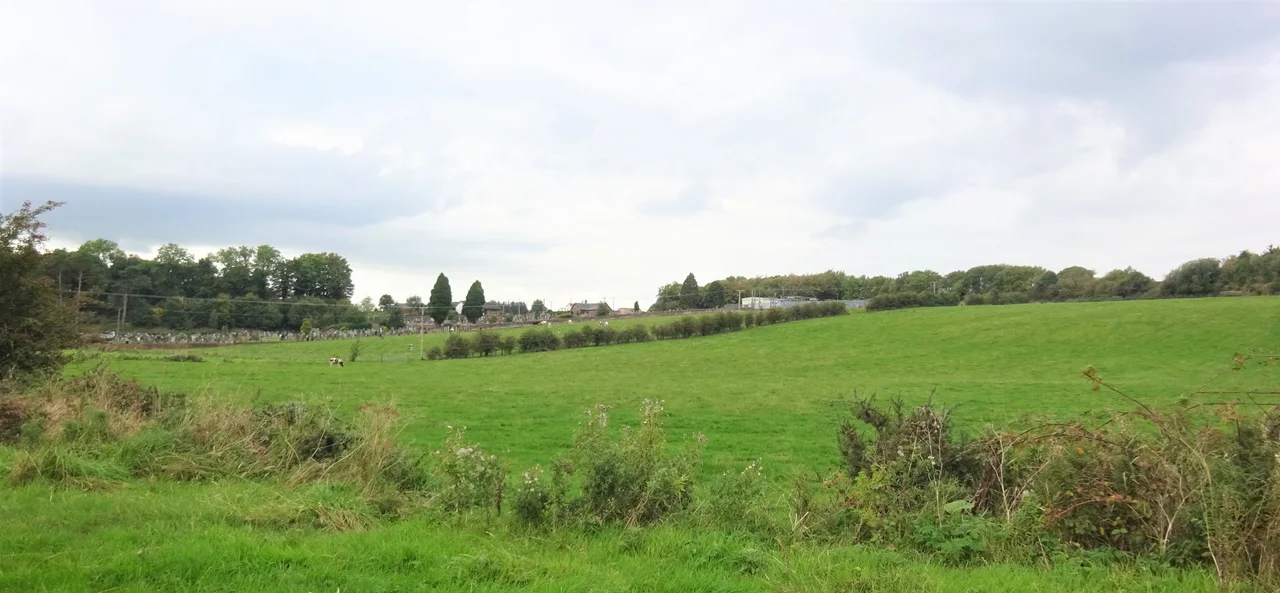
The battle was fought on Mauchline Moor near the town of Mauchline, approximately 55.51 N, 4.38 W in East Ayrshire. The exact location of the battle site is not precisely known but lay on open moorland just outside the town. Recommended viewing altitude: 3,000-4,500 ft AGL. The surrounding landscape is gently rolling former moorland now divided into agricultural fields and pasture. Visual landmarks include the town of Mauchline itself (associated with Robert Burns and the Burns House), the River Ayr to the north, and the Cumnock-Auchinleck area to the southeast. Nearest airfield: Glasgow Prestwick (EGPK) approximately 14 miles west.
Nearby Stories
- HMS Ulysses (1917) 7.3 km away
- Greenbank Garden 9 km away
- Ballantrae Lifeboat Station 12 km away
- Shotts 12 km away
- Douglas Castle 12 km away
- Battle of Glen Trool 13 km away
- Ellisland Farm 14 km away
- Rothesay Castle 15 km away