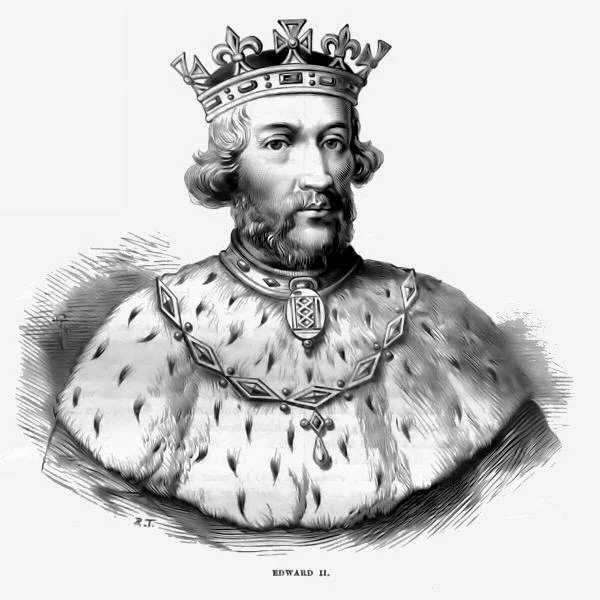

Battle of Old Byland
Edward II was dining at Rievaulx Abbey with Queen Isabella when news arrived that the Scots were over the moor. There was no time to gather his belongings - they came as the king fled, his personal possessions left behind on tables and in chests for the Bruce's men to pick over. It was October 1322, and on the chalk ridge of Scawton Moor between Rievaulx and Byland Abbey, a battle was about to be fought that the English thought could not be lost. They were wrong about almost everything.
The Great Raid of 1322
Eight years after Bannockburn, Robert Bruce had perfected an art the English still had not learned: how to make an invasion of Scotland fail before it began. When Edward marched north in August, Bruce burned the crops, drove off the livestock, and pulled his army behind the River Forth. In all of Lothian the English found exactly one lame cow, prompting the Earl of Surrey's bitter joke that it was the dearest beef he had ever seen - it had cost a thousand pounds and more. Sickness and starvation broke the army before any Scottish sword did. The retreat from Edinburgh was as ruinous to English morale as Bannockburn itself had been. And then, while Edward limped south to recover at Rievaulx, Bruce crossed the Solway with Highland troops from Argyll and the Isles and drove east into Yorkshire faster than messengers could follow.
The Flank They Could Not Be Outflanked On
John of Brittany, Earl of Richmond, had the high ground on Scawton Moor, between Rievaulx Abbey and Byland Abbey - a strong position above steep, broken slopes that English commanders read as impregnable. Bruce read them differently. He had men from the Highlands who had grown up climbing rougher country than this. While Thomas Randolph and James Douglas charged uphill into Richmond's front, a party of Highlanders scaled the cliffs on the English flank, came over the crest, and crashed down into the rear. Resistance dissolved in minutes. Richmond was captured. So was Henri de Sully, Grand Butler of France, along with Sir Ralph Cobham - chronicled at the time as the best knight in England - and Sir Thomas Ughtred. The slope that had looked like a wall became a kill-ground for fugitives.
A Royal Dinner Abandoned
Word reached Rievaulx that the army on the moor had broken. Edward had perhaps an hour, perhaps less. He rode south so fast that the abbey staff, when they looked into the king's chambers afterward, found his plate, his linens, and the royal seals abandoned where he had left them. The Scots, said the chronicler Sir Thomas Gray, were now so fierce and the English so cowed that it was no different between them than between a hare and greyhounds. Old Byland was the most significant Scottish victory since Bannockburn and the closest any Scottish king came to seizing an English king on English soil. Five years later the Scots would beat Edward's son at Stanhope Park. The Treaty of Edinburgh-Northampton, recognising Bruce as King of Scots at last, was now only six years away.
Walking the Battlefield Today
There is no monument, no visitor centre, no English Heritage car park. Scawton Moor between Rievaulx and Byland is still pasture and rough grazing, cut by drystone walls and the quiet B1257. Sutton Bank rises a few miles east, its escarpment giving the same kind of view Bruce's scouts would have used. Both abbeys still stand as ruins below the moor - Rievaulx in its valley, Byland in its meadow - and you can walk from one to the other along the route Edward fled. It is one of the strangest things about the place: an English king nearly lost his kingdom here, and almost no one passing through stops to notice.
From the Air
Located at 54.23 N, 1.16 W on the Hambleton Hills between Rievaulx Abbey and Byland Abbey, southwest of Helmsley in North Yorkshire. The Sutton Bank escarpment runs north-south just east of the battlefield, and the village of Old Byland sits at the head of the valley. Nearest major airport is Teesside International (EGNV), 50 km north. Best viewed at 2,000 to 3,500 feet AGL, with the abbey ruins and the steep western face of the Hambletons making excellent navigation references.
Nearby Stories
- Battle of Marston Moor 1.6 km away
- Middlesbrough Cathedral 3.6 km away
- Ilkley 6.1 km away
- Middleham Castle 6.9 km away
- Scampston Hall 6.9 km away
- Raby Castle 11 km away
- RAF Leconfield 20 km away
- German submarine U-2367 72 km away